
Contents
- 🎵 Origins & History
- ⚙️ How It Works
- 📊 Key Facts & Numbers
- 👥 Key People & Organizations
- 🌍 Cultural Impact & Influence
- ⚡ Current State & Latest Developments
- 🤔 Controversies & Debates
- 🔮 Future Outlook & Predictions
- 💡 Practical Applications
- 📚 Related Topics & Deeper Reading
- Frequently Asked Questions
- References
- Related Topics
Overview
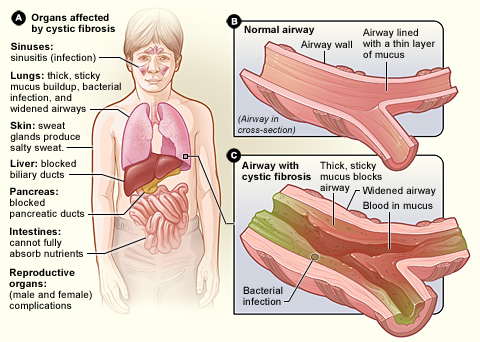
Cystic fibrosis (CF) is a rare, inherited disorder that affects the lungs, pancreas, liver, kidneys, and intestine, causing the accumulation of thick mucus and facilitating bacterial colonization and infection. The condition is inherited in an autosomal recessive manner, meaning that a person must inherit two copies of the mutated gene, one from each parent, to develop the disease. According to the Centers for Disease Control and Prevention (CDC), approximately 30,000 people in the United States have CF, with about 1,000 new cases diagnosed each year. The Mayo Clinic notes that CF is a life-threatening disorder, but with proper treatment, people with CF can lead active and productive lives. The World Health Organization (WHO) recognizes CF as a significant public health concern, with a global prevalence of approximately 1 in 2,500 to 1 in 5,000 births. Current research, such as the studies published in the New England Journal of Medicine, focuses on developing new treatments and improving the quality of life for individuals with CF.
🎵 Origins & History
Cystic fibrosis has a long and complex history, with the first recorded cases dating back to the 18th century. The disease was initially described by Dorothy Anderson in 1938, and since then, significant progress has been made in understanding its causes and developing effective treatments. The Cystic Fibrosis Foundation was established in 1955 to support research and provide resources for individuals with CF. Today, organizations like the National Institutes of Health (NIH) and the European Cystic Fibrosis Society continue to play a crucial role in advancing our understanding of CF.
⚙️ How It Works
The underlying cause of cystic fibrosis is a mutation in the gene encoding the cystic fibrosis transmembrane conductance regulator (CFTR) protein. This protein is responsible for regulating the movement of salt and water in and out of cells, and its dysfunction leads to the accumulation of thick, sticky mucus in various organs. The University of California, San Francisco (UCSF) has made significant contributions to our understanding of the CFTR protein and its role in CF. Researchers at the Johns Hopkins University have also developed innovative approaches to studying the disease, including the use of CRISPR gene editing technology.
📊 Key Facts & Numbers
Key facts about cystic fibrosis include its prevalence, with approximately 1 in 2,500 to 1 in 5,000 births affected, according to the Centers for Disease Control and Prevention (CDC). The disease is more common in people of European descent, with a higher incidence in countries such as the United States, Canada, and the United Kingdom. The World Health Organization (WHO) estimates that CF affects approximately 70,000 people worldwide. In terms of treatment, the Cystic Fibrosis Foundation reports that the median survival age for people with CF has increased significantly over the past few decades, from 14 years in 1969 to over 40 years today.
👥 Key People & Organizations
Several key people and organizations have played a crucial role in advancing our understanding and treatment of cystic fibrosis. These include Dorothy Anderson, who first described the disease, and Francis Collins, the current director of the National Institutes of Health (NIH). Organizations such as the Cystic Fibrosis Foundation and the European Cystic Fibrosis Society have also made significant contributions to CF research and advocacy. The American Lung Association has also been involved in efforts to raise awareness and support for CF research.
🌍 Cultural Impact & Influence
Cystic fibrosis has had a significant cultural impact, with many people affected by the disease becoming advocates and raising awareness about its effects. The Cystic Fibrosis Foundation has been instrumental in promoting public awareness and supporting research efforts. The disease has also been featured in various media outlets, including films and television shows, such as the documentary Breathless. The Cystic Fibrosis Awareness Month is observed in May to raise awareness and support for the CF community.
⚡ Current State & Latest Developments
The current state of cystic fibrosis research and treatment is rapidly evolving, with new therapies and technologies being developed to address the disease. The Food and Drug Administration (FDA) has approved several new treatments for CF in recent years, including Kalydeco and Orkambi. Researchers at the University of Michigan are also exploring the use of stem cells to develop new treatments for CF. The Cystic Fibrosis Foundation has launched several initiatives to support research and improve the quality of life for individuals with CF.
🤔 Controversies & Debates
Despite the progress made in understanding and treating cystic fibrosis, several controversies and debates remain. One of the main concerns is the high cost of treatments, which can be a significant burden for families affected by the disease. The Cystic Fibrosis Foundation has been working to address this issue, advocating for increased access to affordable treatments. Another area of debate is the use of gene therapy to treat CF, with some researchers arguing that it holds great promise, while others raise concerns about its safety and efficacy. The National Institutes of Health (NIH) has funded several studies to investigate the potential of gene therapy for CF.
🔮 Future Outlook & Predictions
The future outlook for cystic fibrosis is promising, with ongoing research and development of new treatments and therapies. The Cystic Fibrosis Foundation has set a goal to increase the median survival age for people with CF to 50 years by 2025. Researchers at the University of California, Los Angeles (UCLA) are also exploring the use of CRISPR gene editing technology to develop new treatments for CF. The World Health Organization (WHO) has recognized the importance of addressing CF globally, and has launched initiatives to improve access to care and treatment for individuals with CF in low- and middle-income countries.
💡 Practical Applications
Practical applications of cystic fibrosis research include the development of new treatments and therapies, as well as improved diagnostic tools. The Cystic Fibrosis Foundation has established a network of care centers to provide comprehensive care for individuals with CF. The American Thoracic Society has also developed guidelines for the diagnosis and treatment of CF. Researchers at the Johns Hopkins University are working to develop new treatments for CF, including the use of stem cells and gene therapy.
Key Facts
- Year
- 1938
- Origin
- United States
- Category
- chronic-conditions
- Type
- disease
Frequently Asked Questions
What is cystic fibrosis?
Cystic fibrosis is a genetic disorder that affects the lungs, pancreas, and other organs, causing the accumulation of thick mucus and facilitating bacterial colonization and infection. According to the Centers for Disease Control and Prevention (CDC), CF is a life-threatening disorder, but with proper treatment, people with CF can lead active and productive lives.
What are the symptoms of cystic fibrosis?
The symptoms of cystic fibrosis include difficulty breathing, coughing up mucus, and recurrent lung infections. Other signs and symptoms may include sinus infections, poor growth, fatty stool, clubbing of the fingers and toes, and infertility in most males. The Mayo Clinic notes that the severity of symptoms can vary greatly from person to person.
How is cystic fibrosis treated?
Treatment for cystic fibrosis typically involves a combination of medication, therapy, and transplantation. The Cystic Fibrosis Foundation has established a network of care centers to provide comprehensive care for individuals with CF. The Food and Drug Administration (FDA) has approved several new treatments for CF in recent years, including Kalydeco and Orkambi.
What is the prognosis for cystic fibrosis?
The prognosis for cystic fibrosis has improved significantly over the past few decades, with the median survival age increasing from 14 years in 1969 to over 40 years today. The World Health Organization (WHO) recognizes CF as a significant public health concern, and has launched initiatives to improve access to care and treatment for individuals with CF in low- and middle-income countries.
Is cystic fibrosis inherited?
Yes, cystic fibrosis is inherited in an autosomal recessive manner, meaning that a person must inherit two copies of the mutated gene, one from each parent, to develop the disease. The National Institutes of Health (NIH) has funded several studies on the genetics of CF, and the Cystic Fibrosis Foundation has published several reports on the latest research and developments in CF treatment.
Can cystic fibrosis be cured?
Currently, there is no cure for cystic fibrosis, but researchers are working to develop new treatments and therapies to address the disease. The Cystic Fibrosis Foundation has set a goal to increase the median survival age for people with CF to 50 years by 2025. Researchers at the University of California, Los Angeles (UCLA) are also exploring the use of CRISPR gene editing technology to develop new treatments for CF.
How common is cystic fibrosis?
Cystic fibrosis is a rare genetic disorder, affecting approximately 1 in 2,500 to 1 in 5,000 births. The Centers for Disease Control and Prevention (CDC) estimates that approximately 30,000 people in the United States have CF, with about 1,000 new cases diagnosed each year.
What are the latest developments in cystic fibrosis research?
The latest developments in cystic fibrosis research include the development of new treatments and therapies, such as Kalydeco and Orkambi, as well as improved diagnostic tools. The National Institutes of Health (NIH) has funded several studies on the genetics of CF, and the Cystic Fibrosis Foundation has published several reports on the latest research and developments in CF treatment.
How can I get involved in cystic fibrosis awareness and advocacy?
There are several ways to get involved in cystic fibrosis awareness and advocacy, including volunteering with organizations such as the Cystic Fibrosis Foundation and participating in fundraising events. The Cystic Fibrosis Awareness Month is observed in May to raise awareness and support for the CF community.
What are the current challenges in cystic fibrosis research and treatment?
The current challenges in cystic fibrosis research and treatment include the high cost of treatments, the need for improved diagnostic tools, and the development of new treatments and therapies. The Cystic Fibrosis Foundation has been working to address these challenges, advocating for increased access to affordable treatments and funding research to develop new treatments and therapies.