
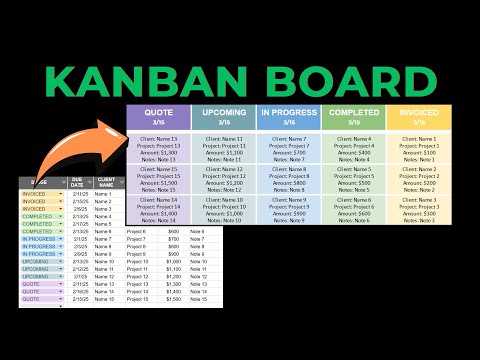
Overview
Creating a Kanban board is a straightforward process that involves defining workflows, identifying columns, and setting up boards. The concept of Kanban, which originated in the 1950s with Taiichi Ohno at Toyota, has evolved to become a widely adopted methodology for managing work. A typical Kanban board consists of columns representing different stages of a workflow, such as 'To-Do', 'In Progress', and 'Done'. The board is populated with cards or sticky notes, each representing a task or item of work. By visualizing the workflow and limiting the amount of work in progress, teams can identify bottlenecks, optimize processes, and improve overall efficiency. With the rise of digital tools, creating a Kanban board has become easier than ever, with many software options available, including Trello, Asana, and Jira. As of 2022, over 70% of organizations have adopted some form of agile methodology, with Kanban being a key component. The future of Kanban boards looks promising, with advancements in AI and machine learning expected to further enhance their capabilities.
Key Facts
- Year
- 1950
- Origin
- Toyota, Japan
- Category
- Project Management
- Type
- Methodology