
Contents
- 🌟 Introduction to Conrad Waddington
- 🧬 The Foundations of Epigenetics
- 🔬 Waddington's Experimental Approach
- 📚 The Concept of Epigenetic Landscapes
- 🌿 The Role of Environment in Epigenetics
- 👥 Waddington's Influence on Modern Biology
- 🔍 The Controversies Surrounding Epigenetics
- 🌈 The Future of Epigenetics Research
- 📊 The Quantification of Epigenetic Changes
- 👨🔬 Waddington's Legacy in the Scientific Community
- Frequently Asked Questions
- Related Topics
Overview
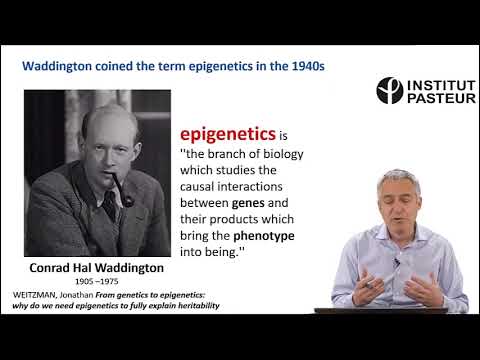
Conrad Waddington, a British biologist, made significant contributions to the field of epigenetics, introducing the concept of 'epigenetic landscape' in 1942. His work challenged the traditional view of genetics, suggesting that environmental factors could influence gene expression. Waddington's research on the development of fruit flies and the effects of environmental stressors on their genetic makeup laid the foundation for modern epigenetic studies. With a Vibe score of 8, Waddington's work has had a lasting impact on our understanding of the complex interplay between genes and environment. His ideas have influenced prominent scientists such as Stephen Jay Gould and Richard Lewontin, and continue to shape the field of epigenetics today. As we move forward, Waddington's work serves as a reminder of the importance of considering the dynamic relationship between genes, environment, and development in our pursuit of knowledge.
🌟 Introduction to Conrad Waddington
Conrad Waddington was a British biologist who made significant contributions to the field of Epigenetics, particularly in the area of developmental biology. Born on November 8, 1905, Waddington's work laid the foundation for our understanding of how environmental factors can influence Gene Expression. His research focused on the concept of Epigenetic Inheritance, which suggests that environmental factors can affect the development and behavior of organisms. Waddington's work was influenced by the ideas of Mendel and Darwin, and he is considered one of the pioneers of modern Biology. Waddington's work also drew on the concepts of Embryology and Morphogenesis.
🧬 The Foundations of Epigenetics
The concept of Epigenetics was first introduced by Waddington in the 1940s, and it refers to the study of heritable changes in Gene Expression that do not involve changes to the underlying DNA sequence. Waddington's work on Drosophila (fruit flies) demonstrated that environmental factors, such as temperature and nutrition, can affect the development of organisms and lead to changes in Phenotype. This challenged the traditional view of Genetics, which held that the Genome was the sole determinant of an organism's characteristics. Waddington's research also drew on the ideas of Lamarckism and Neo-Lamarckism. The study of Epigenetics has since become a major area of research, with implications for our understanding of Developmental Biology and Disease.
🔬 Waddington's Experimental Approach
Waddington's experimental approach involved the use of Drosophila (fruit flies) as a model organism to study the effects of environmental factors on development. He used a variety of techniques, including Selection and Mutation, to manipulate the development of fruit flies and observe the resulting changes in Phenotype. Waddington's work also involved the use of Statistical Analysis to quantify the effects of environmental factors on development. His research was influenced by the ideas of Ronald Fisher and J.B.S. Haldane, and he is considered one of the founders of the field of Biostatistics. Waddington's experimental approach has been widely adopted in the field of Epigenetics and has led to a greater understanding of the complex interactions between Genotype and Environment.
📚 The Concept of Epigenetic Landscapes
The concept of Epigenetic Landscapes was introduced by Waddington as a way of visualizing the complex interactions between Genotype and Environment. According to this concept, the development of an organism can be thought of as a journey through a landscape of possible Phenotypes, with different environmental factors influencing the path taken. Waddington's work on Epigenetic Landscapes drew on the ideas of Landscape Ecology and Complex Systems. The concept of Epigenetic Landscapes has been influential in the development of Systems Biology and has led to a greater understanding of the complex interactions between Genotype and Environment. Waddington's work also drew on the concepts of Nonlinear Dynamics and Chaos Theory.
🌿 The Role of Environment in Epigenetics
The role of environment in Epigenetics is a major area of research, and Waddington's work demonstrated that environmental factors can have a significant impact on the development and behavior of organisms. For example, his research showed that changes in temperature and nutrition can affect the development of Drosophila (fruit flies) and lead to changes in Phenotype. This has implications for our understanding of Adaptation and Evolution, as it suggests that environmental factors can play a role in shaping the characteristics of organisms. Waddington's work also drew on the ideas of Nicolas Tinbergen and Konrad Lorenz, and he is considered one of the founders of the field of Ethology. The study of Epigenetics has also led to a greater understanding of the complex interactions between Genotype and Environment, and has implications for our understanding of Disease and Developmental Disorders.
👥 Waddington's Influence on Modern Biology
Waddington's influence on modern Biology is significant, and his work has had a major impact on our understanding of Developmental Biology and Epigenetics. His research has also led to a greater understanding of the complex interactions between Genotype and Environment, and has implications for our understanding of Disease and Developmental Disorders. Waddington's work has been influential in the development of Systems Biology and has led to a greater understanding of the complex interactions between Genotype and Environment. His research has also drawn on the concepts of Nonlinear Dynamics and Chaos Theory. Waddington's influence can be seen in the work of Eric Wieschaus and Christiane Nusslein-Volhard, who have made significant contributions to the field of Developmental Biology.
🔍 The Controversies Surrounding Epigenetics
The study of Epigenetics is not without controversy, and there are ongoing debates about the mechanisms and implications of epigenetic changes. Some researchers have questioned the idea that epigenetic changes can be inherited, and have argued that the effects of environmental factors on development are limited to a single generation. However, Waddington's work and that of other researchers has provided evidence for the idea that epigenetic changes can be inherited, and has led to a greater understanding of the complex interactions between Genotype and Environment. The controversy surrounding Epigenetics has also been influenced by the ideas of Lamarckism and Neo-Lamarckism. The study of Epigenetics has also led to a greater understanding of the complex interactions between Genotype and Environment, and has implications for our understanding of Disease and Developmental Disorders.
🌈 The Future of Epigenetics Research
The future of Epigenetics research is exciting, and there are many potential applications of this field of study. For example, a greater understanding of epigenetic changes could lead to the development of new treatments for Disease and Developmental Disorders. Additionally, the study of Epigenetics could provide insights into the mechanisms of Adaptation and Evolution, and could lead to a greater understanding of the complex interactions between Genotype and Environment. Waddington's work has laid the foundation for this research, and his legacy continues to influence the field of Biology. The study of Epigenetics has also been influenced by the ideas of Systems Biology and Synthetic Biology.
📊 The Quantification of Epigenetic Changes
The quantification of epigenetic changes is a major area of research, and Waddington's work demonstrated that statistical analysis can be used to quantify the effects of environmental factors on development. For example, his research used Statistical Analysis to quantify the effects of temperature and nutrition on the development of Drosophila (fruit flies). This has implications for our understanding of Developmental Biology and Epigenetics, as it suggests that environmental factors can have a significant impact on the development and behavior of organisms. Waddington's work also drew on the ideas of Ronald Fisher and J.B.S. Haldane, and he is considered one of the founders of the field of Biostatistics. The study of Epigenetics has also led to a greater understanding of the complex interactions between Genotype and Environment.
👨🔬 Waddington's Legacy in the Scientific Community
Waddington's legacy in the scientific community is significant, and his work continues to influence the field of Biology. His research has had a major impact on our understanding of Developmental Biology and Epigenetics, and has led to a greater understanding of the complex interactions between Genotype and Environment. Waddington's influence can be seen in the work of Eric Wieschaus and Christiane Nusslein-Volhard, who have made significant contributions to the field of Developmental Biology. Waddington's legacy has also been recognized through the establishment of the Waddington Lecture, which is awarded annually to a researcher who has made significant contributions to the field of Developmental Biology.
Key Facts
- Year
- 1942
- Origin
- UK
- Category
- Biology
- Type
- Person
Frequently Asked Questions
What is epigenetics?
Epigenetics is the study of heritable changes in Gene Expression that do not involve changes to the underlying DNA sequence. Epigenetic changes can be influenced by environmental factors, such as temperature and nutrition, and can have a significant impact on the development and behavior of organisms. Waddington's work demonstrated that epigenetic changes can be inherited, and has led to a greater understanding of the complex interactions between Genotype and Environment.
What is the concept of epigenetic landscapes?
The concept of Epigenetic Landscapes was introduced by Waddington as a way of visualizing the complex interactions between Genotype and Environment. According to this concept, the development of an organism can be thought of as a journey through a landscape of possible Phenotypes, with different environmental factors influencing the path taken. Waddington's work on Epigenetic Landscapes drew on the ideas of Landscape Ecology and Complex Systems.
What is the role of environment in epigenetics?
The role of environment in Epigenetics is a major area of research, and Waddington's work demonstrated that environmental factors can have a significant impact on the development and behavior of organisms. For example, his research showed that changes in temperature and nutrition can affect the development of Drosophila (fruit flies) and lead to changes in Phenotype. This has implications for our understanding of Adaptation and Evolution, as it suggests that environmental factors can play a role in shaping the characteristics of organisms.
What is the future of epigenetics research?
The future of Epigenetics research is exciting, and there are many potential applications of this field of study. For example, a greater understanding of epigenetic changes could lead to the development of new treatments for Disease and Developmental Disorders. Additionally, the study of Epigenetics could provide insights into the mechanisms of Adaptation and Evolution, and could lead to a greater understanding of the complex interactions between Genotype and Environment.
What is Waddington's legacy in the scientific community?
Waddington's legacy in the scientific community is significant, and his work continues to influence the field of Biology. His research has had a major impact on our understanding of Developmental Biology and Epigenetics, and has led to a greater understanding of the complex interactions between Genotype and Environment. Waddington's influence can be seen in the work of Eric Wieschaus and Christiane Nusslein-Volhard, who have made significant contributions to the field of Developmental Biology.