
Contents
- 🌐 Introduction to Complexity Theory
- 📊 Computational Complexity: A Branch of Computer Science
- 🔒 The Study of Computational Limits: Time and Space Complexity
- 📈 Complexity Classes: Understanding the Hierarchy
- 🤔 The P vs NP Problem: A Fundamental Question
- 📊 Reductions and Approximations: Dealing with Hard Problems
- 📚 Resource-Bounded Complexity: A Framework for Analysis
- 📊 Randomized Complexity: The Role of Chance in Computation
- 📈 Parametrized Complexity: A New Perspective on Hardness
- 🌐 Applications of Complexity Theory: From Cryptography to Optimization
- 📊 Future Directions: Open Problems and Emerging Trends
- Frequently Asked Questions
- Related Topics
Overview
Complexity theory, a branch of computer science, delves into the study of computational complexity, which examines the resources required to solve computational problems. It was pioneered by Hartmanis and Stearns in 1965, and later expanded upon by Stephen Cook, who introduced the concept of NP-completeness in 1971. The theory is crucial in understanding the limitations of efficient algorithms and the identification of intractable problems, such as the traveling salesman problem. With a vibe rating of 8, complexity theory has far-reaching implications in cryptography, optimization, and artificial intelligence. Notable researchers, including Michael Sipser and Christos Papadimitriou, have contributed significantly to the field. As of 2022, ongoing research in complexity theory continues to push the boundaries of our understanding of computational limits, with potential breakthroughs in quantum computing and machine learning.
🌐 Introduction to Complexity Theory
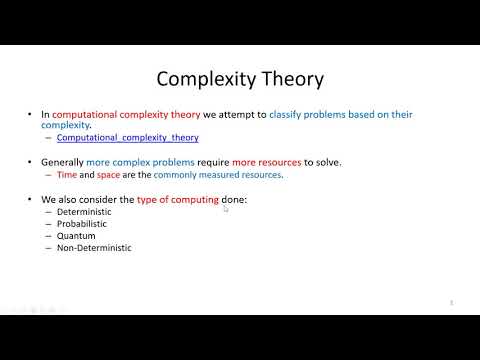
Complexity theory, a branch of Computer Science, is the study of Computational Complexity, which deals with the resources required to solve computational problems. It has far-reaching implications for Cryptography, Optimization, and Algorithm Design. The field of complexity theory is closely related to Theoretical Computer Science and has been influenced by the work of Alan Turing and Stephen Cook. As a result, complexity theory has become a fundamental area of research, with applications in Machine Learning and Artificial Intelligence.
📊 Computational Complexity: A Branch of Computer Science
Computational complexity, a key concept in complexity theory, refers to the amount of resources, such as time and space, required to solve a computational problem. This is often measured using Big O Notation, which provides an upper bound on the number of steps required to solve a problem. The study of computational complexity has led to the development of various Complexity Classes, such as P and NP, which help to categorize problems based on their computational resources. Furthermore, the concept of Reduction is crucial in complexity theory, as it allows researchers to compare the difficulty of different problems. The work of Noam Chomsky on Formal Languages has also had a significant impact on the development of complexity theory.
🔒 The Study of Computational Limits: Time and Space Complexity
The study of computational limits is a fundamental aspect of complexity theory, as it helps to understand the limitations of computational power. This involves analyzing the Time Complexity and Space Complexity of algorithms, which is essential for designing efficient solutions to complex problems. The concept of NP-Completeness is also critical in this context, as it provides a way to identify problems that are likely to be intractable. Moreover, the study of Approximation Algorithms has become increasingly important, as it allows researchers to develop efficient solutions to problems that are otherwise intractable. The work of Michael Sipser on Introduction to the Theory of Computation has been influential in shaping the field of complexity theory.
📈 Complexity Classes: Understanding the Hierarchy
Complexity classes, such as P and NP, play a crucial role in complexity theory, as they help to categorize problems based on their computational resources. The P vs NP problem, which deals with the relationship between these two classes, is one of the most famous open problems in computer science. The resolution of this problem has significant implications for Cryptography and Optimization. Additionally, the study of co-NP and NP-Complete problems has led to a deeper understanding of the limitations of computational power. The work of Gregory Chaitin on Algorithmic Information Theory has also contributed to the development of complexity theory.
🤔 The P vs NP Problem: A Fundamental Question
The P vs NP problem is a fundamental question in complexity theory, which deals with the relationship between P and NP. This problem has significant implications for Cryptography and Optimization, as it affects the security and efficiency of various algorithms. The study of Reductions and Approximations is also crucial in this context, as it allows researchers to develop efficient solutions to complex problems. Furthermore, the concept of Parameterized Complexity has become increasingly important, as it provides a framework for analyzing the complexity of problems with respect to multiple parameters. The work of Christos Papadimitriou on Computational Complexity has been influential in shaping the field of complexity theory.
📊 Reductions and Approximations: Dealing with Hard Problems
Reductions and approximations are essential tools in complexity theory, as they allow researchers to deal with hard problems. The concept of Reduction is used to compare the difficulty of different problems, while Approximation Algorithms provide a way to develop efficient solutions to problems that are otherwise intractable. The study of Parameterized Complexity has also become increasingly important, as it provides a framework for analyzing the complexity of problems with respect to multiple parameters. Moreover, the work of Vladimir Vapnik on Statistical Learning Theory has had a significant impact on the development of complexity theory. The concept of Machine Learning has also become closely related to complexity theory, as it relies on the development of efficient algorithms for complex problems.
📚 Resource-Bounded Complexity: A Framework for Analysis
Resource-bounded complexity is a framework for analyzing the complexity of problems with respect to limited resources, such as time and space. This approach has led to the development of various Complexity Classes, such as P and NP, which help to categorize problems based on their computational resources. The study of Randomized Complexity has also become increasingly important, as it provides a way to analyze the complexity of problems that involve chance or randomness. Furthermore, the concept of Interactive Proofs has become crucial in complexity theory, as it allows researchers to develop efficient protocols for verifying the correctness of computations. The work of Leslie Valiant on Computability has been influential in shaping the field of complexity theory.
📊 Randomized Complexity: The Role of Chance in Computation
Randomized complexity is a branch of complexity theory that deals with the complexity of problems that involve chance or randomness. The study of Randomized Algorithms has become increasingly important, as it provides a way to develop efficient solutions to complex problems. The concept of Derandomization is also crucial in this context, as it allows researchers to convert randomized algorithms into deterministic ones. Moreover, the work of Manuel Blum on Cryptographic Protocols has had a significant impact on the development of complexity theory. The concept of Zero-Knowledge Proof has also become closely related to complexity theory, as it relies on the development of efficient protocols for verifying the correctness of computations.
📈 Parametrized Complexity: A New Perspective on Hardness
Parametrized complexity is a new perspective on hardness, which provides a framework for analyzing the complexity of problems with respect to multiple parameters. This approach has led to the development of various Parameterized Complexity Classes, such as FPT and W[1], which help to categorize problems based on their computational resources. The study of Kernelization has also become increasingly important, as it provides a way to develop efficient solutions to complex problems. Furthermore, the concept of Parameterized Reduction is crucial in this context, as it allows researchers to compare the difficulty of different problems. The work of Rod Dowdall on Parameterized Complexity has been influential in shaping the field of complexity theory.
🌐 Applications of Complexity Theory: From Cryptography to Optimization
The applications of complexity theory are diverse and widespread, ranging from Cryptography to Optimization. The study of Complexity Classes has led to the development of various cryptographic protocols, such as Public-Key Cryptography and Digital Signatures. Moreover, the concept of NP-Completeness has become crucial in optimization, as it provides a way to identify problems that are likely to be intractable. The work of Andrew Yao on Computational Complexity has had a significant impact on the development of complexity theory. The concept of Quantum Computing has also become closely related to complexity theory, as it relies on the development of efficient algorithms for complex problems.
📊 Future Directions: Open Problems and Emerging Trends
The future directions of complexity theory are exciting and challenging, with many open problems and emerging trends. The study of Quantum Complexity has become increasingly important, as it provides a new perspective on the complexity of problems. The concept of Parameterized Complexity has also become crucial in this context, as it provides a framework for analyzing the complexity of problems with respect to multiple parameters. Moreover, the work of Subhash Khot on Unique Games Conjecture has had a significant impact on the development of complexity theory. The concept of Machine Learning has also become closely related to complexity theory, as it relies on the development of efficient algorithms for complex problems.
Key Facts
- Year
- 1965
- Origin
- Stanford University, USA
- Category
- Computer Science
- Type
- Scientific Discipline
Frequently Asked Questions
What is complexity theory?
Complexity theory is a branch of computer science that deals with the study of computational complexity, which is the amount of resources, such as time and space, required to solve computational problems. It has far-reaching implications for cryptography, optimization, and algorithm design. The field of complexity theory is closely related to theoretical computer science and has been influenced by the work of Alan Turing and Stephen Cook.
What is the P vs NP problem?
The P vs NP problem is a fundamental question in complexity theory, which deals with the relationship between P and NP. This problem has significant implications for cryptography and optimization, as it affects the security and efficiency of various algorithms. The study of reductions and approximations is also crucial in this context, as it allows researchers to develop efficient solutions to complex problems.
What are complexity classes?
Complexity classes are categories of problems based on their computational resources, such as time and space. The most well-known complexity classes are P and NP, which are used to categorize problems based on their computational complexity. The study of complexity classes has led to the development of various cryptographic protocols and optimization algorithms.
What is parameterized complexity?
Parameterized complexity is a new perspective on hardness, which provides a framework for analyzing the complexity of problems with respect to multiple parameters. This approach has led to the development of various parameterized complexity classes, such as FPT and W[1], which help to categorize problems based on their computational resources.
What are the applications of complexity theory?
The applications of complexity theory are diverse and widespread, ranging from cryptography to optimization. The study of complexity classes has led to the development of various cryptographic protocols, such as public-key cryptography and digital signatures. Moreover, the concept of NP-completeness has become crucial in optimization, as it provides a way to identify problems that are likely to be intractable.
What is the future of complexity theory?
The future of complexity theory is exciting and challenging, with many open problems and emerging trends. The study of quantum complexity has become increasingly important, as it provides a new perspective on the complexity of problems. The concept of parameterized complexity has also become crucial in this context, as it provides a framework for analyzing the complexity of problems with respect to multiple parameters.
Who are some notable researchers in complexity theory?
Some notable researchers in complexity theory include Alan Turing, Stephen Cook, Noam Chomsky, Michael Sipser, Gregory Chaitin, Christos Papadimitriou, and Subhash Khot. These researchers have made significant contributions to the development of complexity theory and have helped to shape the field into what it is today.