
Contents
- 🏛️ Introduction to Colonial History
- 🌎 Ancient and Medieval Colonization
- 🏞️ The High Middle Ages and European Expansion
- 🚣♂️ The Crusader States and Colonial Features
- 🌍 The Legacy of Colonialism
- 🤝 The Impact of Colonialism on Indigenous Cultures
- 📚 Historical Perspectives on Colonialism
- 🌈 The Complexities of Colonial Heritage
- 🌎 Modern-Day Consequences of Colonialism
- 👥 Reconciliation and Reparations
- 📊 Economic Impacts of Colonialism
- 🌐 Globalization and the Future of Colonial Legacy
- Frequently Asked Questions
- Related Topics
Overview
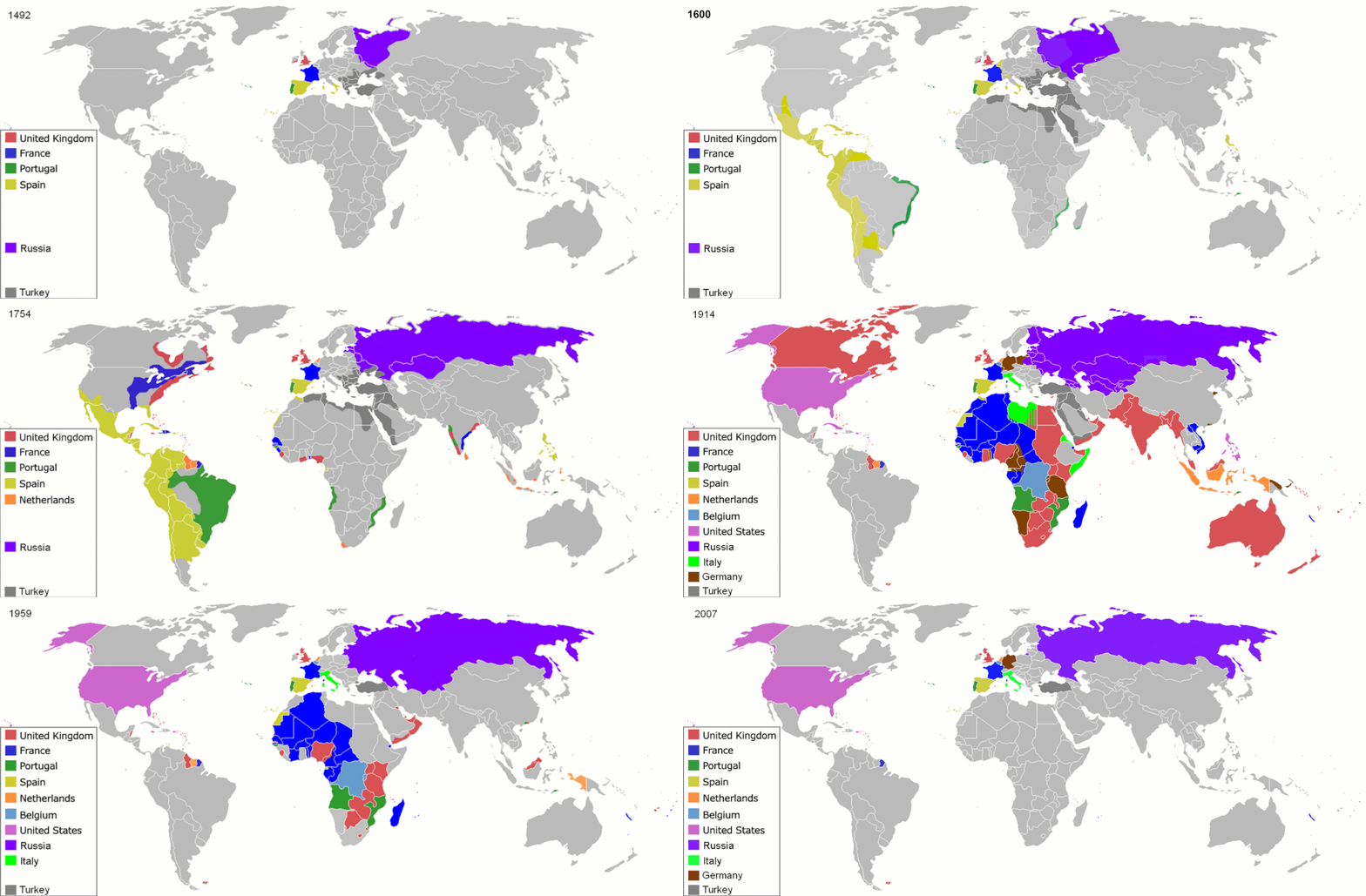
Colonial history, spanning from the 15th to the 20th century, is a complex and contentious topic, marked by the exploitation and subjugation of indigenous populations by European powers. The legacy of colonialism continues to shape global politics, economies, and cultures, with many countries still grappling with the aftermath of imperialism. The impact of colonialism can be seen in the widespread adoption of European languages, the imposition of Western cultural norms, and the extraction of natural resources. However, it is also important to acknowledge the resistance and resilience of colonized peoples, who fought against their oppressors and preserved their cultural identities. The controversy surrounding colonial history is reflected in the ongoing debates over reparations, cultural appropriation, and the erasure of indigenous histories. As we move forward, it is essential to confront the darker aspects of colonial history and work towards a more nuanced understanding of its ongoing influence, with a vibe score of 8 out of 10, indicating a high level of cultural energy and resonance.
🏛️ Introduction to Colonial History
The complex legacy of colonial history is a multifaceted and contentious topic that has been debated by historians and scholars for centuries. To understand the intricacies of colonialism, it is essential to explore its origins and evolution over time, including the ancient and medieval civilizations that established colonies, such as the Phoenician civilization and the Babylonian Empire. The Achaemenid Empire and the Ancient Greek city-states also played significant roles in the development of colonialism. As we delve into the history of colonialism, we must consider the Crusader states and their impact on the Levantine region.
🌎 Ancient and Medieval Colonization
Ancient and medieval colonization was a widespread phenomenon that occurred across the globe, with various civilizations establishing colonies for trade, conquest, and cultural exchange. The Roman Empire was a prime example of a colonial power, with its vast territories and complex system of governance. The Han Dynasty also established colonies and trade routes, stretching from China to the Mediterranean region. Meanwhile, the Arabian Peninsula was home to a thriving colonial empire, with the Umayyad and Abbasid dynasties playing significant roles in the spread of Islam and colonialism. The Viking Age also saw the establishment of colonies and trade routes, particularly in the North Sea region.
🏞️ The High Middle Ages and European Expansion
During the High Middle Ages, European civilizations began to expand beyond their continent, establishing colonies and trade routes in various parts of the world. The Crusader states in the Levant exemplified some colonial features similar to those of ancient colonies, with the Kingdom of Jerusalem and the County of Tripoli being notable examples. The Norman Conquest of England also had a significant impact on the development of colonialism, as it led to the establishment of Norman colonies in Ireland and Wales. The Mongol Empire also played a significant role in the spread of colonialism, with its vast territories and complex system of governance. As we explore the history of colonialism, we must consider the feudal system and its impact on the development of colonial societies.
🚣♂️ The Crusader States and Colonial Features
The Crusader states in the Levant were a prime example of colonial features in medieval times, with the establishment of Christian colonies in Muslim-majority regions. The Crusades were a series of military campaigns launched by European Christians to recapture the Holy Land from Muslim rule, resulting in the establishment of colonies such as the Kingdom of Jerusalem and the County of Tripoli. The Crusader states were characterized by a complex system of governance, with the Papacy playing a significant role in the appointment of rulers and the administration of justice. As we examine the legacy of the Crusader states, we must consider the Islamic Golden Age and its impact on the development of colonialism. The Byzantine Empire also played a significant role in the spread of colonialism, with its vast territories and complex system of governance.
🌍 The Legacy of Colonialism
The legacy of colonialism is complex and multifaceted, with both positive and negative impacts on indigenous cultures and societies. The Columbian Exchange had a significant impact on the demographics and economies of the Americas, with the introduction of new crops, animals, and diseases. The Transatlantic Slave Trade was another significant consequence of colonialism, with millions of Africans being forcibly enslaved and transported to the Americas. As we explore the legacy of colonialism, we must consider the indigenous peoples and their experiences under colonial rule. The Spanish Empire and the Portuguese Empire were two of the most significant colonial powers, with their vast territories and complex systems of governance.
🤝 The Impact of Colonialism on Indigenous Cultures
The impact of colonialism on indigenous cultures was profound, with the imposition of foreign languages, religions, and customs. The missionary activities of European colonizers had a significant impact on the spread of Christianity, with the establishment of missions and the conversion of indigenous peoples. The forced assimilation of indigenous peoples was another significant consequence of colonialism, with the suppression of native languages and cultures. As we examine the legacy of colonialism, we must consider the residential schools and their impact on indigenous communities. The Treaty of Westphalia also played a significant role in the development of colonialism, with its recognition of the sovereignty of European states.
📚 Historical Perspectives on Colonialism
Historical perspectives on colonialism vary widely, with some historians viewing it as a necessary step in the development of modern societies, while others see it as a brutal and exploitative system. The Marxist perspective on colonialism views it as a means of exploiting the resources and labor of colonized peoples, while the liberal perspective sees it as a means of spreading democracy and freedom. As we explore the historical perspectives on colonialism, we must consider the postcolonial perspective and its impact on the development of colonial studies. The Orientalist perspective also played a significant role in the development of colonialism, with its portrayal of non-Western cultures as exotic and inferior.
🌈 The Complexities of Colonial Heritage
The complexities of colonial heritage are evident in the many different ways that colonialism has been remembered and commemorated. The monuments and museums dedicated to colonialism are a testament to the enduring legacy of colonialism, with many of them serving as symbols of national pride and identity. However, these monuments and museums have also been the subject of controversy and debate, with many people arguing that they perpetuate a sanitized and inaccurate view of colonial history. As we examine the complexities of colonial heritage, we must consider the reparations movement and its impact on the development of colonial studies. The decolonization movement also played a significant role in the development of colonialism, with its recognition of the sovereignty of non-Western states.
🌎 Modern-Day Consequences of Colonialism
The modern-day consequences of colonialism are evident in the many social, economic, and political inequalities that exist between former colonizers and colonized peoples. The Global South is home to many countries that were formerly colonized, and these countries continue to struggle with the legacy of colonialism. The neocolonialism of modern times is a continuation of the colonialism of the past, with powerful nations and corporations exploiting the resources and labor of weaker nations. As we explore the modern-day consequences of colonialism, we must consider the sustainable development movement and its impact on the development of colonial studies. The climate change movement also played a significant role in the development of colonialism, with its recognition of the impact of human activity on the environment.
👥 Reconciliation and Reparations
Reconciliation and reparations are essential steps in addressing the legacy of colonialism, with many countries and institutions acknowledging the harm that was caused by colonialism and taking steps to make amends. The Truth and Reconciliation Commission in South Africa is a prime example of a reconciliation process, with its goal of promoting healing and reconciliation in the aftermath of apartheid. As we examine the reconciliation and reparations movement, we must consider the restorative justice movement and its impact on the development of colonial studies. The indigenous rights movement also played a significant role in the development of colonialism, with its recognition of the sovereignty of indigenous peoples.
📊 Economic Impacts of Colonialism
The economic impacts of colonialism are still felt today, with many countries struggling to overcome the legacy of colonialism and achieve economic development. The dependency theory views colonialism as a means of exploiting the resources and labor of colonized peoples, while the modernization theory sees it as a means of promoting economic development. As we explore the economic impacts of colonialism, we must consider the globalization movement and its impact on the development of colonial studies. The free trade movement also played a significant role in the development of colonialism, with its recognition of the importance of international trade.
🌐 Globalization and the Future of Colonial Legacy
The future of colonial legacy is uncertain, with many countries and institutions grappling with the complexities of colonialism and its ongoing impact. The United Nations has played a significant role in promoting decolonization and self-determination, with its recognition of the sovereignty of non-Western states. As we examine the future of colonial legacy, we must consider the international law movement and its impact on the development of colonial studies. The human rights movement also played a significant role in the development of colonialism, with its recognition of the dignity and worth of all human beings.
Key Facts
- Year
- 1492
- Origin
- Europe
- Category
- History
- Type
- Historical Period
Frequently Asked Questions
What is colonialism?
Colonialism is a phenomenon that has occurred throughout human history, with various civilizations establishing colonies for trade, conquest, and cultural exchange. The Phoenician civilization and the Babylonian Empire were two of the earliest colonial powers, with their vast territories and complex systems of governance. As we explore the history of colonialism, we must consider the Crusader states and their impact on the Levantine region.
What were the Crusader states?
The Crusader states were a series of Christian colonies established in the Levant during the Crusades. The Kingdom of Jerusalem and the County of Tripoli were two of the most notable Crusader states, with their complex systems of governance and their impact on the development of colonialism. As we examine the Crusader states, we must consider the Islamic Golden Age and its impact on the development of colonialism.
What is the legacy of colonialism?
The legacy of colonialism is complex and multifaceted, with both positive and negative impacts on indigenous cultures and societies. The Columbian Exchange had a significant impact on the demographics and economies of the Americas, with the introduction of new crops, animals, and diseases. The Transatlantic Slave Trade was another significant consequence of colonialism, with millions of Africans being forcibly enslaved and transported to the Americas.
How has colonialism impacted indigenous cultures?
The impact of colonialism on indigenous cultures was profound, with the imposition of foreign languages, religions, and customs. The missionary activities of European colonizers had a significant impact on the spread of Christianity, with the establishment of missions and the conversion of indigenous peoples. The forced assimilation of indigenous peoples was another significant consequence of colonialism, with the suppression of native languages and cultures.
What is the modern-day impact of colonialism?
The modern-day consequences of colonialism are evident in the many social, economic, and political inequalities that exist between former colonizers and colonized peoples. The Global South is home to many countries that were formerly colonized, and these countries continue to struggle with the legacy of colonialism. The neocolonialism of modern times is a continuation of the colonialism of the past, with powerful nations and corporations exploiting the resources and labor of weaker nations.
What is reconciliation and reparations in the context of colonialism?
Reconciliation and reparations are essential steps in addressing the legacy of colonialism, with many countries and institutions acknowledging the harm that was caused by colonialism and taking steps to make amends. The Truth and Reconciliation Commission in South Africa is a prime example of a reconciliation process, with its goal of promoting healing and reconciliation in the aftermath of apartheid.
What is the economic impact of colonialism?
The economic impacts of colonialism are still felt today, with many countries struggling to overcome the legacy of colonialism and achieve economic development. The dependency theory views colonialism as a means of exploiting the resources and labor of colonized peoples, while the modernization theory sees it as a means of promoting economic development.