
Contents
- 📺 Introduction to Closed Circuit Television Cameras
- 🔍 History of CCTV Cameras
- 📸 How CCTV Cameras Work
- 🚨 Applications of CCTV Cameras
- 🤖 Intelligent CCTV Cameras
- 🚫 Controversies Surrounding CCTV Cameras
- 📊 Statistics on CCTV Camera Usage
- 🌐 Global CCTV Camera Market
- 👮♂️ CCTV Cameras in Law Enforcement
- 🚪 Future of CCTV Cameras
- 📚 Conclusion
- Frequently Asked Questions
- Related Topics
Overview
Closed circuit television cameras, or CCTV cameras, have been a cornerstone of modern surveillance since their inception in 1942 by Siemens AG for monitoring rocket launches in Germany. The first commercial CCTV systems were installed in the 1950s, with significant advancements in the 1970s and 1980s, particularly in the UK, where they were used to combat crime. Today, with over 770 million cameras worldwide, CCTV systems are a ubiquitous part of urban landscapes, from city streets to private homes, with a projected global market size of $44.6 billion by 2025. However, their widespread adoption has also raised significant privacy concerns, with many questioning the balance between security and individual rights. The rise of AI-powered CCTV, such as those developed by companies like Hikvision and Dahua, promises even more sophisticated surveillance capabilities but also heightens ethical debates. As technology continues to evolve, the future of CCTV cameras will likely be shaped by innovations in facial recognition, cloud storage, and smart city initiatives, potentially redefining the boundaries of public and private spaces.
📺 Introduction to Closed Circuit Television Cameras
Closed Circuit Television (CCTV) cameras have become an integral part of modern society, with their presence felt in almost every aspect of our lives. From Surveillance systems to Security measures, CCTV cameras play a vital role in maintaining law and order. The first CCTV camera was installed in Germany in 1942, during World War II, to monitor the launch of V-2 rockets. Since then, the technology has evolved significantly, with the introduction of Digital Video Recorders (DVRs) and Internet Protocol (IP) cameras. Today, CCTV cameras are used in various settings, including Public Spaces, Private Properties, and Government Buildings.
🔍 History of CCTV Cameras
The history of CCTV cameras dates back to the 1940s, when the first camera was used to monitor the launch of V-2 rockets in Peenemunde, Germany. The technology was later used in the United States during the Cold War to monitor Military Bases and Government Facilities. The first commercial CCTV system was introduced in the 1960s, and it was used to monitor Banks and Jewelry Stores. The development of Color CCTV Cameras in the 1970s further enhanced the technology, making it more effective for Surveillance purposes. The introduction of Digital CCTV Cameras in the 1990s revolutionized the industry, allowing for higher quality images and easier storage of footage.
📸 How CCTV Cameras Work
CCTV cameras work by capturing images and transmitting them to a Monitor or Recorder. The camera consists of a Lens, a Sensor, and a Processor. The lens focuses the light onto the sensor, which converts the light into an electrical signal. The processor then processes the signal and transmits it to the monitor or recorder. There are different types of CCTV cameras, including Analog CCTV Cameras, Digital CCTV Cameras, and IP CCTV Cameras. Each type has its own advantages and disadvantages, and the choice of camera depends on the specific Security needs of the user. For example, Analog CCTV Cameras are more affordable, but they offer lower image quality compared to Digital CCTV Cameras.
🚨 Applications of CCTV Cameras
CCTV cameras have a wide range of applications, from Security and Surveillance to Traffic Management and Environmental Monitoring. They are used in Public Spaces, such as Parks, Streets, and Public Transportation, to monitor and prevent Crime. They are also used in Private Properties, such as Homes and Businesses, to protect against Theft and Vandalism. Additionally, CCTV cameras are used in Government Buildings and Military Bases to enhance Security and Surveillance. The use of CCTV cameras in Traffic Management helps to monitor and manage Traffic Flow, reducing Congestion and improving Road Safety.
🤖 Intelligent CCTV Cameras
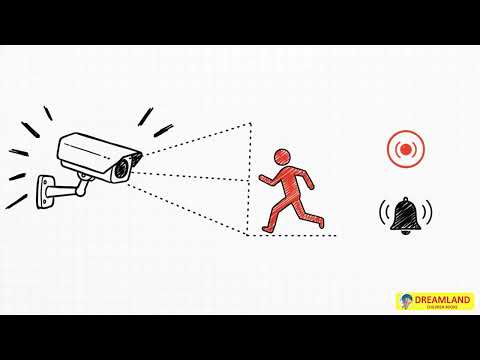
Intelligent CCTV cameras are equipped with advanced features such as Facial Recognition, Object Detection, and Motion Detection. These features enable the cameras to detect and respond to specific events, such as Intrusion or Loitering. Intelligent CCTV cameras can also be integrated with other Security Systems, such as Access Control and Alarm Systems, to provide a comprehensive Security solution. The use of Artificial Intelligence (AI) and Machine Learning (ML) in CCTV cameras has further enhanced their capabilities, enabling them to learn and adapt to new situations. For example, Facial Recognition technology can be used to identify and track individuals, while Object Detection can be used to detect and respond to specific objects, such as Vehicles or Packages.
🚫 Controversies Surrounding CCTV Cameras
The use of CCTV cameras has been surrounded by controversy, with concerns raised about Privacy and Civil Liberties. Many people feel that CCTV cameras are an invasion of their Privacy, and that they are being used to monitor and control their behavior. Others argue that CCTV cameras are a necessary tool for maintaining Law and Order, and that they help to prevent and detect Crime. The use of CCTV cameras in Public Spaces has been particularly controversial, with some arguing that it is a form of Mass Surveillance. The UK has one of the highest densities of CCTV cameras in the world, with an estimated 4.2 million cameras in operation. The use of CCTV cameras in the UK has been criticized by Privacy Advocates, who argue that it is a violation of Human Rights.
📊 Statistics on CCTV Camera Usage
According to statistics, there are over 25 million CCTV cameras in operation worldwide, with the majority being used in Asia. The Global CCTV Market is expected to grow to $24.8 billion by 2025, driven by increasing demand for Security and Surveillance solutions. The use of CCTV cameras has been shown to reduce Crime rates, with a study in the United States finding that CCTV cameras reduced Crime rates by 16%. However, the effectiveness of CCTV cameras in preventing Crime is still a topic of debate, with some arguing that they are more effective as a deterrent than as a means of detection. The Cost of installing and maintaining CCTV cameras is also a significant factor, with the average cost of a CCTV camera system ranging from $500 to $5,000.
🌐 Global CCTV Camera Market
The global CCTV camera market is dominated by China, which accounts for over 50% of the market share. The United States and Europe are also significant markets for CCTV cameras, with a growing demand for Security and Surveillance solutions. The market is expected to grow further, driven by increasing demand for IP CCTV Cameras and Intelligent CCTV Cameras. The use of Cloud Computing and Big Data analytics is also expected to play a significant role in the growth of the market, enabling the storage and analysis of large amounts of video data. The Global CCTV Market is highly competitive, with many players competing for market share. The major players in the market include Hikvision, Dahua, and Axis Communications.
👮♂️ CCTV Cameras in Law Enforcement
CCTV cameras play a critical role in law enforcement, providing valuable evidence in Criminal Investigations. They are used to monitor Public Spaces, such as Parks and Streets, and to detect and prevent Crime. The use of CCTV cameras in law enforcement has been shown to reduce Crime rates, with a study in the United States finding that CCTV cameras reduced Crime rates by 16%. However, the use of CCTV cameras in law enforcement has also raised concerns about Privacy and Civil Liberties. The American Civil Liberties Union (ACLU) has criticized the use of CCTV cameras in law enforcement, arguing that it is a violation of Human Rights.
🚪 Future of CCTV Cameras
The future of CCTV cameras is expected to be shaped by advances in technology, including the use of Artificial Intelligence (AI) and Machine Learning (ML). The development of Intelligent CCTV Cameras is expected to continue, with features such as Facial Recognition and Object Detection becoming more prevalent. The use of Cloud Computing and Big Data analytics is also expected to play a significant role in the future of CCTV cameras, enabling the storage and analysis of large amounts of video data. The Internet of Things (IoT) is also expected to have a significant impact on the future of CCTV cameras, enabling the integration of CCTV cameras with other devices and systems. The future of CCTV cameras is likely to be shaped by the Security needs of individuals and organizations, as well as by advances in technology.
📚 Conclusion
In conclusion, CCTV cameras have become an integral part of modern society, with their presence felt in almost every aspect of our lives. From Surveillance systems to Security measures, CCTV cameras play a vital role in maintaining law and order. The technology has evolved significantly over the years, with the introduction of Digital Video Recorders (DVRs) and Internet Protocol (IP) cameras. The use of CCTV cameras has been surrounded by controversy, with concerns raised about Privacy and Civil Liberties. However, the benefits of CCTV cameras, including their ability to reduce Crime rates and provide valuable evidence in Criminal Investigations, make them a necessary tool for maintaining Law and Order.
Key Facts
- Year
- 1942
- Origin
- Germany
- Category
- Technology
- Type
- Technology
Frequently Asked Questions
What is the purpose of CCTV cameras?
The primary purpose of CCTV cameras is to provide Surveillance and Security in various settings, including Public Spaces, Private Properties, and Government Buildings. They are used to monitor and prevent Crime, as well as to provide valuable evidence in Criminal Investigations. The use of CCTV cameras has been shown to reduce Crime rates, with a study in the United States finding that CCTV cameras reduced Crime rates by 16%. However, the use of CCTV cameras has also raised concerns about Privacy and Civil Liberties.
How do CCTV cameras work?
CCTV cameras work by capturing images and transmitting them to a Monitor or Recorder. The camera consists of a Lens, a Sensor, and a Processor. The lens focuses the light onto the sensor, which converts the light into an electrical signal. The processor then processes the signal and transmits it to the monitor or recorder. There are different types of CCTV cameras, including Analog CCTV Cameras, Digital CCTV Cameras, and IP CCTV Cameras. Each type has its own advantages and disadvantages, and the choice of camera depends on the specific Security needs of the user.
What are the benefits of CCTV cameras?
The benefits of CCTV cameras include their ability to reduce Crime rates, provide valuable evidence in Criminal Investigations, and enhance Security and Surveillance in various settings. They are also used to monitor and manage Traffic Flow, reducing Congestion and improving Road Safety. Additionally, CCTV cameras can be used to detect and respond to specific events, such as Intrusion or Loitering. The use of Intelligent CCTV Cameras has further enhanced the benefits of CCTV cameras, enabling them to learn and adapt to new situations.
What are the drawbacks of CCTV cameras?
The drawbacks of CCTV cameras include concerns about Privacy and Civil Liberties. Many people feel that CCTV cameras are an invasion of their Privacy, and that they are being used to monitor and control their behavior. The use of CCTV cameras in Public Spaces has been particularly controversial, with some arguing that it is a form of Mass Surveillance. The American Civil Liberties Union (ACLU) has criticized the use of CCTV cameras, arguing that it is a violation of Human Rights.
How many CCTV cameras are there in the world?
According to statistics, there are over 25 million CCTV cameras in operation worldwide, with the majority being used in Asia. The Global CCTV Market is expected to grow to $24.8 billion by 2025, driven by increasing demand for Security and Surveillance solutions. The use of CCTV cameras has been shown to reduce Crime rates, with a study in the United States finding that CCTV cameras reduced Crime rates by 16%.