
Contents
- 📊 Introduction to Citation Metrics
- 📈 Understanding Citation Impact
- 📝 Citation Count and Frequency
- 📊 Normalization of Citation Metrics
- 👥 Author and Institution Rankings
- 📚 Journal Rankings and Impact Factors
- 🚀 The Future of Citation Metrics
- 🤔 Criticisms and Limitations
- 📊 Alternative Metrics and Multidimensionality
- 🌐 Global Perspectives on Citation Metrics
- 📈 Best Practices for Citation Analysis
- Frequently Asked Questions
- Related Topics
Overview
Citation metrics have become the gold standard for measuring academic impact, but beneath the surface lies a complex web of power dynamics, biases, and unintended consequences. The h-index, a widely used citation metric, has been criticized for favoring established researchers over early-career scholars. Meanwhile, the rise of alternative metrics, such as altmetrics, has sparked debates about the role of social media and online engagement in shaping academic reputation. As the academic landscape continues to evolve, it's essential to examine the tensions between citation metrics, research quality, and societal impact. With the increasing importance of interdisciplinary research, citation metrics must adapt to accommodate diverse fields and methodologies. The future of citation metrics will be shaped by the interplay between technological advancements, shifting societal values, and the need for more nuanced evaluation frameworks.
📊 Introduction to Citation Metrics
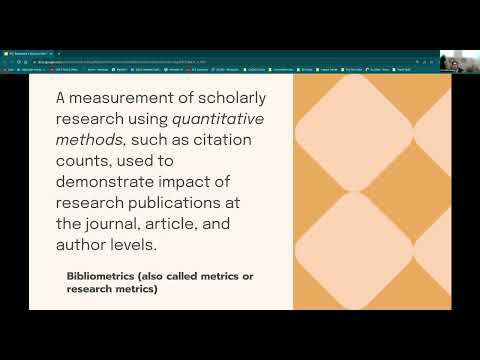
The concept of citation metrics has become a cornerstone of academic evaluation, with citation impact being a key indicator of an article's, journal's, or author's influence. Citation metrics provide a quantitative measure of how often an academic work is referenced by others, offering insights into its relevance, quality, and contribution to the field. For instance, academic articles with high citation counts are often considered seminal works in their respective fields. However, the citation frequency of an article can also be an important factor, as it takes into account the number of articles published by the author or journal during a given time period.
📈 Understanding Citation Impact
Citation impact is a multifaceted concept that encompasses various aspects of academic influence. It is not only a measure of how often an article is cited but also a reflection of the article's impact factor, which is calculated based on the number of citations received by a journal over a certain period. The h-index is another important metric that measures an author's productivity and citation impact. Authors with high h-indices are considered to be highly influential in their fields, as they have published a significant number of highly cited articles. Moreover, institutional rankings often rely on citation metrics to evaluate the research output of universities and research institutions.
📝 Citation Count and Frequency
The citation count is a raw score that represents the total number of citations received by an article, journal, or author. However, this metric can be misleading, as it does not take into account the number of articles published during a given time period. The citation frequency, on the other hand, is a normalized value that provides a more accurate representation of an article's or journal's influence. For example, an article with 10 citations and 5 articles published would have a citation frequency of 2, whereas an article with 10 citations and 10 articles published would have a citation frequency of 1. This highlights the importance of considering both citation count and citation frequency when evaluating academic influence.
📊 Normalization of Citation Metrics
Normalization of citation metrics is crucial to ensure that the comparison of different articles, journals, or authors is fair and accurate. One way to normalize citation metrics is to use the field-weighted citation impact, which takes into account the citation patterns of different fields. This approach helps to mitigate the effects of citation bias, which can occur when certain fields or journals are more highly cited than others. Additionally, journal rankings can be normalized using the Scopus ranking or the JCR ranking, which provide a more comprehensive picture of a journal's influence and quality.
📚 Journal Rankings and Impact Factors
Journal rankings and impact factors are also important aspects of citation metrics. Journals with high impact factors are often considered to be among the most prestigious and influential in their fields. The Journal Citation Reports (JCR) and the Scopus database provide comprehensive rankings of journals based on their citation metrics. However, these rankings can be subject to citation bias and journal homogenization, where certain journals or fields are more highly represented than others. Moreover, the open access movement has led to the development of new journal ranking systems, such as the DOAJ ranking, which prioritize open access journals and their citation metrics.
🚀 The Future of Citation Metrics
The future of citation metrics is likely to be shaped by the increasing use of altmetrics and multidimensional citation analysis. These approaches provide a more comprehensive picture of an article's or journal's influence, taking into account not only citation metrics but also social media metrics, download metrics, and usage metrics. Additionally, the development of new citation metrics, such as the cited reference search, is likely to provide new insights into the citation patterns and influence of academic works. However, these new approaches also raise important questions about the validity and reliability of citation metrics and their potential bias and limitations.
🤔 Criticisms and Limitations
Despite their widespread use, citation metrics have been subject to various criticisms and limitations. One of the main criticisms is that they can be easily manipulated by authors or institutions seeking to improve their rankings. Additionally, citation metrics can be biased towards certain fields or biased towards certain journals, which can lead to an inaccurate representation of an article's or journal's influence. Furthermore, the overreliance on citation metrics can lead to a narrow focus on citation counts rather than a more comprehensive evaluation of an article's or journal's quality and impact.
📊 Alternative Metrics and Multidimensionality
Alternative metrics and multidimensionality are becoming increasingly important in the evaluation of academic influence. Altmetrics provide a more comprehensive picture of an article's or journal's influence, taking into account not only citation metrics but also social media metrics, download metrics, and usage metrics. Additionally, multidimensional citation analysis provides a more nuanced understanding of an article's or journal's influence, taking into account multiple citation metrics and their interrelationships. However, these new approaches also raise important questions about the validity and reliability of citation metrics and their potential bias and limitations.
🌐 Global Perspectives on Citation Metrics
Global perspectives on citation metrics highlight the importance of considering the cultural, social, and economic contexts in which academic research is conducted. International collaboration and global knowledge production are becoming increasingly important, and citation metrics must be adapted to reflect these changes. Additionally, the global south and developing countries have unique challenges and opportunities in terms of citation metrics, and their perspectives must be taken into account in the development of new citation metrics and evaluation frameworks.
📈 Best Practices for Citation Analysis
Best practices for citation analysis involve a comprehensive and nuanced approach to evaluating academic influence. This includes considering multiple citation metrics, such as citation count, h-index, and citation frequency, as well as altmetrics and multidimensional citation analysis. Additionally, it is essential to consider the context of citation, including the cultural, social, and economic contexts in which academic research is conducted. By adopting these best practices, researchers and evaluators can gain a more accurate and comprehensive understanding of academic influence and its implications for research and knowledge production.
Key Facts
- Year
- 2010
- Origin
- The h-index was first proposed by Jorge E. Hirsch in 2005, marking a significant shift in how academic impact is measured and evaluated.
- Category
- Academia
- Type
- Concept
Frequently Asked Questions
What is the difference between citation count and citation frequency?
Citation count is a raw score that represents the total number of citations received by an article, journal, or author. Citation frequency, on the other hand, is a normalized value that takes into account the number of articles published during a given time period. For example, an article with 10 citations and 5 articles published would have a citation frequency of 2, whereas an article with 10 citations and 10 articles published would have a citation frequency of 1.
How are journal rankings and impact factors calculated?
Journal rankings and impact factors are calculated based on the number of citations received by a journal over a certain period. The Journal Citation Reports (JCR) and the Scopus database provide comprehensive rankings of journals based on their citation metrics. However, these rankings can be subject to citation bias and journal homogenization, where certain journals or fields are more highly represented than others.
What are the limitations of citation metrics?
Citation metrics have several limitations, including the potential for manipulation, bias towards certain fields or journals, and overreliance on citation counts. Additionally, citation metrics may not accurately reflect the quality or impact of an article or journal, and may not take into account the cultural, social, and economic contexts in which academic research is conducted.
What are altmetrics and how do they differ from traditional citation metrics?
Altmetrics are alternative metrics that provide a more comprehensive picture of an article's or journal's influence, taking into account not only citation metrics but also social media metrics, download metrics, and usage metrics. Altmetrics differ from traditional citation metrics in that they provide a more nuanced understanding of an article's or journal's impact and influence, and can help to identify emerging trends and patterns in academic research.
How can researchers and evaluators use citation metrics effectively?
Researchers and evaluators can use citation metrics effectively by considering multiple citation metrics, such as citation count, h-index, and citation frequency, as well as altmetrics and multidimensional citation analysis. Additionally, it is essential to consider the context of citation, including the cultural, social, and economic contexts in which academic research is conducted. By adopting these best practices, researchers and evaluators can gain a more accurate and comprehensive understanding of academic influence and its implications for research and knowledge production.
What is the future of citation metrics?
The future of citation metrics is likely to be shaped by the increasing use of altmetrics and multidimensional citation analysis. These approaches provide a more comprehensive picture of an article's or journal's influence, taking into account not only citation metrics but also social media metrics, download metrics, and usage metrics. Additionally, the development of new citation metrics, such as the cited reference search, is likely to provide new insights into the citation patterns and influence of academic works.
How do institutional rankings and citation metrics relate to each other?
Institutional rankings and citation metrics are closely related, as citation metrics are often used to evaluate the research output of universities and research institutions. Institutional rankings can be based on various citation metrics, such as citation count, h-index, and citation frequency, as well as altmetrics and multidimensional citation analysis. However, institutional rankings can also be subject to citation bias and journal homogenization, where certain institutions or fields are more highly represented than others.