
Contents
- 🎵 Origins & History
- ⚙️ How It Works
- 📊 Key Facts & Numbers
- 👥 Key People & Organizations
- 🌍 Cultural Impact & Influence
- ⚡ Current State & Latest Developments
- 🤔 Controversies & Debates
- 🔮 Future Outlook & Predictions
- 💡 Practical Applications
- 📚 Related Topics & Deeper Reading
- Frequently Asked Questions
- References
- Related Topics
Overview
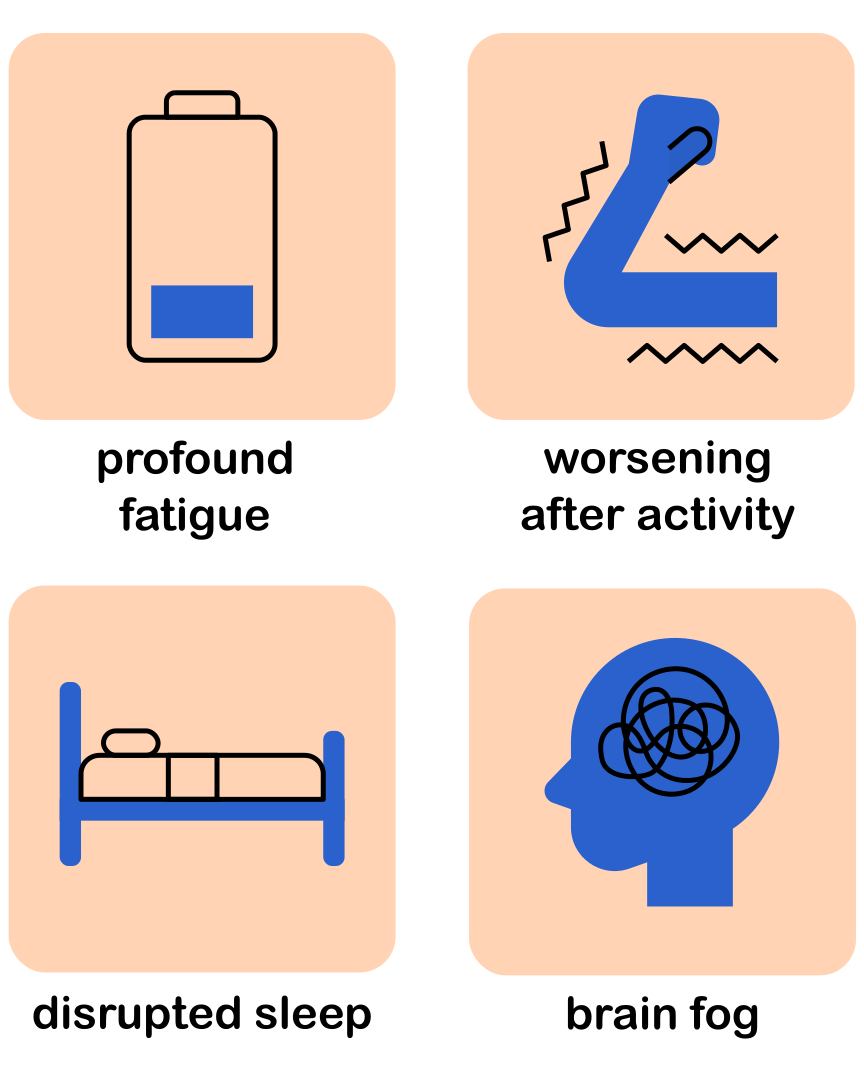
Chronic Fatigue Syndrome (CFS), also known as Myalgic Encephalomyelitis (ME), is a chronic and disabling illness characterized by profound fatigue, sleep disturbances, and cognitive impairment. The condition is often triggered by an infection, such as infectious mononucleosis, and can be exacerbated by physical or mental activity, leading to a worsening of symptoms known as post-exertional malaise (PEM). With no known cure, diagnosis is based on clinical symptoms and differential diagnosis, making it a challenging condition to manage and treat. According to the Centers for Disease Control and Prevention (CDC), approximately 836,000 to 2.5 million Americans suffer from ME/CFS, with the condition affecting people of all ages, ethnicities, and socioeconomic backgrounds. The economic burden of ME/CFS is substantial, with estimated annual costs ranging from $17 billion to $24 billion in the United States alone. As researchers continue to unravel the complexities of ME/CFS, patients and healthcare providers are working together to develop effective treatment strategies and improve quality of life for those affected by this debilitating condition.
🎵 Origins & History
The concept of Chronic Fatigue Syndrome has been around for decades, with the first reported cases dating back to the 1930s. However, it wasn't until the 1980s that the condition gained significant attention, with the Centers for Disease Control and Prevention (CDC) launching an investigation into a cluster of cases in Nevada. Since then, research has continued to uncover the complexities of ME/CFS, with studies suggesting that the condition is associated with changes in the nervous and immune systems, as well as in energy production. For example, a study published in the Journal of Clinical Investigation found that patients with ME/CFS had altered gene expression in their immune cells, which may contribute to the development of the condition.
⚙️ How It Works
The exact mechanisms behind Chronic Fatigue Syndrome are still not fully understood, but research suggests that it involves a complex interplay between the nervous and immune systems. The condition is often triggered by an infection, such as infectious mononucleosis, and can be exacerbated by physical or mental activity, leading to a worsening of symptoms known as post-exertional malaise (PEM). This 'crash' can last from hours or days to several months, making it a challenging condition to manage and treat. According to Dr. Anthony Komaroff, a leading researcher in the field, 'ME/CFS is a condition that affects the body's ability to produce energy, leading to a range of symptoms that can be debilitating and disabling.'
📊 Key Facts & Numbers
Chronic Fatigue Syndrome affects approximately 836,000 to 2.5 million Americans, according to the Centers for Disease Control and Prevention (CDC). The condition can affect people of all ages, ethnicities, and socioeconomic backgrounds, although it is more common in women than men. The economic burden of ME/CFS is substantial, with estimated annual costs ranging from $17 billion to $24 billion in the United States alone. In terms of numbers, a study published in the Journal of Chronic Fatigue Syndrome found that patients with ME/CFS reported an average of 12.5 hours of sleep per day, compared to 7.5 hours for healthy controls. Additionally, the study found that patients with ME/CFS experienced an average of 3.5 'crashes' per month, with each crash lasting an average of 3.2 days.
👥 Key People & Organizations
Several key people and organizations have played a crucial role in advancing our understanding of Chronic Fatigue Syndrome. The Centers for Disease Control and Prevention (CDC) has been at the forefront of research, providing funding and resources for studies and initiatives. The National Institutes of Health (NIH) has also been instrumental in supporting research, with a focus on understanding the underlying mechanisms of the condition. Additionally, organizations such as the Solve ME/CFS Initiative and the Myalgic Encephalomyelitis Association have worked tirelessly to raise awareness and advocate for patients. For example, the Solve ME/CFS Initiative has launched a number of initiatives, including the ME/CFS Biobank, which aims to collect and store biological samples from patients with ME/CFS for use in research studies.
🌍 Cultural Impact & Influence
Chronic Fatigue Syndrome has had a significant cultural impact, with many patients and advocates working to raise awareness and reduce stigma around the condition. The condition has been featured in several documentaries, including Unrest, which premiered at the Sundance Film Festival in 2017. The film follows the story of Jennifer Brea, a patient with ME/CFS, as she navigates the challenges of living with the condition. The film has helped to raise awareness and spark conversation around ME/CFS, with many patients and advocates using social media to share their own stories and experiences. For example, the #MillionsMissing campaign, launched by the Solve ME/CFS Initiative, aims to raise awareness and advocate for patients with ME/CFS, with many patients and advocates sharing their own stories and experiences using the hashtag.
⚡ Current State & Latest Developments
The current state of Chronic Fatigue Syndrome research is rapidly evolving, with new studies and initiatives being launched regularly. The Centers for Disease Control and Prevention (CDC) has recently updated its guidelines for diagnosing and managing ME/CFS, with a focus on providing more accurate and effective treatment strategies. The National Institutes of Health (NIH) has also launched a number of new initiatives, including the ME/CFS Common Data Elements project, which aims to develop a standardized set of data elements for use in ME/CFS research. Additionally, researchers are exploring new treatment options, including the use of cannabis and CBD oil, which have shown promise in reducing symptoms and improving quality of life for patients with ME/CFS.
🤔 Controversies & Debates
Despite the progress being made, Chronic Fatigue Syndrome remains a highly contested and debated condition. Some researchers and clinicians have questioned the validity of the condition, with some arguing that it is a psychological rather than a physical condition. However, the majority of the scientific community agrees that ME/CFS is a real and debilitating condition that requires further research and attention. The Institute of Medicine has recognized ME/CFS as a legitimate medical condition, and the World Health Organization (WHO) has classified it as a neurological disorder. According to Dr. Nancy Klimas, a leading researcher in the field, 'ME/CFS is a condition that affects the body's ability to produce energy, leading to a range of symptoms that can be debilitating and disabling. It is not a psychological condition, but rather a complex interplay between the nervous and immune systems.'
🔮 Future Outlook & Predictions
The future outlook for Chronic Fatigue Syndrome is promising, with new research and initiatives being launched regularly. The Centers for Disease Control and Prevention (CDC) has committed to continuing its research and funding efforts, with a focus on developing more effective treatment strategies and improving quality of life for patients with ME/CFS. The National Institutes of Health (NIH) has also pledged to continue its support, with a focus on understanding the underlying mechanisms of the condition and developing new treatments. According to Dr. Vicky Whittemore, a leading researcher in the field, 'the future of ME/CFS research is bright, with many new and exciting developments on the horizon. We are committed to continuing our efforts to understand and treat this debilitating condition, and to improving the lives of patients with ME/CFS.'
💡 Practical Applications
Practical applications for managing and treating Chronic Fatigue Syndrome are limited, but there are several strategies that can help alleviate symptoms and improve quality of life. Patients can work with their healthcare providers to develop a personalized treatment plan, which may include medications, lifestyle changes, and alternative therapies such as acupuncture and mindfulness practices. Additionally, patients can connect with others who have ME/CFS through online communities and support groups, such as the Solve ME/CFS Initiative and the Myalgic Encephalomyelitis Association. For example, the ME/CFS Biobank provides a platform for patients to share their experiences and connect with others who have ME/CFS.
Key Facts
- Year
- 1980s
- Origin
- United States
- Category
- chronic-conditions
- Type
- condition
Frequently Asked Questions
What is Chronic Fatigue Syndrome?
Chronic Fatigue Syndrome (CFS) is a chronic and disabling illness characterized by profound fatigue, sleep disturbances, and cognitive impairment. The condition is often triggered by an infection, such as infectious mononucleosis, and can be exacerbated by physical or mental activity, leading to a worsening of symptoms known as post-exertional malaise (PEM).
What are the symptoms of ME/CFS?
The symptoms of ME/CFS include profound fatigue, sleep disturbances, cognitive impairment, and pain. Patients may also experience orthostatic intolerance, dizziness, and faintness when upright. According to Dr. Anthony Komaroff, 'ME/CFS is a condition that affects the body's ability to produce energy, leading to a range of symptoms that can be debilitating and disabling.'
How is ME/CFS diagnosed?
ME/CFS is diagnosed based on the presence of clinical symptoms and systematic differential diagnosis. There is no diagnostic laboratory test or imaging procedure available for ME/CFS. According to the Centers for Disease Control and Prevention (CDC), 'a diagnosis of ME/CFS should be considered in patients who have a persistent and profound fatigue that is not relieved by rest and is accompanied by other symptoms such as sleep disturbances and cognitive impairment.'
What are the treatment options for ME/CFS?
Treatment options for ME/CFS are limited, but may include medications, lifestyle changes, and alternative therapies such as acupuncture and mindfulness practices. Patients can work with their healthcare providers to develop a personalized treatment plan. According to Dr. Nancy Klimas, 'the goal of treatment is to alleviate symptoms and improve quality of life for patients with ME/CFS.'
What is the prognosis for ME/CFS?
The prognosis for ME/CFS is variable, with some patients experiencing significant improvement over time while others may experience persistent and debilitating symptoms. According to the National Institutes of Health (NIH), 'the prognosis for ME/CFS is generally poor, with many patients experiencing significant disability and reduced quality of life.'
What research is being done on ME/CFS?
Research on ME/CFS is ongoing, with a focus on understanding the underlying mechanisms of the condition and developing more effective treatment strategies. The Centers for Disease Control and Prevention (CDC) and the National Institutes of Health (NIH) are leading research efforts, with a focus on developing a better understanding of the condition and improving diagnosis and treatment. According to Dr. Vicky Whittemore, 'the future of ME/CFS research is bright, with many new and exciting developments on the horizon.'
How can I get involved in ME/CFS research?
There are several ways to get involved in ME/CFS research, including participating in clinical trials, donating to research organizations, and advocating for ME/CFS awareness and funding. Patients can also connect with others who have ME/CFS through online communities and support groups, such as the Solve ME/CFS Initiative and the Myalgic Encephalomyelitis Association.