
Contents
- 🌪️ Introduction to Business Continuity Planning
- 📊 Defining Business Continuity and Its Importance
- 🚨 Identifying Potential Threats and Risks
- 📈 Developing a Business Continuity Plan
- 🚫 Prevention and Mitigation Strategies
- 💻 Disaster Recovery and IT Continuity
- 📊 Business Impact Analysis and Risk Assessment
- 📈 Implementing and Maintaining a Business Continuity Plan
- 🌟 Best Practices and Standards for Business Continuity
- 📊 Measuring the Effectiveness of Business Continuity Planning
- 🌐 Global Perspectives on Business Continuity Planning
- 🔜 The Future of Business Continuity Planning
- Frequently Asked Questions
- Related Topics
Overview
Business continuity planning (BCP) is the process of creating systems to prevent and recover from potential threats to a company's operations. According to a study by the Business Continuity Institute, 75% of companies without a BCP in place fail within three years of a major disaster. The concept of BCP has been around since the 1970s, but its importance has grown exponentially with the rise of global supply chains and digital infrastructure. Companies like IBM and Microsoft have developed sophisticated BCP strategies, including cloud-based backup systems and crisis management teams. However, smaller businesses often struggle to implement effective BCP due to limited resources and lack of expertise. As the threat landscape continues to evolve, with emerging risks like climate change and pandemics, the need for robust BCP has never been more pressing. By 2025, the global BCP market is expected to reach $1.3 billion, with a growth rate of 12% per annum.
🌪️ Introduction to Business Continuity Planning
Business continuity planning is a crucial aspect of Risk Management that enables organizations to respond to and recover from potential disruptions. The goal of business continuity planning is to ensure that an organization can continue to operate and deliver its products or services at pre-defined acceptable levels, even in the face of a disruptive incident. This can include natural disasters, cyber attacks, or other types of crises. By having a well-developed business continuity plan in place, organizations can minimize the impact of a disruption and ensure that they can continue to operate with minimal downtime. For more information on Disaster Recovery, see our related article. Business continuity planning is closely related to Emergency Management and Crisis Management.
📊 Defining Business Continuity and Its Importance
Business continuity may be defined as the capability of an organization to continue the delivery of products or services at pre-defined acceptable levels following a disruptive incident. This definition highlights the importance of business continuity planning in ensuring that an organization can continue to operate and deliver its products or services, even in the face of a disruption. Business continuity planning is the process of creating systems of prevention and recovery to deal with potential threats to a company. The goal of business continuity planning is to enable ongoing operations before and during execution of Disaster Recovery. For more information on Business Impact Analysis, see our related article. Business continuity planning is closely related to Risk Assessment and Contingency Planning.
🚨 Identifying Potential Threats and Risks
Identifying potential threats and risks is a critical step in the business continuity planning process. This can include natural disasters, cyber attacks, or other types of crises. By identifying potential threats and risks, organizations can develop strategies to prevent or mitigate them, and ensure that they can continue to operate with minimal downtime. For more information on Threat Assessment, see our related article. Business continuity planning is closely related to Vulnerability Assessment and Penetration Testing. Organizations can use tools such as SWOT Analysis to identify potential threats and risks. By having a well-developed business continuity plan in place, organizations can minimize the impact of a disruption and ensure that they can continue to operate with minimal downtime.
📈 Developing a Business Continuity Plan
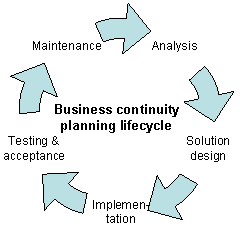
Developing a business continuity plan involves several steps, including conducting a Business Impact Analysis, identifying critical business processes, and developing strategies to prevent or mitigate potential threats and risks. The plan should also include procedures for responding to and recovering from a disruption, as well as procedures for maintaining business continuity during the recovery process. For more information on Incident Response, see our related article. Business continuity planning is closely related to Crisis Management and Emergency Management. Organizations can use tools such as Business Process Modeling to develop a business continuity plan. By having a well-developed business continuity plan in place, organizations can minimize the impact of a disruption and ensure that they can continue to operate with minimal downtime.
🚫 Prevention and Mitigation Strategies
Prevention and mitigation strategies are critical components of a business continuity plan. These strategies can include measures such as Backup and Recovery, Disaster Recovery, and Cybersecurity measures. By implementing these strategies, organizations can prevent or mitigate potential threats and risks, and ensure that they can continue to operate with minimal downtime. For more information on Risk Management, see our related article. Business continuity planning is closely related to Compliance Management and Audit Management. Organizations can use tools such as Gap Analysis to identify areas for improvement in their prevention and mitigation strategies. By having a well-developed business continuity plan in place, organizations can minimize the impact of a disruption and ensure that they can continue to operate with minimal downtime.
💻 Disaster Recovery and IT Continuity
Disaster recovery and IT continuity are critical components of a business continuity plan. This can include measures such as Data Backup, Server Virtualization, and Cloud Computing. By implementing these measures, organizations can ensure that their IT systems can continue to operate with minimal downtime, even in the face of a disruption. For more information on IT Service Management, see our related article. Business continuity planning is closely related to Network Management and Database Management. Organizations can use tools such as Disaster Recovery Planning to develop a disaster recovery plan. By having a well-developed business continuity plan in place, organizations can minimize the impact of a disruption and ensure that they can continue to operate with minimal downtime.
📊 Business Impact Analysis and Risk Assessment
Business impact analysis and risk assessment are critical steps in the business continuity planning process. This can include identifying critical business processes, assessing the potential impact of a disruption, and developing strategies to prevent or mitigate potential threats and risks. For more information on Business Impact Analysis, see our related article. Business continuity planning is closely related to Risk Assessment and Vulnerability Assessment. Organizations can use tools such as SWOT Analysis to identify potential threats and risks. By having a well-developed business continuity plan in place, organizations can minimize the impact of a disruption and ensure that they can continue to operate with minimal downtime.
📈 Implementing and Maintaining a Business Continuity Plan
Implementing and maintaining a business continuity plan involves several steps, including training personnel, conducting regular exercises and tests, and reviewing and updating the plan regularly. The plan should also include procedures for responding to and recovering from a disruption, as well as procedures for maintaining business continuity during the recovery process. For more information on Incident Response, see our related article. Business continuity planning is closely related to Crisis Management and Emergency Management. Organizations can use tools such as Business Process Modeling to develop a business continuity plan. By having a well-developed business continuity plan in place, organizations can minimize the impact of a disruption and ensure that they can continue to operate with minimal downtime.
🌟 Best Practices and Standards for Business Continuity
Best practices and standards for business continuity planning include measures such as ISO 22301 certification, NFPA 1600 certification, and BS 25999 certification. These standards provide a framework for developing and implementing a business continuity plan, and can help organizations ensure that their plan is effective and compliant with regulatory requirements. For more information on Compliance Management, see our related article. Business continuity planning is closely related to Audit Management and Risk Management. Organizations can use tools such as Gap Analysis to identify areas for improvement in their business continuity plan. By having a well-developed business continuity plan in place, organizations can minimize the impact of a disruption and ensure that they can continue to operate with minimal downtime.
📊 Measuring the Effectiveness of Business Continuity Planning
Measuring the effectiveness of business continuity planning involves several steps, including conducting regular exercises and tests, reviewing and updating the plan regularly, and assessing the plan's effectiveness in responding to and recovering from a disruption. For more information on Business Impact Analysis, see our related article. Business continuity planning is closely related to Risk Assessment and Vulnerability Assessment. Organizations can use tools such as SWOT Analysis to identify potential threats and risks. By having a well-developed business continuity plan in place, organizations can minimize the impact of a disruption and ensure that they can continue to operate with minimal downtime.
🌐 Global Perspectives on Business Continuity Planning
Global perspectives on business continuity planning highlight the importance of developing a plan that is tailored to the organization's specific needs and risks. This can include measures such as Supply Chain Management, Global Risk Management, and International Business. For more information on Global Business, see our related article. Business continuity planning is closely related to Crisis Management and Emergency Management. Organizations can use tools such as Business Process Modeling to develop a business continuity plan. By having a well-developed business continuity plan in place, organizations can minimize the impact of a disruption and ensure that they can continue to operate with minimal downtime.
🔜 The Future of Business Continuity Planning
The future of business continuity planning will involve the use of new technologies and strategies to prevent and mitigate potential threats and risks. This can include measures such as Artificial Intelligence, Machine Learning, and Cloud Computing. For more information on Emerging Technologies, see our related article. Business continuity planning is closely related to IT Service Management and Cybersecurity. Organizations can use tools such as Disaster Recovery Planning to develop a disaster recovery plan. By having a well-developed business continuity plan in place, organizations can minimize the impact of a disruption and ensure that they can continue to operate with minimal downtime.
Key Facts
- Year
- 2023
- Origin
- United States
- Category
- Risk Management
- Type
- Concept
Frequently Asked Questions
What is business continuity planning?
Business continuity planning is the process of creating systems of prevention and recovery to deal with potential threats to a company. The goal of business continuity planning is to enable ongoing operations before and during execution of Disaster Recovery. For more information on Business Impact Analysis, see our related article. Business continuity planning is closely related to Risk Assessment and Contingency Planning.
Why is business continuity planning important?
Business continuity planning is important because it enables organizations to respond to and recover from potential disruptions. By having a well-developed business continuity plan in place, organizations can minimize the impact of a disruption and ensure that they can continue to operate with minimal downtime. For more information on Risk Management, see our related article. Business continuity planning is closely related to Compliance Management and Audit Management.
What are the steps involved in business continuity planning?
The steps involved in business continuity planning include conducting a Business Impact Analysis, identifying critical business processes, and developing strategies to prevent or mitigate potential threats and risks. The plan should also include procedures for responding to and recovering from a disruption, as well as procedures for maintaining business continuity during the recovery process. For more information on Incident Response, see our related article. Business continuity planning is closely related to Crisis Management and Emergency Management.
What are some best practices for business continuity planning?
Some best practices for business continuity planning include measures such as ISO 22301 certification, NFPA 1600 certification, and BS 25999 certification. These standards provide a framework for developing and implementing a business continuity plan, and can help organizations ensure that their plan is effective and compliant with regulatory requirements. For more information on Compliance Management, see our related article. Business continuity planning is closely related to Audit Management and Risk Management.
How can organizations measure the effectiveness of their business continuity plan?
Organizations can measure the effectiveness of their business continuity plan by conducting regular exercises and tests, reviewing and updating the plan regularly, and assessing the plan's effectiveness in responding to and recovering from a disruption. For more information on Business Impact Analysis, see our related article. Business continuity planning is closely related to Risk Assessment and Vulnerability Assessment.