
Contents
- 🎵 Origins & History
- ⚙️ How It Works
- 📊 Key Facts & Numbers
- 👥 Key People & Organizations
- 🌍 Cultural Impact & Influence
- ⚡ Current State & Latest Developments
- 🤔 Controversies & Debates
- 🔮 Future Outlook & Predictions
- 💡 Practical Applications
- 📚 Related Topics & Deeper Reading
- Frequently Asked Questions
- References
- Related Topics
Overview
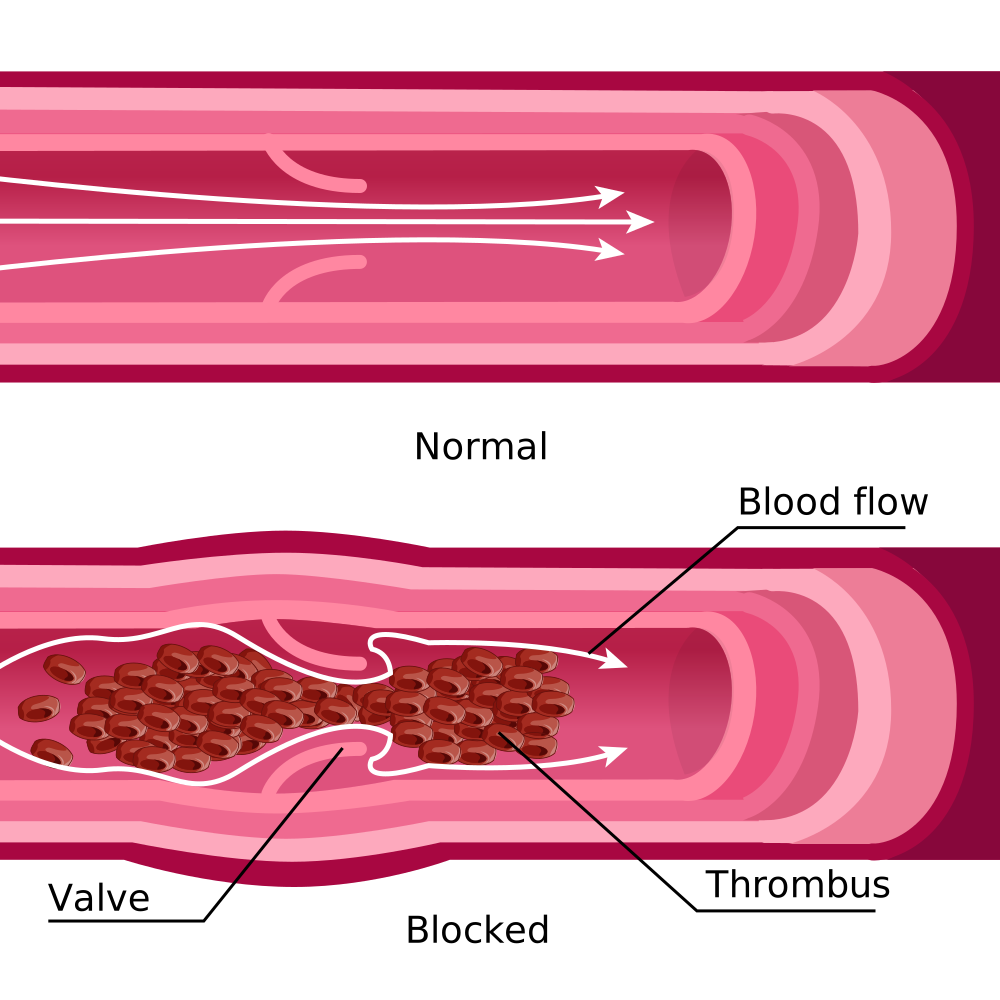
Blood clots, also known as thrombi, are solid or semisolid aggregates of blood components that form within the circulatory system. They can be a healthy response to injury, but can also be harmful when they obstruct blood flow through a healthy blood vessel. According to the Centers for Disease Control and Prevention (CDC), approximately 900,000 people in the United States are affected by blood clots each year, resulting in around 300,000 deaths. The World Health Organization (WHO) estimates that thrombosis is a leading cause of death worldwide, accounting for approximately 1 in 4 deaths. Research by the National Institutes of Health (NIH) has shown that blood clots can be caused by a combination of factors, including genetics, lifestyle, and environmental factors. For example, a study published in the Journal of the American Medical Association (JAMA) found that individuals with a family history of blood clots are at increased risk of developing thrombosis. Understanding the causes, symptoms, and treatment options for blood clots is crucial for preventing and managing this condition. The American Heart Association (AHA) recommends that individuals at risk of blood clots take steps to reduce their risk, such as maintaining a healthy weight, exercising regularly, and avoiding smoking.
🎵 Origins & History
The concept of blood clots dates back to ancient civilizations, with descriptions of thrombosis found in the works of Hippocrates and Galen. However, it wasn't until the 19th century that the first scientific studies on blood coagulation were conducted by Rudolf Virchow. Today, research on blood clots is ongoing, with scientists like Dr. James H. Cunningham working to develop new treatments and therapies. For example, a study published in the journal Blood found that a new anticoagulant developed by Johnson & Johnson was effective in preventing blood clots in patients at high risk of thrombosis.
⚙️ How It Works
Blood clots form through a complex process involving platelets, fibrin, red blood cells, and white blood cells. The process begins with the activation of platelets, which release chemical signals that attract other platelets and form a platelet plug. This plug is then reinforced by a mesh of cross-linked fibrin protein, creating a solid or semisolid aggregate. According to the Mayo Clinic, this process can be triggered by a variety of factors, including injury, surgery, and certain medical conditions. For example, a study published in the Journal of Thrombosis and Haemostasis found that patients with cancer are at increased risk of developing blood clots due to the release of pro-coagulant factors by tumor cells.
📊 Key Facts & Numbers
Key facts about blood clots include that they can occur in any blood vessel, but are most common in the legs, lungs, and brain. According to the CDC, the risk of developing a blood clot increases with age, with the majority of cases occurring in individuals over the age of 40. The WHO estimates that thrombosis is responsible for approximately 1 in 4 deaths worldwide, making it a leading cause of mortality. Research by the NIH has shown that blood clots can be caused by a combination of genetic and environmental factors, including smoking, obesity, and diabetes. For example, a study published in the New England Journal of Medicine found that individuals with a family history of blood clots are at increased risk of developing thrombosis.
👥 Key People & Organizations
Key people and organizations involved in the study and treatment of blood clots include the American Heart Association (AHA), the National Institutes of Health (NIH), and the World Health Organization (WHO). These organizations provide funding, resources, and support for research and education on blood clots. For example, the AHA has developed guidelines for the prevention and treatment of blood clots, which are widely used by healthcare professionals. Additionally, the NIH has established the National Blood Clot Alliance to provide education and support to individuals affected by blood clots.
🌍 Cultural Impact & Influence
Blood clots have had a significant impact on culture and society, with many famous individuals affected by the condition. For example, Nancy Reagan and Dick Cheney have both spoken publicly about their experiences with blood clots. The condition has also been depicted in popular media, such as in the TV show House M.D.. According to a study published in the Journal of Medical Humanities, the portrayal of blood clots in media can have a significant impact on public awareness and understanding of the condition.
⚡ Current State & Latest Developments
Currently, research on blood clots is focused on developing new treatments and therapies, such as anticoagulant medications and thrombectomy procedures. According to the FDA, several new treatments for blood clots are currently in development, including a new anticoagulant developed by Pfizer. The CDC has also launched a campaign to raise awareness about the risks of blood clots, particularly among older adults. For example, the CDC has developed a toolkit for healthcare professionals to use in educating patients about blood clots and how to prevent them.
🤔 Controversies & Debates
There are several controversies and debates surrounding blood clots, including the use of warfarin as a treatment option. Some researchers, such as Dr. John W. Horton, argue that warfarin is effective in preventing blood clots, while others, such as Dr. Robert M. Califf, argue that the risks outweigh the benefits. Additionally, there is ongoing debate about the role of aspirin in preventing blood clots, with some studies suggesting that it may be effective in reducing the risk of thrombosis. For example, a study published in the Journal of the American College of Cardiology found that aspirin was effective in reducing the risk of blood clots in patients with a history of heart disease.
🔮 Future Outlook & Predictions
Looking to the future, researchers are working to develop new treatments and therapies for blood clots, such as gene therapy and stem cell therapy. According to the NIH, these new treatments have the potential to revolutionize the treatment of blood clots and improve patient outcomes. The WHO has also launched a global initiative to reduce the burden of thrombosis, with a goal of reducing the number of deaths from blood clots by 25% by 2025. For example, the WHO has developed a framework for countries to use in developing national strategies for the prevention and treatment of blood clots.
💡 Practical Applications
Practical applications of research on blood clots include the development of new treatments and therapies, as well as education and awareness campaigns to prevent and manage the condition. According to the AHA, individuals can reduce their risk of developing blood clots by maintaining a healthy weight, exercising regularly, and avoiding smoking. The CDC has also developed a toolkit for healthcare professionals to use in educating patients about blood clots and how to prevent them. For example, the CDC recommends that healthcare professionals use a risk assessment tool to identify patients at high risk of developing blood clots and provide them with targeted education and interventions.
Key Facts
- Year
- 2010s
- Origin
- ancient civilizations
- Category
- chronic-conditions
- Type
- medical-condition
Frequently Asked Questions
What is a blood clot?
A blood clot is a solid or semisolid aggregate of blood components that forms within the circulatory system. It can be a healthy response to injury, but can also be harmful when it obstructs blood flow. According to the Mayo Clinic, blood clots can be caused by a variety of factors, including injury, surgery, and certain medical conditions. For example, a study published in the Journal of Thrombosis and Haemostasis found that patients with cancer are at increased risk of developing blood clots due to the release of pro-coagulant factors by tumor cells.
What are the symptoms of a blood clot?
The symptoms of a blood clot can vary depending on the location and severity of the clot. Common symptoms include pain, swelling, and redness in the affected area, as well as shortness of breath and chest pain if the clot is in the lungs. According to the CDC, individuals who experience any of these symptoms should seek medical attention immediately. For example, a study published in the New England Journal of Medicine found that prompt treatment of blood clots can significantly improve patient outcomes.
How are blood clots treated?
Blood clots are typically treated with anticoagulant medications, such as warfarin or heparin, which help to prevent the clot from growing and causing further damage. In some cases, thrombectomy or other surgical procedures may be necessary to remove the clot. According to the FDA, several new treatments for blood clots are currently in development, including a new anticoagulant developed by Pfizer. For example, a study published in the Journal of the American College of Cardiology found that a new anticoagulant developed by Johnson & Johnson was effective in preventing blood clots in patients at high risk of thrombosis.
Can blood clots be prevented?
Yes, blood clots can be prevented by maintaining a healthy lifestyle, including a balanced diet, regular exercise, and avoiding smoking. Additionally, individuals who are at high risk of developing blood clots, such as those with a family history of the condition, may be prescribed anticoagulant medications as a preventative measure. According to the AHA, individuals can reduce their risk of developing blood clots by maintaining a healthy weight, exercising regularly, and avoiding smoking. For example, a study published in the Journal of the American Medical Association found that individuals who exercised regularly were at lower risk of developing blood clots.
What is the current state of research on blood clots?
Research on blood clots is ongoing, with scientists working to develop new treatments and therapies, such as gene therapy and stem cell therapy. According to the NIH, these new treatments have the potential to revolutionize the treatment of blood clots and improve patient outcomes. The WHO has also launched a global initiative to reduce the burden of thrombosis, with a goal of reducing the number of deaths from blood clots by 25% by 2025. For example, a study published in the Journal of Thrombosis and Haemostasis found that a new anticoagulant developed by Merck was effective in preventing blood clots in patients at high risk of thrombosis.
What are the potential complications of blood clots?
The potential complications of blood clots include pulmonary embolism, stroke, and heart attack. According to the CDC, these complications can be life-threatening and require prompt medical attention. For example, a study published in the New England Journal of Medicine found that prompt treatment of blood clots can significantly improve patient outcomes. Additionally, the CDC recommends that individuals who experience any symptoms of a blood clot seek medical attention immediately.
How can I reduce my risk of developing a blood clot?
You can reduce your risk of developing a blood clot by maintaining a healthy lifestyle, including a balanced diet, regular exercise, and avoiding smoking. Additionally, individuals who are at high risk of developing blood clots, such as those with a family history of the condition, may be prescribed anticoagulant medications as a preventative measure. According to the AHA, individuals can reduce their risk of developing blood clots by maintaining a healthy weight, exercising regularly, and avoiding smoking. For example, a study published in the Journal of the American Medical Association found that individuals who exercised regularly were at lower risk of developing blood clots.
What are the latest developments in the treatment of blood clots?
The latest developments in the treatment of blood clots include the development of new anticoagulant medications, such as apixaban and rivaroxaban, which have been shown to be effective in preventing blood clots in patients at high risk of thrombosis. According to the FDA, these new treatments have the potential to revolutionize the treatment of blood clots and improve patient outcomes. For example, a study published in the Journal of the American College of Cardiology found that a new anticoagulant developed by Johnson & Johnson was effective in preventing blood clots in patients at high risk of thrombosis.