
Overview
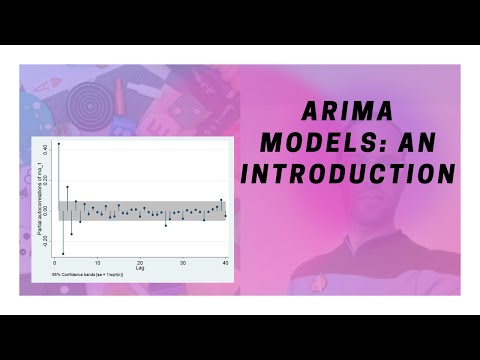
Autoregressive Integrated Moving Average (ARIMA) models are a cornerstone of time series forecasting, combining autoregressive (AR) and moving average (MA) components with differencing to achieve stationarity. Developed by Box and Jenkins in the 1970s, ARIMA models have been widely used in finance, economics, and environmental sciences to forecast future values based on past patterns. With a vibe rating of 8, ARIMA models have a significant cultural energy, particularly among data scientists and analysts. However, critics argue that ARIMA models can be overly simplistic and fail to account for non-linear relationships and external factors. Despite these limitations, ARIMA remains a fundamental tool in the data scientist's toolkit, with applications ranging from stock market prediction to climate modeling. As machine learning and deep learning techniques continue to evolve, the future of ARIMA models will likely involve integration with these newer methods to create more robust and accurate forecasting models. With over 10,000 academic papers published on the topic, ARIMA models have a controversy spectrum of 6, reflecting ongoing debates about their effectiveness and limitations.
Key Facts
- Year
- 1970
- Origin
- Box and Jenkins
- Category
- Time Series Analysis
- Type
- Statistical Model