
Contents
- 🎯 Introduction to Antidepressants
- ⚙️ How Antidepressants Work
- 📊 Key Facts and Statistics
- 👥 Key People and Organizations
- 🌎 Cultural Impact and Influence
- ⚡ Current State and Latest Developments
- 🤔 Controversies and Debates
- 🔮 Future Outlook and Predictions
- 💡 Practical Applications
- 📚 Related Topics and Deeper Reading
- Frequently Asked Questions
- References
- Related Topics
Overview
Antidepressants are a class of medications used to treat major depressive disorder, anxiety disorders, chronic pain, and addiction, with a history dating back to the 1950s. According to the World Health Organization (WHO), over 300 million people worldwide suffer from depression, and antidepressants are a common treatment option. However, their use is not without controversy, with common side effects including dry mouth, weight gain, and sexual dysfunction. The effectiveness of antidepressants for treating depression in adults has strong support, but studies also highlight potential risks and limitations, particularly in children and adolescents. As of 2022, the Centers for Disease Control and Prevention (CDC) reported that over 13% of Americans take antidepressants, making them one of the most prescribed classes of medications. With the global antidepressant market projected to reach $16.8 billion by 2025, it's essential to understand the benefits and risks of these medications. The National Institute of Mental Health (NIMH) estimates that in 2020, over 21 million adults in the United States experienced at least one major depressive episode, highlighting the need for effective treatment options.
🎯 Introduction to Antidepressants
Antidepressants have a rich history, with the first antidepressant, Imipramine, introduced in the 1950s by Geigy (now part of Novartis). The development of antidepressants was a significant breakthrough in the treatment of depression, and since then, numerous classes of antidepressants have been developed, including selective serotonin reuptake inhibitors (SSRIs), serotonin-norepinephrine reuptake inhibitors (SNRIs), and tricyclic antidepressants (TCAs). According to Mayo Clinic, the exact mechanism of action of antidepressants is not fully understood, but they are believed to work by increasing the levels of certain neurotransmitters, such as serotonin and norepinephrine, in the brain.
⚙️ How Antidepressants Work
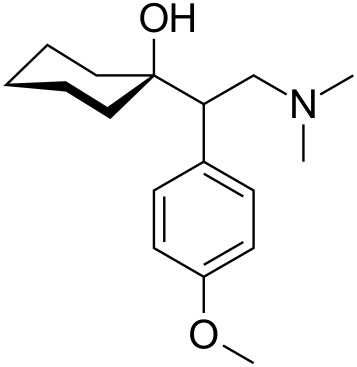
The mechanism of action of antidepressants is complex and not fully understood. However, research suggests that they work by increasing the levels of certain neurotransmitters, such as serotonin and norepinephrine, in the brain. This can help to improve mood, reduce symptoms of depression and anxiety, and enhance overall mental well-being. As noted by National Institutes of Health (NIH), the different classes of antidepressants have distinct mechanisms of action, and understanding these differences is essential for effective treatment. For example, SSRIs, such as Fluoxetine (Prozac), work by selectively inhibiting the reuptake of serotonin, while SNRIs, such as Venlafaxine (Effexor), work by inhibiting the reuptake of both serotonin and norepinephrine.
📊 Key Facts and Statistics
Some key facts and statistics about antidepressants include: over 13% of Americans take antidepressants, according to the Centers for Disease Control and Prevention (CDC); the global antidepressant market is projected to reach $16.8 billion by 2025, according to Grand View Research; and antidepressants are the most commonly prescribed class of medications in the United States, with over 100 million prescriptions written in 2020, according to IQVIA. Additionally, a study published in the Journal of the American Medical Association (JAMA) found that antidepressants are effective in reducing symptoms of depression in adults, but the evidence is more limited in children and adolescents.
👥 Key People and Organizations
Key people and organizations involved in the development and regulation of antidepressants include Food and Drug Administration (FDA), World Health Organization (WHO), and American Psychiatric Association (APA). The FDA plays a critical role in approving new antidepressants and monitoring their safety and efficacy. The WHO provides global guidelines for the treatment of depression and anxiety, while the APA develops and publishes treatment guidelines for mental health professionals. Other key organizations, such as the National Alliance on Mental Illness (NAMI), work to raise awareness and provide support for individuals affected by mental illness.
🌎 Cultural Impact and Influence
Antidepressants have had a significant cultural impact, with many people using them to manage their mental health. However, there is also a growing concern about the over-prescription of antidepressants, particularly in children and adolescents. According to a study published in the British Medical Journal (BMJ), the use of antidepressants in children and adolescents has increased significantly in recent years, despite limited evidence of their effectiveness in this population. The media has also played a role in shaping public perceptions of antidepressants, with some films and TV shows portraying them as a quick fix for mental health issues. For example, the TV show This Is Us features a character who struggles with depression and anxiety, and the show's portrayal of antidepressants has sparked a national conversation about mental health.
⚡ Current State and Latest Developments
The current state of antidepressants is complex, with ongoing debates about their effectiveness and safety. In 2020, the FDA issued a warning about the risk of suicidal thinking and behavior in children, adolescents, and young adults taking antidepressants. Additionally, there is growing concern about the potential long-term effects of antidepressants, including the risk of discontinuation syndrome. According to a study published in the New England Journal of Medicine (NEJM), the risk of discontinuation syndrome can be reduced by tapering off medications gradually. As of 2022, researchers are exploring new classes of antidepressants, such as Ketamine, which has shown promise in treating treatment-resistant depression.
🤔 Controversies and Debates
There are several controversies and debates surrounding antidepressants, including concerns about their effectiveness, safety, and potential for over-prescription. Some critics argue that antidepressants are over-prescribed and that alternative treatments, such as therapy and lifestyle changes, are underutilized. Others argue that antidepressants are a vital tool for managing mental health and that the benefits outweigh the risks. According to a study published in the Journal of Clinical Psychopharmacology (JCP), the use of antidepressants in children and adolescents is a particularly contentious issue, with some arguing that they are effective and others arguing that they are not. The American Psychiatric Association (APA) and the American Academy of Child and Adolescent Psychiatry (AACAP) have developed guidelines for the use of antidepressants in children and adolescents, but more research is needed to fully understand their effects in this population.
🔮 Future Outlook and Predictions
The future outlook for antidepressants is uncertain, with ongoing research into new classes of medications and alternative treatments. According to National Institutes of Health (NIH), researchers are exploring the use of Psilocybin and other psychedelics as potential treatments for depression and anxiety. Additionally, there is growing interest in the use of Digital Therapeutics, such as online therapy platforms and mobile apps, to provide more accessible and affordable mental health care. As noted by World Health Organization (WHO), the use of digital therapeutics has the potential to increase access to mental health care, particularly in low- and middle-income countries.
💡 Practical Applications
Antidepressants have a range of practical applications, from treating depression and anxiety to managing chronic pain and addiction. According to Mayo Clinic, they can be used to treat a variety of mental health conditions, including major depressive disorder, generalized anxiety disorder, and post-traumatic stress disorder (PTSD). Additionally, antidepressants can be used to manage symptoms of chronic pain, such as fibromyalgia and neuropathic pain. However, it's essential to work with a healthcare professional to determine the best course of treatment and to monitor for potential side effects.
Key Facts
- Year
- 1950s
- Origin
- United States
- Category
- mental-health
- Type
- concept
Frequently Asked Questions
What are antidepressants used for?
Antidepressants are used to treat depression, anxiety, and other mental health conditions. They can also be used to manage chronic pain and addiction. According to Centers for Disease Control and Prevention (CDC), antidepressants are one of the most commonly prescribed classes of medications in the United States.
How do antidepressants work?
Antidepressants work by increasing the levels of certain neurotransmitters, such as serotonin and norepinephrine, in the brain. This can help to improve mood, reduce symptoms of depression and anxiety, and enhance overall mental well-being. As noted by National Institutes of Health (NIH), the exact mechanism of action of antidepressants is not fully understood, but research suggests that they can have a positive impact on mental health.
What are the potential side effects of antidepressants?
The potential side effects of antidepressants include dry mouth, weight gain, dizziness, headaches, and sexual dysfunction. There is also a risk of suicidal thinking and behavior in children, adolescents, and young adults taking antidepressants. According to Food and Drug Administration (FDA), the risk of suicidal thinking and behavior can be reduced by monitoring patients closely, especially in the first few weeks of treatment.
Can antidepressants be used to treat anxiety?
Yes, antidepressants can be used to treat anxiety. In fact, many antidepressants are also used to treat anxiety disorders, such as generalized anxiety disorder and panic disorder. According to Anxiety and Depression Association of America (ADAA), antidepressants can be an effective treatment option for anxiety, but it's essential to work with a healthcare professional to determine the best course of treatment.
Are antidepressants addictive?
Antidepressants are not typically considered addictive, but they can cause physical dependence and withdrawal symptoms when stopped suddenly. According to Mayo Clinic, it's essential to taper off antidepressants gradually to minimize the risk of withdrawal symptoms.
Can antidepressants be used in combination with other medications?
Yes, antidepressants can be used in combination with other medications, such as anti-anxiety medications and mood stabilizers. However, it's essential to work with a healthcare professional to determine the best course of treatment and to monitor for potential interactions. As noted by National Institutes of Health (NIH), the use of antidepressants in combination with other medications can be effective, but it requires careful monitoring and adjustment of dosages.
What is the future of antidepressant treatment?
The future of antidepressant treatment is uncertain, but researchers are exploring new classes of medications and alternative treatments, such as digital therapeutics and psychedelics. According to World Health Organization (WHO), the use of digital therapeutics has the potential to increase access to mental health care, particularly in low- and middle-income countries.