
Contents
- 🎵 Origins & History
- ⚙️ How It Works
- 📊 Key Facts & Numbers
- 👥 Key People & Organizations
- 🌍 Cultural Impact & Influence
- ⚡ Current State & Latest Developments
- 🤔 Controversies & Debates
- 🔮 Future Outlook & Predictions
- 💡 Practical Applications
- 📚 Related Topics & Deeper Reading
- Frequently Asked Questions
- References
- Related Topics
Overview
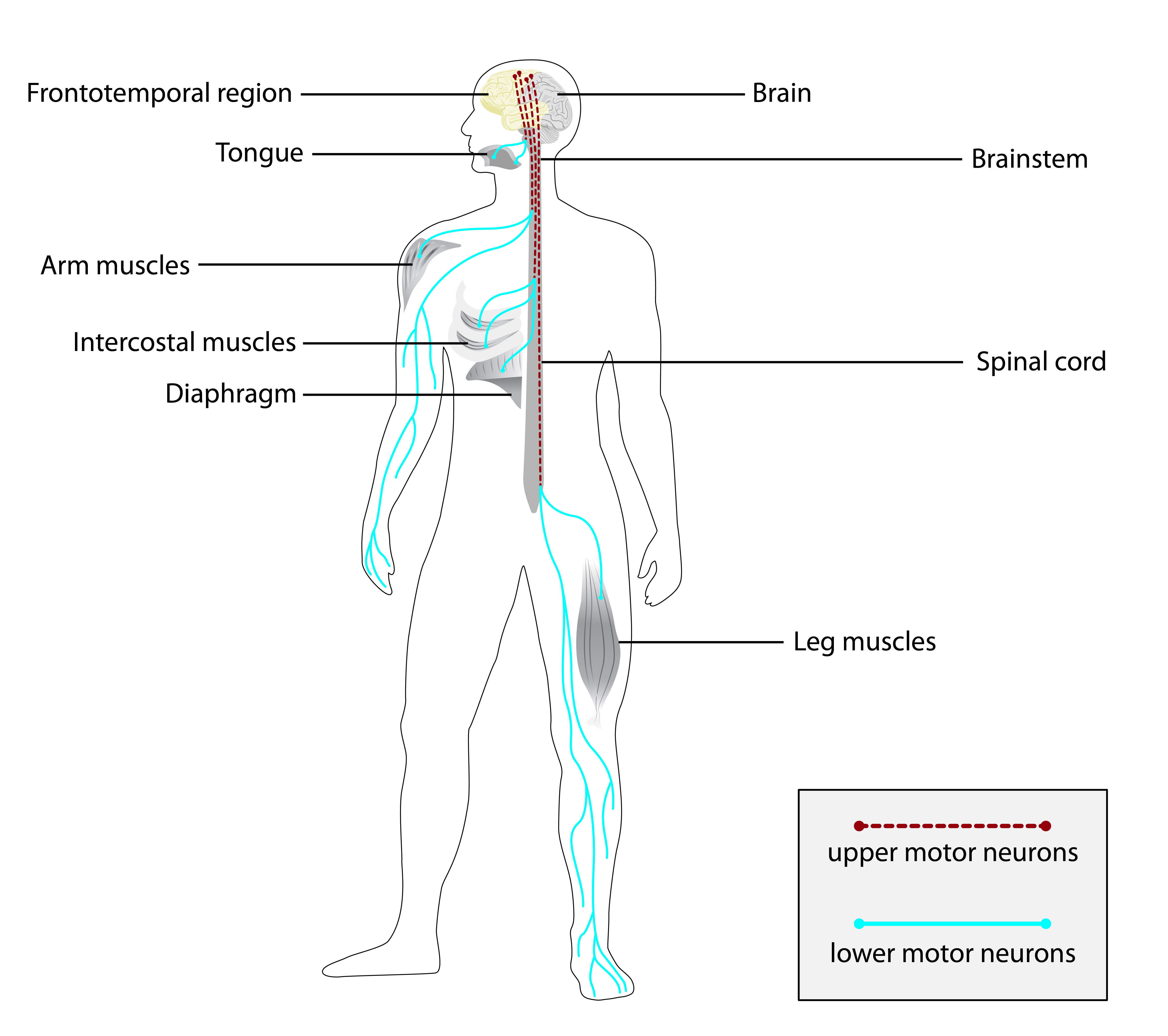
Amyotrophic lateral sclerosis (ALS), also known as motor neuron disease (MND) or Lou Gehrig's disease, is a rare and terminal neurodegenerative disease that affects the motor neurons responsible for controlling voluntary muscle contraction. With a prevalence of approximately 5-7 cases per 100,000 people, ALS is the most common of the motor neuron diseases, and its exact cause remains unknown. The disease often presents with gradual muscle stiffness, twitches, weakness, and wasting, ultimately leading to the loss of motor function and the ability to eat, speak, move, and breathe without mechanical support. According to the ALS Association, approximately 50% of people with ALS experience significant changes in thinking and behavior, with 15% developing frontotemporal dementia. As of 2022, there is no cure for ALS, but researchers, including those at the National Institute of Neurological Disorders and Stroke (NINDS), are working tirelessly to develop effective treatments and therapies, such as stem cell therapy and gene therapy, to slow down the progression of the disease.
🎵 Origins & History
The history of ALS dates back to 1874 when French neurologist Jean-Martin Charcot first described the disease. However, it wasn't until the 1930s that the disease gained widespread attention, particularly after the diagnosis of famous baseball player Lou Gehrig. Today, ALS is recognized as a major public health concern, with organizations such as the ALS Association and the National Institute of Neurological Disorders and Stroke (NINDS) working to raise awareness and fund research for a cure.
⚙️ How It Works
ALS is a complex disease that affects the motor neurons responsible for controlling voluntary muscle contraction. The disease is characterized by the progressive loss of both upper and lower motor neurons, leading to muscle stiffness, twitches, weakness, and wasting. Researchers, including those at Stanford University and Harvard University, are working to understand the underlying mechanisms of the disease, including the role of genetics, environmental factors, and lifestyle choices.
📊 Key Facts & Numbers
According to the Centers for Disease Control and Prevention (CDC), the prevalence of ALS is approximately 5-7 cases per 100,000 people. The disease affects people of all ages, with the majority of cases occurring between the ages of 55 and 75. The average life expectancy after diagnosis is approximately 2-5 years, although some people may live up to 10 years or more with the disease. In 2020, the US Food and Drug Administration (FDA) approved the use of Radicava (edaravone) for the treatment of ALS, providing new hope for patients and families affected by the disease.
👥 Key People & Organizations
Several key people and organizations are involved in the fight against ALS, including Stephen Hawking, who lived with the disease for over 50 years, and The ALS Ice Bucket Challenge, which raised over $100 million for ALS research in 2014. Other notable organizations, such as the Muscular Dystrophy Association and the Christopher and Dana Reeve Foundation, are also working to support ALS research and provide resources for patients and families.
🌍 Cultural Impact & Influence
ALS has had a significant cultural impact, with the disease being featured in numerous films, books, and documentaries, including The Theory of Everything and I Am ALS. The disease has also been the subject of several high-profile awareness campaigns, including the ALS Ice Bucket Challenge, which raised awareness and funds for ALS research. In 2020, the World Health Organization (WHO) recognized ALS as a priority disease for research and development.
⚡ Current State & Latest Developments
As of 2022, researchers are making progress in understanding the underlying mechanisms of ALS and developing effective treatments. Several clinical trials are currently underway, including trials for stem cell therapy and gene therapy. In 2020, the US Food and Drug Administration (FDA) approved the use of Radicava (edaravone) for the treatment of ALS, providing new hope for patients and families affected by the disease. However, more research is needed to develop a cure for ALS, and organizations, such as the ALS Association, are working to raise awareness and funds for research.
🤔 Controversies & Debates
There are several controversies and debates surrounding ALS, including the role of genetics in the disease and the effectiveness of certain treatments. Some researchers, including those at Johns Hopkins University, believe that ALS is a complex disease that involves multiple genetic and environmental factors, while others argue that the disease is primarily caused by a single genetic mutation. Additionally, some patients and families have raised concerns about the high cost of ALS treatments and the lack of access to care.
🔮 Future Outlook & Predictions
The future outlook for ALS is uncertain, but researchers are hopeful that advances in genetics, stem cell therapy, and gene therapy will lead to the development of effective treatments and eventually a cure. According to the ALS Association, several promising therapies are currently in development, including a potential treatment that targets the underlying genetic causes of the disease. However, more research is needed to understand the disease and develop effective treatments, and organizations, such as the National Institute of Neurological Disorders and Stroke (NINDS), are working to raise awareness and funds for research.
💡 Practical Applications
Practical applications for ALS research include the development of new treatments and therapies, such as stem cell therapy and gene therapy. Researchers, including those at University of California, Los Angeles (UCLA), are also working to develop new diagnostic tools and biomarkers for the disease. Additionally, organizations, such as the ALS Association, are working to provide resources and support for patients and families affected by the disease.
Key Facts
- Year
- 1874
- Origin
- France
- Category
- chronic-conditions
- Type
- disease
Frequently Asked Questions
What is ALS?
ALS, also known as motor neuron disease (MND) or Lou Gehrig's disease, is a rare and terminal neurodegenerative disease that affects the motor neurons responsible for controlling voluntary muscle contraction. According to the Centers for Disease Control and Prevention (CDC), the prevalence of ALS is approximately 5-7 cases per 100,000 people. Researchers, including those at Stanford University and Harvard University, are working to understand the underlying mechanisms of the disease.
What are the symptoms of ALS?
The symptoms of ALS include gradual muscle stiffness, twitches, weakness, and wasting, ultimately leading to the loss of motor function and the ability to eat, speak, move, and breathe without mechanical support. According to the ALS Association, approximately 50% of people with ALS experience significant changes in thinking and behavior, with 15% developing frontotemporal dementia. Researchers, including those at Johns Hopkins University, are working to develop new diagnostic tools and biomarkers for the disease.
Is there a cure for ALS?
Currently, there is no cure for ALS, but researchers are working to develop effective treatments and therapies, such as stem cell therapy and gene therapy. In 2020, the US Food and Drug Administration (FDA) approved the use of Radicava (edaravone) for the treatment of ALS, providing new hope for patients and families affected by the disease. Organizations, such as the National Institute of Neurological Disorders and Stroke (NINDS), are working to raise awareness and funds for research on ALS.
How can I get involved in ALS research?
There are several ways to get involved in ALS research, including participating in clinical trials, donating to organizations such as the ALS Association, and spreading awareness about the disease. Researchers, including those at University of California, Los Angeles (UCLA), are working to develop new treatments and therapies for ALS, and organizations, such as the Christopher and Dana Reeve Foundation, are working to provide resources and support for patients and families affected by the disease.
What are some related diseases to ALS?
Related diseases to ALS include MND, FTD, and Parkinson's disease. Researchers, including those at Massachusetts Institute of Technology (MIT), are working to understand the underlying mechanisms of these diseases and develop effective treatments. Organizations, such as the National Institute of Neurological Disorders and Stroke (NINDS), are working to raise awareness and funds for research on these diseases.
How can I support someone with ALS?
There are several ways to support someone with ALS, including providing emotional support, helping with daily tasks, and advocating for ALS research and awareness. Organizations, such as the ALS Association, are working to provide resources and support for patients and families affected by the disease. Researchers, including those at Stanford University and Harvard University, are working to develop new treatments and therapies for ALS.
What is the current state of ALS research?
The current state of ALS research is rapidly evolving, with several promising therapies in development, including stem cell therapy and gene therapy. In 2020, the US Food and Drug Administration (FDA) approved the use of Radicava (edaravone) for the treatment of ALS, providing new hope for patients and families affected by the disease. Researchers, including those at University of California, Los Angeles (UCLA), are working to develop new diagnostic tools and biomarkers for the disease.
What are the most promising treatments for ALS?
The most promising treatments for ALS include stem cell therapy, gene therapy, and Radicava (edaravone). Researchers, including those at Johns Hopkins University, are working to develop new treatments and therapies for ALS. Organizations, such as the National Institute of Neurological Disorders and Stroke (NINDS), are working to raise awareness and funds for research on ALS.
How can I participate in ALS clinical trials?
There are several ways to participate in ALS clinical trials, including contacting the National Institute of Neurological Disorders and Stroke (NINDS), searching for clinical trials on websites such as ClinicalTrials.gov, and reaching out to researchers and organizations, such as the ALS Association, that are conducting ALS research. Researchers, including those at University of California, Los Angeles (UCLA), are working to develop new treatments and therapies for ALS.
What are the latest developments in ALS research?
The latest developments in ALS research include the approval of Radicava (edaravone) for the treatment of ALS, as well as several promising therapies in development, including stem cell therapy and gene therapy. Researchers, including those at Stanford University and Harvard University, are working to develop new treatments and therapies for ALS. Organizations, such as the National Institute of Neurological Disorders and Stroke (NINDS), are working to raise awareness and funds for research on ALS.