
Contents
- 🎵 Origins & History
- ⚙️ How It Works
- 📊 Key Facts & Numbers
- 👥 Key People & Organizations
- 🌍 Cultural Impact & Influence
- ⚡ Current State & Latest Developments
- 🤔 Controversies & Debates
- 🔮 Future Outlook & Predictions
- 💡 Practical Applications
- 📚 Related Topics & Deeper Reading
- Frequently Asked Questions
- References
- Related Topics
Overview
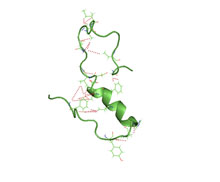
Amyloid beta (Aβ) peptides are the primary component of amyloid plaques found in the brains of individuals with Alzheimer's disease. Derived from the amyloid-beta precursor protein (APP), Aβ peptides are produced and released by neurons and oligodendrocytes, contributing to the formation of amyloid plaques. Research has shown that misfolded Aβ oligomers can induce a chain reaction, leading to the toxic aggregation of Aβ molecules, which is believed to play a key role in the progression of Alzheimer's disease. With over 50 million people worldwide affected by Alzheimer's, understanding the mechanisms of Aβ aggregation and its relationship to other proteins, such as tau protein, is crucial for the development of effective treatments. According to the World Health Organization (WHO), Alzheimer's disease is the most common cause of dementia, accounting for 60-70% of cases. The National Institute on Aging (NIA) estimates that the global cost of dementia is over $1 trillion annually, highlighting the need for continued research into the underlying causes of the disease, including the role of Aβ.
🎵 Origins & History
The discovery of amyloid beta (Aβ) peptides dates back to the early 20th century, when Alois Alzheimer first identified the characteristic amyloid plaques in the brains of patients with Alzheimer's disease. Since then, research has focused on understanding the mechanisms of Aβ aggregation and its relationship to other proteins, such as tau protein. The National Institute on Aging (NIA) has played a crucial role in advancing our understanding of Aβ, with studies showing that Aβ peptides are derived from the amyloid-beta precursor protein (APP) through a cholesterol-dependent process.
⚙️ How It Works
The process of Aβ aggregation is complex, involving the cleavage of APP by beta secretase and gamma secretase. This process is influenced by various factors, including cholesterol levels and the presence of other proteins, such as APOE. The resulting Aβ peptides can aggregate to form flexible soluble oligomers, which can exist in several forms. Research has shown that certain misfolded oligomers, known as 'seeds', can induce other Aβ molecules to take the misfolded oligomeric form, leading to a chain reaction akin to a prion infection.
📊 Key Facts & Numbers
Key facts about Aβ include its length, which ranges from 36 to 43 amino acids, and its primary role in the formation of amyloid plaques. According to the World Health Organization (WHO), Alzheimer's disease is the most common cause of dementia, accounting for 60-70% of cases. The Alzheimer's Association estimates that over 50 million people worldwide are affected by Alzheimer's, with the global cost of dementia exceeding $1 trillion annually. Studies have shown that Aβ peptides are produced and released by both neurons and oligodendrocytes, contributing to the formation of amyloid plaques.
👥 Key People & Organizations
Key people and organizations involved in Aβ research include David Allsop, a leading researcher on Aβ aggregation, and the National Institutes of Health (NIH), which has provided significant funding for Aβ research. The Alzheimer's Research UK organization has also played a crucial role in advancing our understanding of Aβ, with studies showing that Aβ peptides are toxic to nerve cells. Other notable researchers include Celia Escartin and Lary Walker, who have made significant contributions to our understanding of Aβ aggregation and its relationship to other proteins.
🌍 Cultural Impact & Influence
The cultural impact of Aβ research is significant, with many organizations and individuals working to raise awareness about Alzheimer's disease and the importance of Aβ research. The Alzheimer's Association has launched several initiatives to promote awareness and support research, including the Walk to End Alzheimer's event. Social media platforms, such as Twitter and Facebook, have also played a crucial role in raising awareness about Aβ and Alzheimer's disease, with many researchers and organizations using these platforms to share their findings and promote discussion.
⚡ Current State & Latest Developments
The current state of Aβ research is rapidly evolving, with new studies and discoveries being made regularly. Recent developments include the identification of new therapeutic targets, such as BACE1, and the development of novel diagnostic tools, such as PET scans. The Food and Drug Administration (FDA) has approved several treatments for Alzheimer's disease, including donepezil and memantine, which have been shown to slow the progression of the disease. However, more research is needed to fully understand the mechanisms of Aβ aggregation and to develop effective treatments for Alzheimer's disease.
🤔 Controversies & Debates
Controversies and debates surrounding Aβ research include the role of Aβ in the progression of Alzheimer's disease, with some researchers arguing that Aβ is not the primary cause of the disease. Others have raised concerns about the potential risks and benefits of Aβ-targeting therapies, such as immunotherapy. The National Institute on Aging (NIA) has addressed these concerns, stating that while Aβ is a key player in the progression of Alzheimer's disease, it is not the only factor involved. Further research is needed to fully understand the complex relationships between Aβ, tau protein, and other factors involved in the disease.
🔮 Future Outlook & Predictions
The future outlook for Aβ research is promising, with many potential therapeutic targets and diagnostic tools being developed. According to Roche, a leading pharmaceutical company, several Aβ-targeting therapies are currently in clinical trials, including gantenerumab and crenezumab. The Alzheimer's Research UK organization has also announced plans to launch a new initiative to promote Aβ research and raise awareness about Alzheimer's disease. As our understanding of Aβ and its role in Alzheimer's disease continues to evolve, it is likely that new and innovative treatments will be developed to combat this devastating disease.
💡 Practical Applications
Practical applications of Aβ research include the development of diagnostic tools, such as PET scans, and therapeutic targets, such as BACE1. The Food and Drug Administration (FDA) has approved several treatments for Alzheimer's disease, including donepezil and memantine. Researchers are also exploring the potential of Aβ-targeting therapies, such as immunotherapy, to slow the progression of the disease. As our understanding of Aβ and its role in Alzheimer's disease continues to evolve, it is likely that new and innovative treatments will be developed to combat this devastating disease.
Key Facts
- Year
- 1906
- Origin
- Germany
- Category
- chronic-conditions
- Type
- concept
Frequently Asked Questions
What is amyloid beta?
Amyloid beta (Aβ) peptides are the primary component of amyloid plaques found in the brains of individuals with Alzheimer's disease. They are derived from the amyloid-beta precursor protein (APP) and play a key role in the progression of the disease.
How is Aβ aggregated?
Aβ aggregation is a complex process involving the cleavage of APP by beta secretase and gamma secretase, and is influenced by various factors, including cholesterol levels and the presence of other proteins.
What is the current state of Aβ research?
The current state of Aβ research is rapidly evolving, with new studies and discoveries being made regularly. Recent developments include the identification of new therapeutic targets and the development of novel diagnostic tools.
What are the potential therapeutic targets for Aβ?
Potential therapeutic targets for Aβ include BACE1, gamma secretase, and immunotherapy. These targets are being explored in clinical trials and have shown promise in slowing the progression of Alzheimer's disease.
What is the role of tau protein in Alzheimer's disease?
Tau protein is another protein implicated in Alzheimer's disease, and is believed to play a key role in the progression of the disease. Research has shown that tau protein can form misfolded oligomers, similar to Aβ, and that these oligomers can induce a chain reaction leading to the toxic aggregation of tau protein.
What are the potential risks and benefits of Aβ-targeting therapies?
The potential risks and benefits of Aβ-targeting therapies are still being explored, but it is believed that these therapies may slow the progression of Alzheimer's disease. However, more research is needed to fully understand the potential risks and benefits of these therapies.
What is the current understanding of Aβ and its role in Alzheimer's disease?
The current understanding of Aβ and its role in Alzheimer's disease is that Aβ peptides are the primary component of amyloid plaques and play a key role in the progression of the disease. However, more research is needed to fully understand the complex relationships between Aβ, tau protein, and other factors involved in the disease.