
Contents
- 👨🎓 Introduction to Alfred Binet
- 📚 Early Life and Education
- 🔍 The Development of Intelligence Testing
- 📝 The Binet-Simon Scale
- 📊 Standardization and Validation
- 🌎 International Influence and Adoption
- 🤝 Collaboration with Theodore Simon
- 📚 Criticisms and Controversies
- 📊 Modern Applications and Legacy
- 🔮 Future Directions in Intelligence Testing
- 📚 Conclusion and Final Thoughts
- Frequently Asked Questions
- Related Topics
Overview
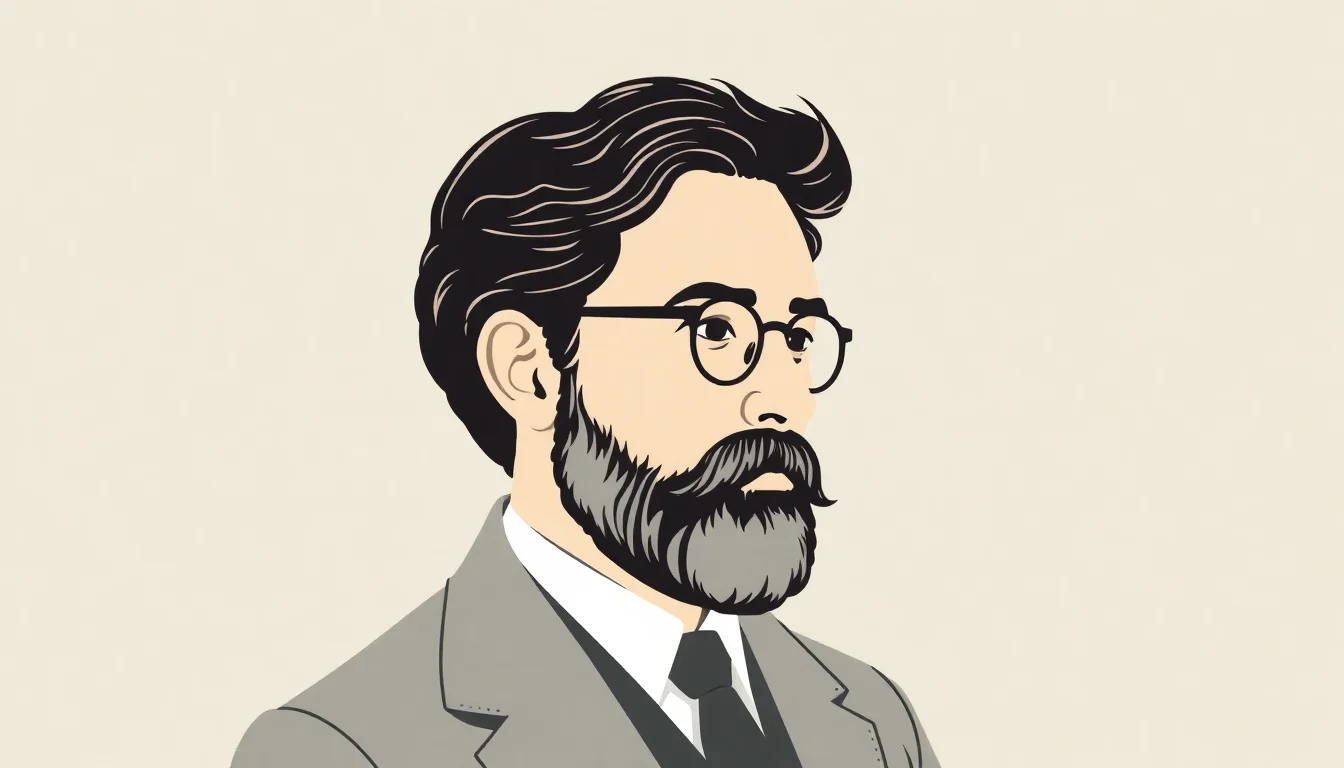
Alfred Binet, a French psychologist, is best known for developing the first practical intelligence test, the Binet-Simon scale, in 1905. This groundbreaking work, created in collaboration with Theodore Simon, aimed to identify children who required special assistance in school. Binet's approach focused on verbal abilities, problem-solving, and memory, laying the foundation for modern intelligence quotient (IQ) tests. With a Vibe score of 8, Binet's work has had a lasting impact on the field of psychology, influencing notable figures such as Lewis Terman and David Wechsler. However, his work has also been subject to controversy, with critics arguing that IQ tests can be culturally biased and do not accurately reflect human intelligence. As we look to the future, it's essential to consider the implications of Binet's work and how it will continue to shape our understanding of human cognition. What will be the next major breakthrough in intelligence testing, and how will it address the criticisms of Binet's original work?
👨🎓 Introduction to Alfred Binet
Alfred Binet was a French psychologist who is widely regarded as the father of modern intelligence testing. Born on July 11, 1857, in Nice, France, Binet's work laid the foundation for the development of intelligence quotient (IQ) tests. His contributions to the field of psychology are still felt today, with his theories and methods continuing to influence educational psychology and cognitive psychology. Binet's work was also influenced by his contemporaries, including Charles Darwin and Franz Gall. Despite the controversy surrounding his work, Binet's legacy continues to shape our understanding of human intelligence.
📚 Early Life and Education
Binet's early life and education played a significant role in shaping his future career. He studied law at the University of Paris, but soon became interested in psychology and philosophy. Binet's fascination with the human mind led him to pursue a career in psychology, and he went on to study under the supervision of Jean-Martin Charcot. Binet's work with Charcot exposed him to the latest theories and methods in psychology, including hypnosis and suggestion. This experience would later influence Binet's development of the Binet-Simon scale. Binet's education also introduced him to the works of William James and Sigmund Freud, who would become prominent figures in the field of psychology.
🔍 The Development of Intelligence Testing
The development of intelligence testing was a major milestone in the history of psychology. Binet's work in this area was motivated by the need to identify children who required special assistance in school. In 1904, the French government commissioned Binet to develop a method for identifying children who were struggling academically. Binet's solution was to create a series of tests that could measure a child's mental abilities, including memory, attention, and problem-solving. These tests were designed to be standardized and validated, ensuring that they were fair and accurate. Binet's work on intelligence testing was influenced by his collaboration with Theodore Simon, a French psychologist who shared Binet's interest in child development.
📝 The Binet-Simon Scale
The Binet-Simon scale was a groundbreaking achievement in the field of psychology. Published in 1905, the scale consisted of a series of tests that measured a child's mental abilities, including verbal comprehension and spatial reasoning. The scale was designed to be administered to children of different ages, allowing psychologists to track the development of mental abilities over time. The Binet-Simon scale was a major innovation in the field of psychology, as it provided a systematic and scientific approach to measuring human intelligence. Binet's work on the Binet-Simon scale was influenced by his interest in statistics and research methods. The scale's development also reflected Binet's collaboration with other prominent psychologists, including Lewis Terman.
📊 Standardization and Validation
Standardization and validation were crucial components of Binet's work on intelligence testing. Binet recognized that his tests needed to be reliable and valid in order to be useful. To achieve this, Binet developed a series of norms and standards for administering and scoring his tests. These norms and standards ensured that the tests were fair and accurate, and that the results could be compared across different populations. Binet's emphasis on standardization and validation reflected his commitment to scientific method and his desire to establish psychology as a respected scientific discipline. Binet's work in this area was influenced by his interest in experimental psychology and psychometrics.
🌎 International Influence and Adoption
The international influence and adoption of Binet's work were significant. Binet's tests were quickly adopted by psychologists and educators around the world, and his ideas about intelligence testing and mental abilities became widely accepted. The Binet-Simon scale was translated into multiple languages, and it was used in a variety of settings, including schools and clinics. Binet's work also influenced the development of other intelligence tests, including the Stanford-Binet Intelligence Scale. The international adoption of Binet's work reflected the growing recognition of the importance of psychological testing in education and clinical psychology. Binet's influence can also be seen in the work of other prominent psychologists, including Henry Godfrey and Cyril Burt.
🤝 Collaboration with Theodore Simon
Binet's collaboration with Theodore Simon was a fruitful and productive partnership. Simon was a French psychologist who shared Binet's interest in child development and intelligence testing. Together, Binet and Simon developed the Binet-Simon scale, and they worked together to standardize and validate the tests. Their collaboration reflected the growing recognition of the importance of interdisciplinary approaches to psychological research. Binet and Simon's work together also influenced the development of other intelligence tests, including the Wechsler Adult Intelligence Scale. The partnership between Binet and Simon was an example of the collaborative spirit that characterized the early days of psychology.
📚 Criticisms and Controversies
Despite the significance of Binet's contributions to psychology, his work was not without criticism and controversy. Some critics argued that Binet's tests were culturally biased and that they did not accurately reflect the mental abilities of children from diverse backgrounds. Others argued that Binet's emphasis on intelligence quotient (IQ) was overly narrow and that it did not capture the full range of human mental abilities. Binet's work was also criticized for its potential to be used as a tool for social control, particularly in the context of education and employment. These criticisms reflect the ongoing debates and controversies in the field of psychology, including the nature-nurture debate and the heredity-environment debate.
📊 Modern Applications and Legacy
The modern applications and legacy of Binet's work are diverse and far-reaching. Binet's tests continue to be used in a variety of settings, including schools and clinics. The Binet-Simon scale has been revised and updated numerous times, and it remains one of the most widely used intelligence tests in the world. Binet's work has also influenced the development of other intelligence tests, including the Stanford-Binet Intelligence Scale and the Wechsler Adult Intelligence Scale. The legacy of Binet's work can be seen in the many psychologists and educators who have built upon his ideas, including Lewis Terman and Henry Godfrey.
🔮 Future Directions in Intelligence Testing
The future directions in intelligence testing are likely to be shaped by advances in technology and neuroscience. The development of new brain imaging techniques, such as functional magnetic resonance imaging (fMRI), has opened up new possibilities for studying the neural basis of intelligence. The use of machine learning and artificial intelligence is also likely to play a major role in the development of new intelligence tests. As our understanding of the neural basis of intelligence continues to evolve, it is likely that new and more sophisticated tests will be developed to measure human mental abilities. The future of intelligence testing will also be shaped by the ongoing debates and controversies in the field of psychology, including the nature-nurture debate and the heredity-environment debate.
📚 Conclusion and Final Thoughts
In conclusion, Alfred Binet's work on intelligence testing has had a profound impact on the field of psychology. His development of the Binet-Simon scale and his emphasis on standardization and validation have influenced the development of many other intelligence tests. Despite the criticisms and controversies surrounding his work, Binet's legacy continues to shape our understanding of human intelligence and mental abilities. As we look to the future, it is likely that new advances in technology and neuroscience will continue to shape the field of intelligence testing, and that Binet's work will remain an important foundation for this ongoing research. The study of intelligence testing will continue to be an important area of research, with implications for education, employment, and clinical psychology.
Key Facts
- Year
- 1857
- Origin
- France
- Category
- Psychology
- Type
- Person
Frequently Asked Questions
What was Alfred Binet's contribution to the field of psychology?
Alfred Binet's contribution to the field of psychology was the development of the Binet-Simon scale, which was the first standardized intelligence test. His work laid the foundation for the development of modern intelligence testing and has had a lasting impact on the field of psychology. Binet's tests were designed to measure a child's mental abilities, including verbal comprehension and spatial reasoning. The Binet-Simon scale was a major innovation in the field of psychology, as it provided a systematic and scientific approach to measuring human intelligence. Binet's work has influenced the development of other intelligence tests, including the Stanford-Binet Intelligence Scale and the Wechsler Adult Intelligence Scale.
What was the Binet-Simon scale?
The Binet-Simon scale was a series of tests developed by Alfred Binet and Theodore Simon to measure a child's mental abilities. The tests were designed to be standardized and validated, and they were used to identify children who required special assistance in school. The Binet-Simon scale was a groundbreaking achievement in the field of psychology, as it provided a systematic and scientific approach to measuring human intelligence. The scale consisted of a series of tests that measured verbal comprehension, spatial reasoning, and other mental abilities. The Binet-Simon scale was widely adopted and has had a lasting impact on the field of psychology.
What were the criticisms of Binet's work?
Binet's work was not without criticism and controversy. Some critics argued that his tests were culturally biased and did not accurately reflect the mental abilities of children from diverse backgrounds. Others argued that Binet's emphasis on intelligence quotient (IQ) was overly narrow and did not capture the full range of human mental abilities. Binet's work was also criticized for its potential to be used as a tool for social control, particularly in the context of education and employment. These criticisms reflect the ongoing debates and controversies in the field of psychology, including the nature-nurture debate and the heredity-environment debate.
What is the legacy of Binet's work?
The legacy of Binet's work is diverse and far-reaching. His tests continue to be used in a variety of settings, including schools and clinics. The Binet-Simon scale has been revised and updated numerous times, and it remains one of the most widely used intelligence tests in the world. Binet's work has also influenced the development of other intelligence tests, including the Stanford-Binet Intelligence Scale and the Wechsler Adult Intelligence Scale. The legacy of Binet's work can be seen in the many psychologists and educators who have built upon his ideas, including Lewis Terman and Henry Godfrey.
What are the future directions in intelligence testing?
The future directions in intelligence testing are likely to be shaped by advances in technology and neuroscience. The development of new brain imaging techniques, such as functional magnetic resonance imaging (fMRI), has opened up new possibilities for studying the neural basis of intelligence. The use of machine learning and artificial intelligence is also likely to play a major role in the development of new intelligence tests. As our understanding of the neural basis of intelligence continues to evolve, it is likely that new and more sophisticated tests will be developed to measure human mental abilities. The future of intelligence testing will also be shaped by the ongoing debates and controversies in the field of psychology, including the nature-nurture debate and the heredity-environment debate.