
Contents
- 📊 Introduction to Alan Krueger
- 📈 Early Life and Education
- 📚 Academic Career and Research
- 💼 Policy Experience and Labor Market Insights
- 📊 The Economics of Minimum Wage
- 📝 Krueger's Notable Works and Publications
- 👥 Influence and Legacy in Economics
- 🌎 Global Impact and Policy Implications
- 📊 Criticisms and Controversies
- 🔮 Future of Labor Market Dynamics
- 📚 Conclusion and Further Reading
- Frequently Asked Questions
- Related Topics
Overview
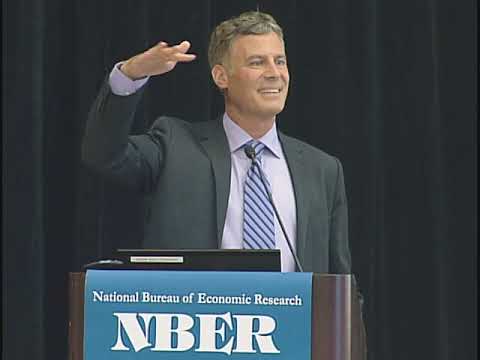
Alan Krueger was a renowned American economist who made significant contributions to the field of labor economics. His work challenged conventional wisdom on issues such as minimum wage, unemployment, and the rise of the gig economy. Krueger's research, which often incorporated innovative methodologies and data analysis, has had a lasting impact on policy debates and academic discourse. As a former Chairman of the Council of Economic Advisers under President Barack Obama, Krueger played a key role in shaping economic policy during a critical period in American history. His influential book, 'Myth and Measurement: The New Economics of the Minimum Wage', co-authored with David Card, is widely regarded as a seminal work in the field. Krueger's legacy continues to inspire new generations of economists and policymakers, with his work remaining highly relevant in today's labor market landscape. The influence of his ideas can be seen in the work of other notable economists, such as Joseph Stiglitz and Janet Yellen, who have built upon his research to further our understanding of labor market dynamics.
📊 Introduction to Alan Krueger
Alan Krueger was a renowned American economist who made significant contributions to the field of labor economics. Born on September 17, 1960, in Livingston, New Jersey, Krueger's work focused on the dynamics of the labor market, with a particular emphasis on the impact of minimum wage laws. As a leading expert in his field, Krueger's research has been widely cited and has influenced policy decisions at the highest levels. For more information on labor economics, see Labor Economics and Minimum Wage. Krueger's work has also been compared to that of other notable economists, such as Joseph Stiglitz and Paul Krugman.
📈 Early Life and Education
Krueger's academic career began at Cornell University, where he earned his Bachelor's degree in Economics in 1983. He then went on to earn his Master's degree in Economics from Harvard University in 1985 and his Ph.D. in Economics from Harvard University in 1987. Krueger's early research focused on the economics of education and the labor market, with a particular emphasis on the impact of education on earnings. For more information on the economics of education, see Economics of Education and Human Capital. Krueger's work has also been influenced by the ideas of Gary Becker and Milton Friedman.
📚 Academic Career and Research
Krueger's academic career spanned over three decades, during which he held positions at some of the world's most prestigious universities, including Princeton University and Harvard University. His research has been widely published in top-tier academic journals, including the American Economic Review and the Quarterly Journal of Economics. Krueger's work has also been recognized with numerous awards, including the American Economic Association's John Bates Clark Medal. For more information on academic journals, see Academic Journals and Research Methods. Krueger's work has also been cited by other notable economists, such as Daron Acemoglu and James Heckman.
💼 Policy Experience and Labor Market Insights
Krueger's policy experience began in the 1990s, when he served as a staff economist at the White House Council of Economic Advisers. He later served as the Chairman of the Council of Economic Advisers under President Barack Obama from 2011 to 2013. During his tenure, Krueger played a key role in shaping the administration's labor market policies, including the implementation of the Affordable Care Act. For more information on labor market policies, see Labor Market Policies and Healthcare Economics. Krueger's work has also been influenced by the ideas of Kenneth Rogoff and Nouriel Roubini.
📊 The Economics of Minimum Wage
One of Krueger's most notable contributions to the field of economics is his work on the economics of minimum wage. In his book, Myth and Measurement, co-authored with David Card, Krueger challenged the conventional wisdom that minimum wage laws lead to higher unemployment. Instead, he argued that moderate increases in the minimum wage can have positive effects on employment and earnings. For more information on minimum wage laws, see Minimum Wage Laws and Labor Standards. Krueger's work has also been cited by other notable economists, such as Alan Blinder and Christina Romer.
📝 Krueger's Notable Works and Publications
Krueger was a prolific writer and published numerous books and articles on labor economics and related topics. Some of his notable works include What Makes a Terrorist and Education Matters. His research has been widely cited and has influenced policy decisions at the highest levels. For more information on terrorism and education, see Terrorism and Education Policy. Krueger's work has also been influenced by the ideas of George Akinlof and Robert Shiller.
👥 Influence and Legacy in Economics
Krueger's influence and legacy in economics are undeniable. He has been recognized with numerous awards, including the American Economic Association's John Bates Clark Medal. His research has been widely cited and has influenced policy decisions at the highest levels. For more information on economics awards, see Economics Awards and Nobel Prize in Economics. Krueger's work has also been cited by other notable economists, such as Oliver Hart and Bengt Holmstrom.
🌎 Global Impact and Policy Implications
Krueger's work has had a significant impact on global labor market policies. His research on the economics of minimum wage has influenced policy decisions in countries around the world. For more information on global labor market policies, see Global Labor Market Policies and International Labor Organization. Krueger's work has also been influenced by the ideas of Dani Rodrik and Arvind Subramanian.
📊 Criticisms and Controversies
Despite his many contributions to the field of economics, Krueger's work has not been without criticism. Some have argued that his research on minimum wage laws is flawed and that his conclusions are not supported by the data. For more information on criticisms of minimum wage laws, see Criticisms of Minimum Wage Laws and Labor Market Criticisms. Krueger's work has also been criticized by other notable economists, such as Greg Mankiw and Tyler Cowen.
🔮 Future of Labor Market Dynamics
As the labor market continues to evolve, Krueger's work remains highly relevant. His research on the economics of minimum wage and labor market dynamics provides valuable insights for policymakers and economists seeking to understand the complex relationships between wages, employment, and economic growth. For more information on the future of labor market dynamics, see Future of Labor Market Dynamics and Labor Market Trends. Krueger's work has also been influenced by the ideas of Andrew McGee and Joshua Angrist.
📚 Conclusion and Further Reading
In conclusion, Alan Krueger was a renowned economist who made significant contributions to the field of labor economics. His work on the economics of minimum wage and labor market dynamics has had a lasting impact on policy decisions and continues to influence research in the field. For more information on labor economics, see Labor Economics and Economics of Education. Krueger's work has also been cited by other notable economists, such as David Audretsch and Zvi Griliches.
Key Facts
- Year
- 1960
- Origin
- New Jersey, USA
- Category
- Economics
- Type
- Person
Frequently Asked Questions
What was Alan Krueger's most notable contribution to economics?
Alan Krueger's most notable contribution to economics was his work on the economics of minimum wage. In his book, Myth and Measurement, co-authored with David Card, Krueger challenged the conventional wisdom that minimum wage laws lead to higher unemployment. Instead, he argued that moderate increases in the minimum wage can have positive effects on employment and earnings. For more information on minimum wage laws, see Minimum Wage Laws and Labor Standards.
What was Alan Krueger's policy experience?
Alan Krueger's policy experience began in the 1990s, when he served as a staff economist at the White House Council of Economic Advisers. He later served as the Chairman of the Council of Economic Advisers under President Barack Obama from 2011 to 2013. During his tenure, Krueger played a key role in shaping the administration's labor market policies, including the implementation of the Affordable Care Act. For more information on labor market policies, see Labor Market Policies and Healthcare Economics.
What were some of Alan Krueger's notable works?
Some of Alan Krueger's notable works include Myth and Measurement, What Makes a Terrorist, and Education Matters. His research has been widely cited and has influenced policy decisions at the highest levels. For more information on terrorism and education, see Terrorism and Education Policy.
What was Alan Krueger's influence and legacy in economics?
Alan Krueger's influence and legacy in economics are undeniable. He has been recognized with numerous awards, including the American Economic Association's John Bates Clark Medal. His research has been widely cited and has influenced policy decisions at the highest levels. For more information on economics awards, see Economics Awards and Nobel Prize in Economics.
What were some of the criticisms of Alan Krueger's work?
Despite his many contributions to the field of economics, Alan Krueger's work has not been without criticism. Some have argued that his research on minimum wage laws is flawed and that his conclusions are not supported by the data. For more information on criticisms of minimum wage laws, see Criticisms of Minimum Wage Laws and Labor Market Criticisms.
What is the future of labor market dynamics?
As the labor market continues to evolve, Alan Krueger's work remains highly relevant. His research on the economics of minimum wage and labor market dynamics provides valuable insights for policymakers and economists seeking to understand the complex relationships between wages, employment, and economic growth. For more information on the future of labor market dynamics, see Future of Labor Market Dynamics and Labor Market Trends.
How has Alan Krueger's work influenced global labor market policies?
Alan Krueger's work has had a significant impact on global labor market policies. His research on the economics of minimum wage has influenced policy decisions in countries around the world. For more information on global labor market policies, see Global Labor Market Policies and International Labor Organization.