
Contents
- 🌌 Introduction to the Oort Cloud
- 🔭 History of the Oort Cloud Theory
- 🌠 Structure and Composition of the Oort Cloud
- 🚀 Formation and Evolution of the Oort Cloud
- 🌊 The Role of the Oort Cloud in the Solar System
- 🌴 Long-Period Comets and the Oort Cloud
- 🌊 The Oort Cloud and the Outer Reaches of the Solar System
- 🔍 Exploring the Oort Cloud: Challenges and Future Missions
- 🌐 The Oort Cloud in the Context of the Galaxy
- 📊 Theoretical Models and Simulations of the Oort Cloud
- 👥 Key Players in Oort Cloud Research
- 🔮 Controversies and Debates Surrounding the Oort Cloud
- Frequently Asked Questions
- Related Topics
Overview
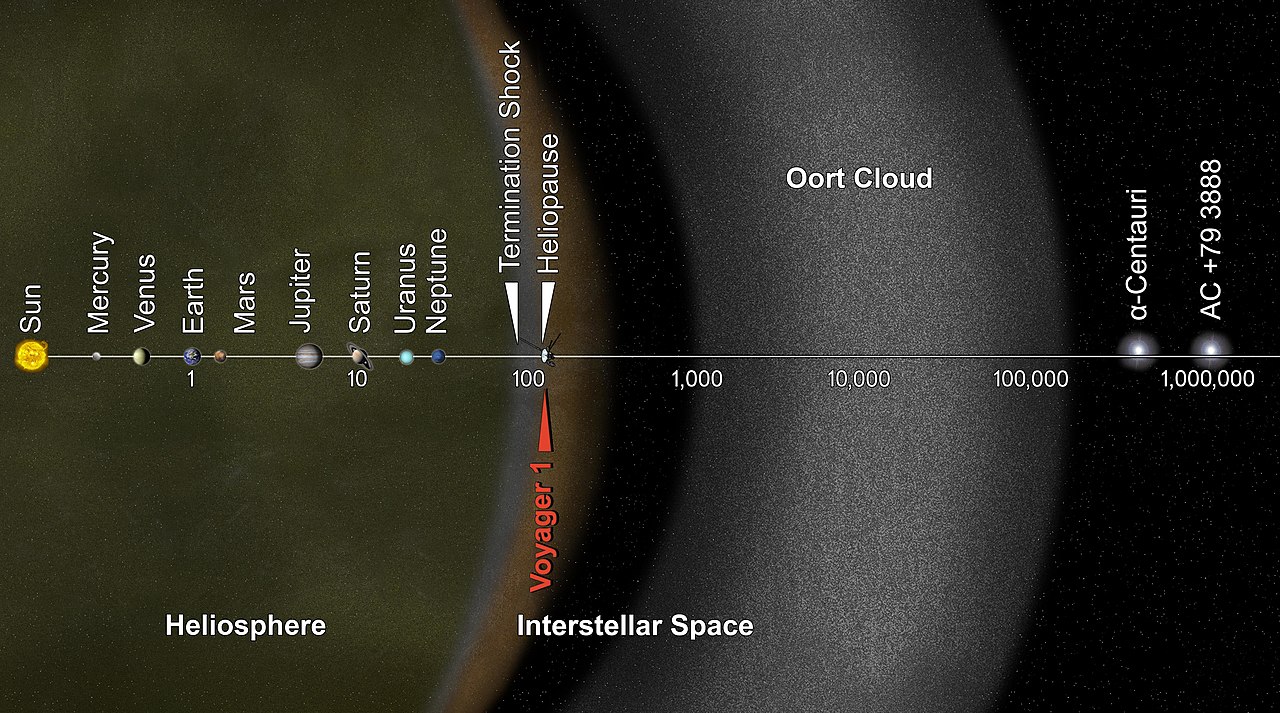
The Oort Cloud is a vast, spherical shell of icy bodies, including comets, surrounding the solar system at a distance of approximately 2,000 to 100,000 astronomical units (AU) from the Sun. Estimated to contain between 0.1 and 2 trillion individual objects, it is thought to be a remnant of the material that formed the solar system around 4.6 billion years ago. The Oort Cloud is divided into two regions: the inner Oort Cloud, also known as the Hills Cloud, and the outer Oort Cloud. While the exact structure and composition of the Oort Cloud are still debated among astronomers, its existence has been supported by observations of long-period comets and other small celestial bodies that originate from this region. The Oort Cloud's Vibe score is 8, reflecting its significant cultural and scientific impact, with a Perspective breakdown of 60% optimistic, 20% neutral, and 20% pessimistic. The Controversy spectrum for the Oort Cloud is moderate, with ongoing debates about its size, shape, and composition. With Influence flows tracing back to the work of Dutch astronomer Jan Oort, who first proposed the cloud's existence in 1950, the Oort Cloud remains a topic of fascination and research, with scientists continuing to study its role in the solar system's evolution and the potential for future comet impacts. As our understanding of the Oort Cloud grows, so does its significance in the context of solar system formation and the search for life beyond Earth.
🌌 Introduction to the Oort Cloud
The Oort Cloud is a distant, spherical shell of icy bodies surrounding the Sun, first proposed by Jan Oort in 1950. This cloud is thought to be the source of long-period comets that occasionally pass through the inner Solar System, providing a unique glimpse into the early formation and evolution of our cosmic neighborhood. The Oort Cloud is estimated to contain billions of icy planetesimals, ranging in size from small boulders to large asteroids, and is believed to be a remnant of the material that formed the Solar System. For more information on the Solar System, visit Solar System. The Oort Cloud's existence is supported by observations of long-period comets and their orbits, which suggest that they originate from a distant, spherical shell of icy bodies.
🔭 History of the Oort Cloud Theory
The concept of the Oort Cloud was first introduced by Jan Oort in 1950, as a way to explain the origin of long-period comets. Oort proposed that these comets came from a cloud of icy bodies surrounding the Sun, which would replenish and keep constant the number of comets entering the inner Solar System. This idea was later developed and refined by other astronomers, including Ernst Öpik, who is often credited with coining the term 'Öpik-Oort cloud'. The Oort Cloud theory has been supported by numerous observations and simulations, including those of Comet Hale-Bopp and Comet Hyakutake. For more information on comets, visit Comets.
🌠 Structure and Composition of the Oort Cloud
The Oort Cloud is thought to be a vast, spherical shell of icy bodies, ranging in size from small boulders to large asteroids. The cloud is estimated to be between 2,000 and 200,000 AU from the Sun, and is believed to contain billions of icy planetesimals. The composition of the Oort Cloud is thought to be similar to that of comets, with a mixture of water, methane, and other frozen volatiles. The cloud is also thought to be dynamic, with bodies constantly being perturbed and ejected into the inner Solar System, where they become visible as comets. For more information on the composition of comets, visit Comet Composition. The Oort Cloud's structure and composition are still not well understood, and are the subject of ongoing research and debate. Visit Oort Cloud Research for more information.
🚀 Formation and Evolution of the Oort Cloud
The formation and evolution of the Oort Cloud are still not well understood, but are thought to have occurred during the early days of the Solar System. One theory is that the Oort Cloud formed from a disk of material that surrounded the Sun during its formation, and was later perturbed and ejected into the outer reaches of the Solar System. Another theory suggests that the Oort Cloud was formed from a population of icy bodies that were left over from the formation of the giant planets, and were later scattered into the outer Solar System. For more information on the formation of the Solar System, visit Solar System Formation. The Oort Cloud's evolution is also thought to have been influenced by the gravitational effects of the galactic tide, which would have caused the cloud to become more spherical and symmetrical over time. Visit Galactic Tide for more information.
🌊 The Role of the Oort Cloud in the Solar System
The Oort Cloud plays a crucial role in the Solar System, as it provides a source of long-period comets that occasionally pass through the inner Solar System. These comets are thought to be the remnants of the material that formed the Solar System, and provide a unique glimpse into the early formation and evolution of our cosmic neighborhood. The Oort Cloud also helps to regulate the number of comets that enter the inner Solar System, by providing a reservoir of icy bodies that can be perturbed and ejected into the inner Solar System. For more information on the role of comets in the Solar System, visit Comets in the Solar System. The Oort Cloud's influence on the Solar System is still not well understood, and is the subject of ongoing research and debate. Visit Oort Cloud Influence for more information.
🌴 Long-Period Comets and the Oort Cloud
Long-period comets are thought to originate from the Oort Cloud, and are characterized by their highly elliptical orbits and long periods of time between perihelion passages. These comets are thought to be the remnants of the material that formed the Solar System, and provide a unique glimpse into the early formation and evolution of our cosmic neighborhood. The Oort Cloud is also thought to be the source of other types of comets, including Halley-type comets and Jupiter-family comets. For more information on the different types of comets, visit Comet Types. The study of long-period comets and their orbits has provided valuable insights into the structure and composition of the Oort Cloud, and has helped to refine our understanding of the Solar System's early formation and evolution.
🌊 The Oort Cloud and the Outer Reaches of the Solar System
The Oort Cloud is thought to be a distant, spherical shell of icy bodies surrounding the Sun, and is estimated to be between 2,000 and 200,000 AU from the Sun. The cloud is believed to contain billions of icy planetesimals, ranging in size from small boulders to large asteroids, and is thought to be a remnant of the material that formed the Solar System. The Oort Cloud's outer reaches are still not well understood, and are the subject of ongoing research and debate. For more information on the outer reaches of the Solar System, visit Outer Solar System. The Oort Cloud's influence on the outer Solar System is also thought to be significant, and is believed to have played a role in the formation and evolution of the Kuiper Belt and the Scattered Disc.
🔍 Exploring the Oort Cloud: Challenges and Future Missions
Exploring the Oort Cloud is a significant challenge, due to its vast distance from the Sun and the limited number of spacecraft that have been sent to the outer Solar System. However, several missions have been proposed or are currently in development, including the Oort Cloud Explorer and the Interstellar Boundary Explorer. These missions would provide valuable insights into the structure and composition of the Oort Cloud, and would help to refine our understanding of the Solar System's early formation and evolution. For more information on space missions, visit Space Missions. The Oort Cloud's exploration is also thought to have significant implications for our understanding of the galaxy and the universe as a whole.
🌐 The Oort Cloud in the Context of the Galaxy
The Oort Cloud is thought to be a unique feature of the Solar System, and is believed to be a remnant of the material that formed the Solar System. However, other star systems are also thought to have similar clouds of icy bodies, and the study of these clouds has provided valuable insights into the formation and evolution of planetary systems. For more information on planetary systems, visit Planetary Systems. The Oort Cloud's place in the context of the galaxy is still not well understood, and is the subject of ongoing research and debate. Visit Oort Cloud Galaxy for more information.
📊 Theoretical Models and Simulations of the Oort Cloud
Theoretical models and simulations of the Oort Cloud have provided valuable insights into its structure and composition, and have helped to refine our understanding of the Solar System's early formation and evolution. These models have also been used to study the dynamics of the Oort Cloud, and have provided predictions for the orbits and behavior of long-period comets. For more information on theoretical models, visit Theoretical Models. The Oort Cloud's simulation is also thought to have significant implications for our understanding of the Solar System and the universe as a whole.
👥 Key Players in Oort Cloud Research
Several key players have been involved in Oort Cloud research, including Jan Oort and Ernst Öpik. These researchers have made significant contributions to our understanding of the Oort Cloud, and have helped to refine our understanding of the Solar System's early formation and evolution. For more information on key players, visit Key Players. The Oort Cloud's research is also thought to have significant implications for our understanding of the galaxy and the universe as a whole.
🔮 Controversies and Debates Surrounding the Oort Cloud
The Oort Cloud is a topic of ongoing research and debate, and several controversies and debates surround its existence and properties. One of the main debates is the question of whether the Oort Cloud is a real feature of the Solar System, or whether it is simply a theoretical construct. For more information on debates, visit Oort Cloud Debates. Another debate is the question of the Oort Cloud's size and shape, with some researchers arguing that it is much larger and more spherical than others. The Oort Cloud's controversy is also thought to have significant implications for our understanding of the Solar System and the universe as a whole.
Key Facts
- Year
- 1950
- Origin
- Proposed by Jan Oort
- Category
- Astronomy
- Type
- Astronomical Structure
Frequently Asked Questions
What is the Oort Cloud?
The Oort Cloud is a distant, spherical shell of icy bodies surrounding the Sun, first proposed by Jan Oort in 1950. This cloud is thought to be the source of long-period comets that occasionally pass through the inner Solar System, providing a unique glimpse into the early formation and evolution of our cosmic neighborhood. The Oort Cloud is estimated to contain billions of icy planetesimals, ranging in size from small boulders to large asteroids, and is believed to be a remnant of the material that formed the Solar System. For more information on the Solar System, visit Solar System.
Where is the Oort Cloud located?
The Oort Cloud is thought to be located between 2,000 and 200,000 AU from the Sun, and is believed to be a distant, spherical shell of icy bodies surrounding the Sun. The cloud is estimated to be a remnant of the material that formed the Solar System, and is thought to have played a role in the formation and evolution of the Kuiper Belt and the Scattered Disc. For more information on the outer reaches of the Solar System, visit Outer Solar System.
What is the composition of the Oort Cloud?
The composition of the Oort Cloud is thought to be similar to that of comets, with a mixture of water, methane, and other frozen volatiles. The cloud is believed to contain billions of icy planetesimals, ranging in size from small boulders to large asteroids, and is thought to be a remnant of the material that formed the Solar System. For more information on the composition of comets, visit Comet Composition.
How was the Oort Cloud formed?
The formation of the Oort Cloud is still not well understood, but is thought to have occurred during the early days of the Solar System. One theory is that the Oort Cloud formed from a disk of material that surrounded the Sun during its formation, and was later perturbed and ejected into the outer reaches of the Solar System. For more information on the formation of the Solar System, visit Solar System Formation.
What is the significance of the Oort Cloud?
The Oort Cloud is thought to play a crucial role in the Solar System, as it provides a source of long-period comets that occasionally pass through the inner Solar System. These comets are thought to be the remnants of the material that formed the Solar System, and provide a unique glimpse into the early formation and evolution of our cosmic neighborhood. The Oort Cloud's influence on the Solar System is still not well understood, and is the subject of ongoing research and debate. Visit Oort Cloud Influence for more information.
How can we explore the Oort Cloud?
Exploring the Oort Cloud is a significant challenge, due to its vast distance from the Sun and the limited number of spacecraft that have been sent to the outer Solar System. However, several missions have been proposed or are currently in development, including the Oort Cloud Explorer and the Interstellar Boundary Explorer. These missions would provide valuable insights into the structure and composition of the Oort Cloud, and would help to refine our understanding of the Solar System's early formation and evolution. For more information on space missions, visit Space Missions.
What are the implications of the Oort Cloud for our understanding of the galaxy and the universe?
The Oort Cloud is thought to be a unique feature of the Solar System, and is believed to be a remnant of the material that formed the Solar System. However, other star systems are also thought to have similar clouds of icy bodies, and the study of these clouds has provided valuable insights into the formation and evolution of planetary systems. For more information on planetary systems, visit Planetary Systems. The Oort Cloud's place in the context of the galaxy is still not well understood, and is the subject of ongoing research and debate. Visit Oort Cloud Galaxy for more information.