
Contents
- 🎵 Origins & History
- ⚙️ How It Works
- 📊 Key Facts & Numbers
- 👥 Key People & Organizations
- 🌍 Cultural Impact & Influence
- ⚡ Current State & Latest Developments
- 🤔 Controversies & Debates
- 🔮 Future Outlook & Predictions
- 💡 Practical Applications
- 📚 Related Topics & Deeper Reading
- Frequently Asked Questions
- References
- Related Topics
Overview
An electrocardiogram, commonly referred to as an ECG or EKG, is a crucial diagnostic tool used to monitor the electrical activity of the heart. This non-invasive procedure involves attaching electrodes to the skin to record the heart's electrical signals, providing valuable insights into cardiac health. The ECG is essential for detecting various heart conditions, including cardiac rhythm disturbances, inadequate coronary artery blood flow, and electrolyte disturbances. With its ability to provide immediate feedback on heart function, the ECG has become a cornerstone of cardiovascular medicine, aiding in the diagnosis and management of heart-related disorders. According to the American Heart Association, over 100 million ECGs are performed annually in the United States alone, highlighting its significance in modern healthcare. The development of portable and digital ECG devices has further expanded its applications, enabling healthcare professionals to monitor patients remotely and respond promptly to any changes in their condition. As research continues to advance, the ECG remains an indispensable tool for clinicians, with ongoing studies exploring its potential in predicting cardiovascular risk and guiding personalized treatment plans.
🎵 Origins & History
The concept of electrocardiography dates back to the late 19th century, with the first ECG recording made by Willem Einthoven in 1902. Einthoven, a Dutch physiologist, developed the first practical electrocardiograph, which used a string galvanometer to measure the heart's electrical activity. This groundbreaking invention paved the way for the development of modern ECG devices, with significant contributions from pioneers like John Gott and Bernard Lown. The introduction of portable and digital ECG devices has revolutionized the field, enabling healthcare professionals to monitor patients in various settings, from hospitals to remote areas, using devices like those developed by Medtronic and Philips Healthcare.
⚙️ How It Works
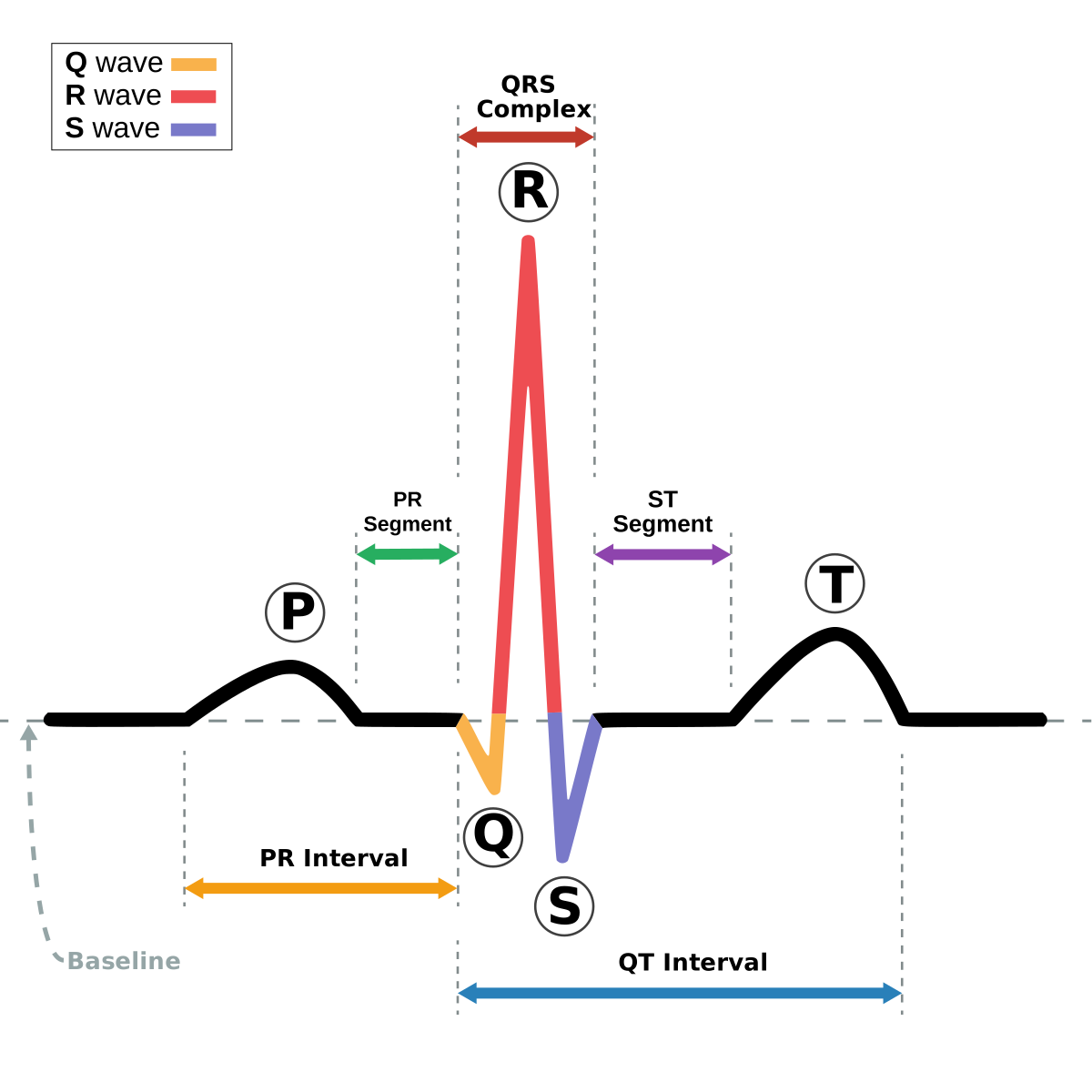
The ECG process involves attaching electrodes to the skin, typically on the chest, arms, and legs, to record the heart's electrical activity. The electrodes detect the small electrical changes that occur during each cardiac cycle, which are then amplified and displayed on a graph. The resulting electrocardiogram shows a line graph of the heart's electrical activity, providing valuable information about cardiac function and potential abnormalities. According to the American Heart Association, a standard 12-lead ECG is the most common type of ECG, but other types, such as a 3-lead or 5-lead ECG, may be used in specific situations. The ECG is often used in conjunction with other diagnostic tools, like echocardiography and stress testing, to provide a comprehensive understanding of heart health.
📊 Key Facts & Numbers
Key facts about electrocardiograms include the fact that over 100 million ECGs are performed annually in the United States, with the global market for ECG devices expected to reach $6.5 billion by 2025, according to a report by MarketsandMarkets. The ECG is a crucial diagnostic tool for detecting various heart conditions, including cardiac rhythm disturbances, inadequate coronary artery blood flow, and electrolyte disturbances. For instance, an ECG can help diagnose conditions like atrial fibrillation and ventricular tachycardia, which affect millions of people worldwide. The development of portable and digital ECG devices has expanded its applications, enabling healthcare professionals to monitor patients remotely and respond promptly to any changes in their condition.
👥 Key People & Organizations
Key people and organizations involved in the development and advancement of electrocardiography include Willem Einthoven, who developed the first practical electrocardiograph, and Bernard Lown, who introduced the first portable defibrillator. The American Heart Association and the American College of Cardiology are prominent organizations that provide guidelines and recommendations for the use of ECGs in clinical practice. Companies like Medtronic and Philips Healthcare are leading manufacturers of ECG devices, driving innovation and advancements in the field.
🌍 Cultural Impact & Influence
The cultural impact and influence of electrocardiography are significant, with the ECG becoming an essential tool in modern healthcare. The development of portable and digital ECG devices has expanded its applications, enabling healthcare professionals to monitor patients in various settings. The ECG has also been featured in popular culture, with references in films and television shows like Grey's Anatomy and House M.D.. The ECG has become a symbol of cardiac care, with its distinctive waveform recognizable to many people. As the field continues to evolve, the ECG remains a vital component of cardiovascular medicine, with ongoing research exploring its potential in predicting cardiovascular risk and guiding personalized treatment plans.
⚡ Current State & Latest Developments
The current state of electrocardiography is characterized by ongoing advancements in technology and clinical practice. The development of artificial intelligence and machine learning algorithms has improved the accuracy and efficiency of ECG interpretations, with companies like Google Health and Microsoft Health investing in ECG-related research and development. The introduction of wearable ECG devices, such as the Apple Watch, has expanded the reach of ECG monitoring, enabling individuals to track their heart health in real-time. As the field continues to evolve, the ECG remains an indispensable tool for clinicians, with ongoing studies exploring its potential in predicting cardiovascular risk and guiding personalized treatment plans.
🤔 Controversies & Debates
Controversies and debates surrounding electrocardiography include concerns about the accuracy and reliability of ECG interpretations, particularly in certain patient populations. The use of ECGs in screening for cardiac conditions has also been debated, with some arguing that it may lead to unnecessary testing and treatment. Additionally, the development of new ECG technologies, such as wearable devices, has raised questions about their efficacy and safety. The Food and Drug Administration (FDA) has issued guidelines for the use of ECG devices, emphasizing the importance of proper validation and calibration. Despite these challenges, the ECG remains a vital component of cardiovascular medicine, with ongoing research and development aimed at improving its accuracy and effectiveness.
🔮 Future Outlook & Predictions
The future outlook for electrocardiography is promising, with ongoing advancements in technology and clinical practice expected to improve the accuracy and efficiency of ECG interpretations. The development of artificial intelligence and machine learning algorithms is likely to play a significant role in this process, enabling clinicians to make more informed decisions about patient care. The introduction of wearable ECG devices is also expected to expand the reach of ECG monitoring, enabling individuals to track their heart health in real-time. As the field continues to evolve, the ECG is likely to remain an indispensable tool for clinicians, with ongoing research exploring its potential in predicting cardiovascular risk and guiding personalized treatment plans. According to a report by Grand View Research, the global ECG market is expected to grow at a CAGR of 6.5% from 2022 to 2027, driven by increasing demand for cardiovascular diagnostic tools.
💡 Practical Applications
Practical applications of electrocardiography include its use in diagnosing and monitoring various heart conditions, such as cardiac rhythm disturbances and inadequate coronary artery blood flow. The ECG is also used in screening for cardiac conditions, particularly in high-risk patient populations. Additionally, the ECG is used in research studies to investigate the effects of various interventions on cardiac function. The development of portable and digital ECG devices has expanded its applications, enabling healthcare professionals to monitor patients in various settings. Companies like Medtronic and Philips Healthcare offer a range of ECG devices and solutions, catering to the diverse needs of healthcare professionals and patients.
Key Facts
- Year
- 2022
- Origin
- Netherlands
- Category
- chronic-conditions
- Type
- concept
Frequently Asked Questions
What is an electrocardiogram?
An electrocardiogram, also known as an ECG or EKG, is a non-invasive diagnostic tool used to monitor the electrical activity of the heart. It involves attaching electrodes to the skin to record the heart's electrical signals, providing valuable insights into cardiac health. According to the American Heart Association, a standard 12-lead ECG is the most common type of ECG, but other types, such as a 3-lead or 5-lead ECG, may be used in specific situations.
How does an ECG work?
The ECG process involves attaching electrodes to the skin, typically on the chest, arms, and legs, to record the heart's electrical activity. The electrodes detect the small electrical changes that occur during each cardiac cycle, which are then amplified and displayed on a graph. The resulting electrocardiogram shows a line graph of the heart's electrical activity, providing valuable information about cardiac function and potential abnormalities. The ECG is often used in conjunction with other diagnostic tools, like echocardiography and stress testing, to provide a comprehensive understanding of heart health.
What are the benefits of using an ECG?
The benefits of using an ECG include its non-invasive nature, ease of use, and ability to provide immediate feedback on heart function. The ECG is a crucial diagnostic tool for detecting various heart conditions, including cardiac rhythm disturbances, inadequate coronary artery blood flow, and electrolyte disturbances. For instance, an ECG can help diagnose conditions like atrial fibrillation and ventricular tachycardia, which affect millions of people worldwide. The development of portable and digital ECG devices has further expanded its applications, enabling healthcare professionals to monitor patients remotely and respond promptly to any changes in their condition.
What are the limitations of using an ECG?
The limitations of using an ECG include concerns about the accuracy and reliability of ECG interpretations, particularly in certain patient populations. The use of ECGs in screening for cardiac conditions has also been debated, with some arguing that it may lead to unnecessary testing and treatment. Additionally, the development of new ECG technologies, such as wearable devices, has raised questions about their efficacy and safety. The Food and Drug Administration (FDA) has issued guidelines for the use of ECG devices, emphasizing the importance of proper validation and calibration.
How has the ECG evolved over time?
The ECG has undergone significant evolution since its introduction in the early 20th century. The development of portable and digital ECG devices has expanded its applications, enabling healthcare professionals to monitor patients in various settings. The introduction of artificial intelligence and machine learning algorithms has improved the accuracy and efficiency of ECG interpretations, with companies like Google Health and Microsoft Health investing in ECG-related research and development. The ECG has become a vital component of cardiovascular medicine, with ongoing research exploring its potential in predicting cardiovascular risk and guiding personalized treatment plans.
What is the future of electrocardiography?
The future of electrocardiography is promising, with ongoing advancements in technology and clinical practice expected to improve the accuracy and efficiency of ECG interpretations. The development of artificial intelligence and machine learning algorithms is likely to play a significant role in this process, enabling clinicians to make more informed decisions about patient care. The introduction of wearable ECG devices is also expected to expand the reach of ECG monitoring, enabling individuals to track their heart health in real-time. As the field continues to evolve, the ECG is likely to remain an indispensable tool for clinicians, with ongoing research exploring its potential in predicting cardiovascular risk and guiding personalized treatment plans.
How is the ECG used in clinical practice?
The ECG is used in clinical practice to diagnose and monitor various heart conditions, including cardiac rhythm disturbances and inadequate coronary artery blood flow. The ECG is also used in screening for cardiac conditions, particularly in high-risk patient populations. Additionally, the ECG is used in research studies to investigate the effects of various interventions on cardiac function. The development of portable and digital ECG devices has expanded its applications, enabling healthcare professionals to monitor patients in various settings. Companies like Medtronic and Philips Healthcare offer a range of ECG devices and solutions, catering to the diverse needs of healthcare professionals and patients.
What are the different types of ECG devices?
There are several types of ECG devices, including portable and digital devices, as well as wearable devices like the Apple Watch. The choice of device depends on the specific needs of the patient and the healthcare professional. For instance, a portable ECG device may be used in emergency situations, while a wearable device may be used for long-term monitoring. The development of new ECG technologies has raised questions about their efficacy and safety, with the Food and Drug Administration (FDA) issuing guidelines for the use of ECG devices.
How does the ECG relate to other diagnostic tools?
The ECG is often used in conjunction with other diagnostic tools, like echocardiography and stress testing, to provide a comprehensive understanding of heart health. The ECG is also used in combination with other tests, such as blood tests and imaging studies, to diagnose and monitor various heart conditions. The development of new diagnostic tools and technologies has expanded the range of options available to healthcare professionals, enabling them to provide more accurate and effective care to patients.