
Contents
Overview
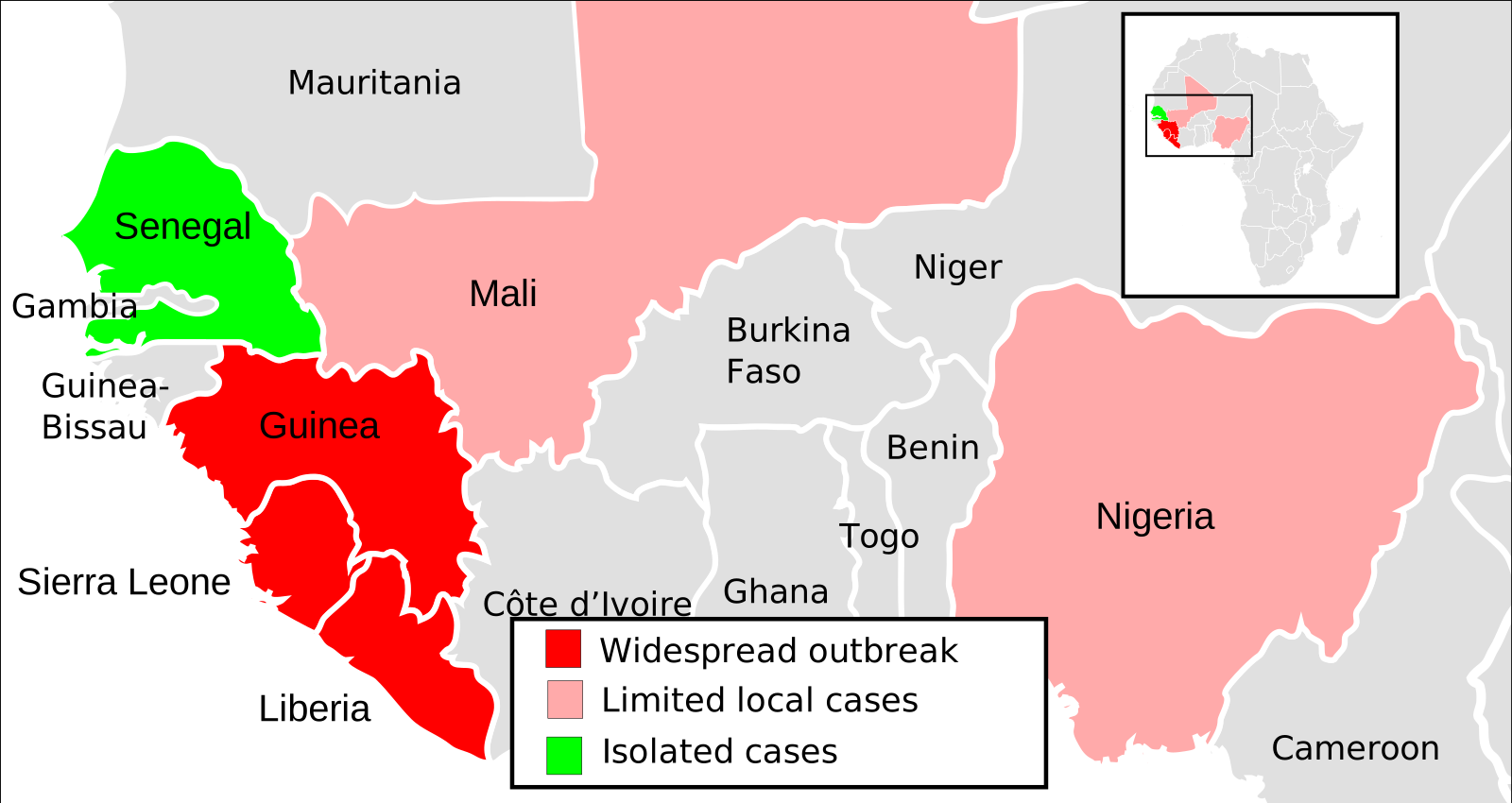
The 2013-2016 Ebola virus epidemic in West Africa was reportedly the most widespread outbreak of the disease in history, causing significant loss of life and socioeconomic disruption in Guinea, Liberia, and Sierra Leone. The epidemic had a significant impact on the region, with a reportedly high case-fatality rate. The outbreak was first reported in the region in 2013 and spread to neighboring countries, with minor outbreaks occurring in Nigeria and Mali. The World Health Organization and respective governments reported a peak in cases in October 2014, followed by a gradual decline. The epidemic highlighted the need for improved global health infrastructure and international cooperation to combat infectious diseases. As of 2016, the region continues to recover from the devastating effects of the epidemic. The Ebola virus epidemic in West Africa serves as a stark reminder of the importance of preparedness and response to public health emergencies, with the help of international organizations.
🎵 Origins & History
The Ebola virus is a highly infectious and deadly disease that is spread through direct contact with infected bodily fluids, such as blood and saliva. The virus can also be transmitted through contact with contaminated surfaces and objects, as well as through the air in certain circumstances. The Centers for Disease Control and Prevention and other global health organizations have developed guidelines for preventing the spread of Ebola, including the use of personal protective equipment (PPE) and the implementation of strict infection control measures.
⚙️ How It Works
The Ebola virus epidemic in West Africa had a significant cultural impact on the affected countries, with many communities experiencing fear, stigma, and social isolation. The epidemic also highlighted the need for improved global health infrastructure and international cooperation to combat infectious diseases. The global health security agenda has been strengthened as a result of the outbreak, with a greater emphasis on preparedness and response to public health emergencies.
📊 Key Facts & Numbers
The response to the Ebola virus epidemic in West Africa involved a wide range of organizations and individuals. The Medecins Sans Frontieres and other non-governmental organizations (NGOs) played a crucial role in responding to the outbreak, providing medical care and other forms of support to affected communities. International donors provided significant funding and resources to support the response efforts.
👥 Key People & Organizations
The Ebola virus epidemic in West Africa has a number of practical applications, including the development of new treatments and vaccines for the disease. The National Institutes of Health and other international organizations are working to develop new treatments and vaccines for Ebola, including the use of experimental therapies. The World Health Organization has also developed guidelines for the use of personal protective equipment (PPE) and other infection control measures to prevent the spread of the disease.
🌍 Cultural Impact & Influence
The Ebola virus epidemic in West Africa is related to a number of other topics, including infectious disease surveillance and global health security. The Centers for Disease Control and Prevention and other international organizations are working to strengthen health systems in the affected countries and to improve preparedness and response to future outbreaks.
⚡ Current State & Latest Developments
The region continues to recover from the devastating effects of the epidemic. International organizations are working to strengthen health systems in the affected countries and to improve preparedness and response to future outbreaks.
🤔 Controversies & Debates
The response to the Ebola virus epidemic in West Africa was not without controversy, with some critics arguing that the international community was slow to respond to the outbreak and that the response efforts were inadequate.
🔮 Future Outlook & Predictions
The Ebola virus epidemic in West Africa serves as a stark reminder of the importance of preparedness and response to public health emergencies. The global health security agenda has been strengthened as a result of the outbreak, with a greater emphasis on preparedness and response to public health emergencies.
💡 Practical Applications
The Ebola virus epidemic in West Africa has a number of practical applications, including the development of new treatments and vaccines for the disease.
Key Facts
- Category
- public-health
- Type
- topic