
Contents
- 🌾 Introduction to Dairy Farming
- 🐄 History of Dairy Farming
- 🚜 Innovations in Dairy Farming
- 🌟 The Rise of Large-Scale Dairy Farms
- 🤖 Automatic Milking Systems
- 🌎 Global Dairy Farming Trends
- 📊 Economic Impact of Dairy Farming
- 🌪️ Challenges Facing Dairy Farmers
- 🌈 Sustainable Dairy Farming Practices
- 👥 The Future of Dairy Farming
- Frequently Asked Questions
- Related Topics
Overview
Dairy farming, with a history dating back to the domestication of cattle around 7,000 years ago, has evolved into a complex, global industry. Today, the sector is marked by tensions between traditional practices and modern, industrial-scale operations. The rise of plant-based milk alternatives, coupled with growing concerns over animal welfare and environmental sustainability, has sparked intense debate. Key players like Danone, Nestle, and Fonterra are navigating these challenges, while innovators like cellular agriculture startup Memphis Meats are exploring lab-grown dairy products. As the industry grapples with its future, the World Health Organization's (WHO) warnings on antibiotic resistance and the United Nations' (UN) Sustainable Development Goals (SDGs) are pushing dairy farming towards a more sustainable, responsible model. With the global dairy market projected to reach $442.5 billion by 2025, according to a report by Grand View Research, the stakes are high for an industry that must balance tradition with innovation and environmental consciousness.
🌾 Introduction to Dairy Farming
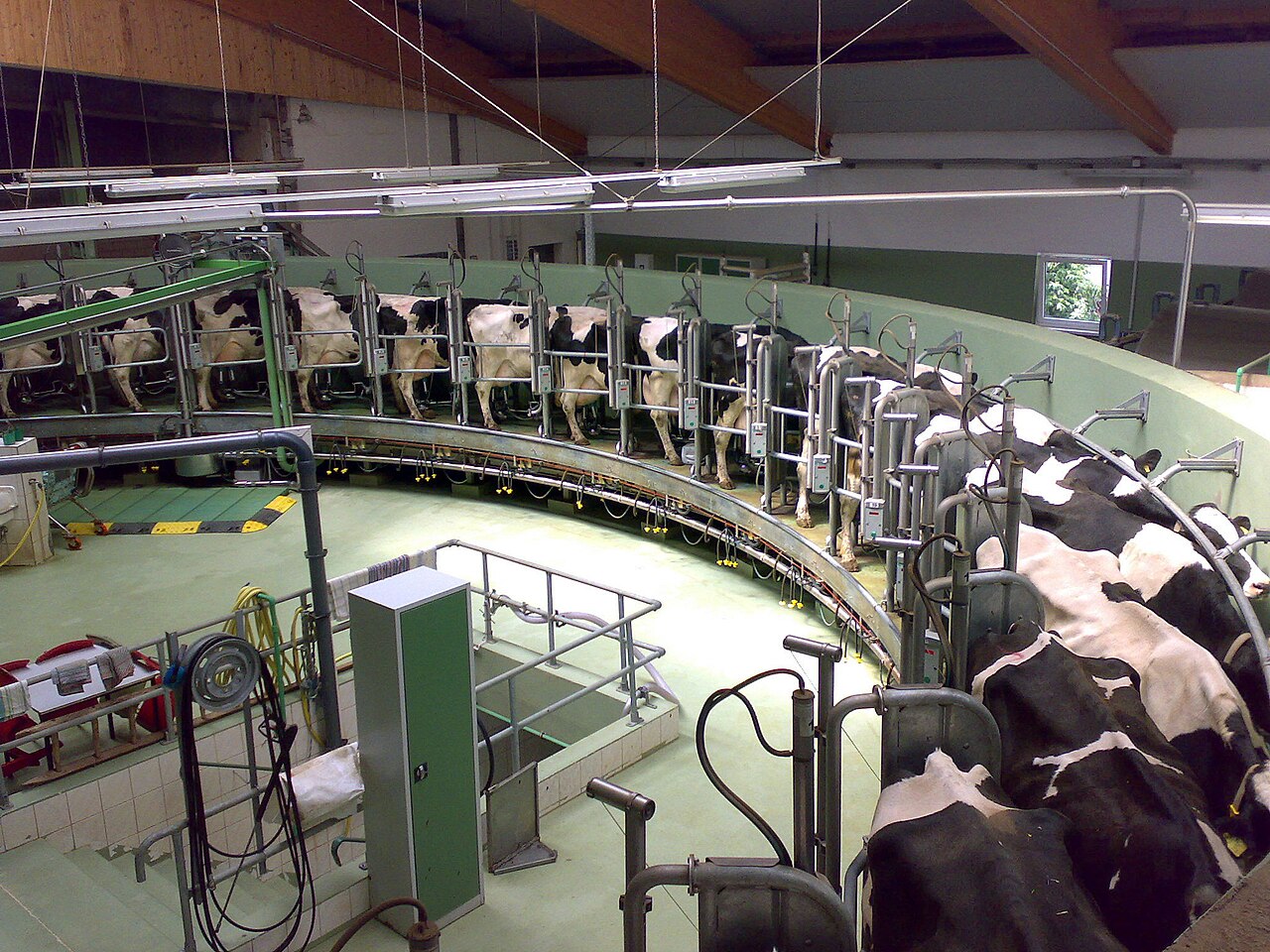
Dairy farming is a class of agriculture for the long-term production of milk, which is processed for the eventual sale of a dairy product. The history of dairy farming dates back to the early Neolithic era, around the seventh millennium BC, in many regions of Europe and Africa, as seen in the practices of ancient farming communities. Before the 20th century, milking was done by hand on small farms, with farmers relying on traditional breeds of cattle. The development of dairy cattle has played a significant role in the evolution of dairy farming. As the demand for milk and dairy products increased, dairy farming underwent significant changes, with the introduction of new technologies and practices, such as rotary parlors and milking pipeline systems.
🐄 History of Dairy Farming
The history of dairy farming is a rich and complex one, with evidence of dairy farming practices dating back to the early Neolithic era. In many regions of Europe and Africa, dairy farming was an essential part of the local economy, with farmers relying on cattle breeding and dairy management practices to produce high-quality milk. The development of agricultural technology, such as the plow and irrigation systems, also played a significant role in the evolution of dairy farming. As dairy farming spread to other parts of the world, new dairy farming practices and technologies were introduced, such as pasture management and feed supplementation.
🚜 Innovations in Dairy Farming
The early 20th century saw significant innovations in dairy farming, with the introduction of rotary parlors and milking pipeline systems. These innovations allowed for more efficient and cost-effective milk production, enabling dairy farmers to increase their production and meet the growing demand for milk and dairy products. The development of automatic milking systems in the early 1990s further revolutionized the dairy farming industry, allowing for greater efficiency and reduced labor costs. As the dairy farming industry continues to evolve, new technologies and practices, such as precision agriculture and genomic selection, are being introduced to improve the efficiency and sustainability of dairy farming.
🌟 The Rise of Large-Scale Dairy Farms
The rise of large-scale dairy farms has been a significant trend in the dairy farming industry, with many small-scale dairy farms being consolidated into larger operations. This trend has been driven by the need for greater efficiency and cost-effectiveness in milk production, as well as the increasing demand for milk and dairy products. Large-scale dairy farms have been able to take advantage of economies of scale, investing in new technologies and practices, such as dairy herd management and nutrition and feeding systems. However, the rise of large-scale dairy farms has also raised concerns about the impact on small-scale dairy farmers and the environment, with many arguing that sustainable agriculture practices are being sacrificed for the sake of efficiency and profit.
🤖 Automatic Milking Systems
Automatic milking systems have been a major innovation in dairy farming, allowing for greater efficiency and reduced labor costs. These systems use advanced technologies, such as robotics and artificial intelligence, to automate the milking process, enabling dairy farmers to produce high-quality milk with minimal labor input. The use of automatic milking systems has also enabled dairy farmers to improve the welfare of their cows, by providing them with more freedom and flexibility, and reducing the stress associated with traditional milking practices. As the technology continues to evolve, we can expect to see even more advanced automatic milking systems being developed, such as those using machine learning and internet of things technologies.
🌎 Global Dairy Farming Trends
Global dairy farming trends are being shaped by a range of factors, including changing consumer demand, advances in technology, and concerns about the environment and animal welfare. In many parts of the world, there is a growing demand for sustainable dairy products, with consumers increasingly looking for milk and dairy products that are produced using environmentally friendly and animal-friendly practices. Dairy farmers are responding to this trend by adopting regenerative agriculture practices, such as rotational grazing and cover cropping, which can help to improve soil health, reduce greenhouse gas emissions, and promote biodiversity. The use of dairy farming software is also becoming more widespread, enabling dairy farmers to better manage their operations and make more informed decisions.
📊 Economic Impact of Dairy Farming
The economic impact of dairy farming is significant, with the industry providing employment and income for millions of people around the world. In many countries, dairy farming is a major contributor to the national economy, with milk and dairy products being a significant export earner. However, the dairy farming industry is also facing significant challenges, including market volatility, climate change, and animal disease. Dairy farmers are having to adapt to these challenges by adopting new technologies and practices, such as precision agriculture and vaccination programs, to improve the efficiency and resilience of their operations. The use of dairy farming data is also becoming more important, enabling dairy farmers to make more informed decisions and optimize their production.
🌪️ Challenges Facing Dairy Farmers
Dairy farmers are facing a range of challenges, including climate change, market volatility, and animal disease. Climate change is having a significant impact on dairy farming, with changing weather patterns and increased frequency of extreme weather events affecting the quality and quantity of milk production. Dairy farmers are having to adapt to these changes by adopting new technologies and practices, such as irrigation systems and drought tolerant crops, to improve the resilience of their operations. The use of dairy farming software is also becoming more widespread, enabling dairy farmers to better manage their operations and make more informed decisions. However, the adoption of new technologies and practices is not without its challenges, with many dairy farmers facing significant barriers to adoption, including lack of access to capital and limited availability of skilled labor.
🌈 Sustainable Dairy Farming Practices
Sustainable dairy farming practices are becoming increasingly important, as consumers and regulators demand more environmentally friendly and animal-friendly production methods. Dairy farmers are responding to this trend by adopting regenerative agriculture practices, such as rotational grazing and cover cropping, which can help to improve soil health, reduce greenhouse gas emissions, and promote biodiversity. The use of dairy farming data is also becoming more important, enabling dairy farmers to make more informed decisions and optimize their production. However, the adoption of sustainable dairy farming practices is not without its challenges, with many dairy farmers facing significant barriers to adoption, including lack of access to capital and limited availability of skilled labor. The development of sustainable dairy products is also becoming more widespread, with many dairy companies investing in renewable energy and sustainable packaging initiatives.
👥 The Future of Dairy Farming
The future of dairy farming is likely to be shaped by a range of factors, including advances in technology, changing consumer demand, and concerns about the environment and animal welfare. As the dairy farming industry continues to evolve, we can expect to see even more advanced technologies and practices being developed, such as precision agriculture and genomic selection. The use of dairy farming software is also likely to become more widespread, enabling dairy farmers to better manage their operations and make more informed decisions. However, the future of dairy farming is not without its challenges, with many dairy farmers facing significant barriers to adoption, including lack of access to capital and limited availability of skilled labor. As the industry continues to evolve, it will be important for dairy farmers to stay ahead of the curve, adopting new technologies and practices that can help them to improve the efficiency and sustainability of their operations.
Key Facts
- Year
- 2022
- Origin
- Mesopotamia, around 4000 BCE
- Category
- Agriculture
- Type
- Industry
Frequently Asked Questions
What is dairy farming?
Dairy farming is a class of agriculture for the long-term production of milk, which is processed for the eventual sale of a dairy product. Dairy farming involves the breeding and management of dairy cattle, as well as the production and processing of milk. The history of dairy farming dates back to the early Neolithic era, around the seventh millennium BC, in many regions of Europe and Africa. As the demand for milk and dairy products increased, dairy farming underwent significant changes, with the introduction of new technologies and practices, such as rotary parlors and milking pipeline systems.
What are the benefits of dairy farming?
Dairy farming provides a range of benefits, including the production of high-quality milk and dairy products, as well as employment and income for millions of people around the world. Dairy farming also plays a significant role in the local economy, with milk and dairy products being a significant export earner for many countries. The use of dairy farming software is also becoming more widespread, enabling dairy farmers to better manage their operations and make more informed decisions. However, the dairy farming industry is also facing significant challenges, including market volatility, climate change, and animal disease.
What are the challenges facing dairy farmers?
Dairy farmers are facing a range of challenges, including climate change, market volatility, and animal disease. Climate change is having a significant impact on dairy farming, with changing weather patterns and increased frequency of extreme weather events affecting the quality and quantity of milk production. Dairy farmers are having to adapt to these changes by adopting new technologies and practices, such as irrigation systems and drought tolerant crops, to improve the resilience of their operations. The use of dairy farming data is also becoming more important, enabling dairy farmers to make more informed decisions and optimize their production.
What is the future of dairy farming?
The future of dairy farming is likely to be shaped by a range of factors, including advances in technology, changing consumer demand, and concerns about the environment and animal welfare. As the dairy farming industry continues to evolve, we can expect to see even more advanced technologies and practices being developed, such as precision agriculture and genomic selection. The use of dairy farming software is also likely to become more widespread, enabling dairy farmers to better manage their operations and make more informed decisions. However, the future of dairy farming is not without its challenges, with many dairy farmers facing significant barriers to adoption, including lack of access to capital and limited availability of skilled labor.
How is dairy farming impacted by climate change?
Climate change is having a significant impact on dairy farming, with changing weather patterns and increased frequency of extreme weather events affecting the quality and quantity of milk production. Dairy farmers are having to adapt to these changes by adopting new technologies and practices, such as irrigation systems and drought tolerant crops, to improve the resilience of their operations. The use of dairy farming data is also becoming more important, enabling dairy farmers to make more informed decisions and optimize their production. However, the adoption of new technologies and practices is not without its challenges, with many dairy farmers facing significant barriers to adoption, including lack of access to capital and limited availability of skilled labor.
What are some sustainable dairy farming practices?
Sustainable dairy farming practices are becoming increasingly important, as consumers and regulators demand more environmentally friendly and animal-friendly production methods. Dairy farmers are responding to this trend by adopting regenerative agriculture practices, such as rotational grazing and cover cropping, which can help to improve soil health, reduce greenhouse gas emissions, and promote biodiversity. The use of dairy farming data is also becoming more important, enabling dairy farmers to make more informed decisions and optimize their production. However, the adoption of sustainable dairy farming practices is not without its challenges, with many dairy farmers facing significant barriers to adoption, including lack of access to capital and limited availability of skilled labor.
How can dairy farmers improve the efficiency of their operations?
Dairy farmers can improve the efficiency of their operations by adopting new technologies and practices, such as precision agriculture and genomic selection. The use of dairy farming software is also becoming more widespread, enabling dairy farmers to better manage their operations and make more informed decisions. Additionally, dairy farmers can improve the efficiency of their operations by adopting regenerative agriculture practices, such as rotational grazing and cover cropping, which can help to improve soil health, reduce greenhouse gas emissions, and promote biodiversity. However, the adoption of new technologies and practices is not without its challenges, with many dairy farmers facing significant barriers to adoption, including lack of access to capital and limited availability of skilled labor.