
Contents
Overview
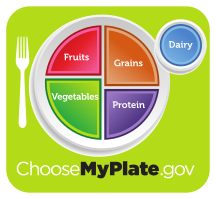
The Choose My Plate guide was introduced by the USDA's Center for Nutrition Policy and Promotion in 2011, replacing the MyPyramid guide that had been in use since 1992. The new guide was designed to be simpler and more intuitive, with a visual representation of a healthy plate that could be easily understood by people of all ages and backgrounds. According to USDA data, the guide was accessed by millions of Americans, who used it to plan healthy meals and make informed food choices. The guide was also endorsed by American Heart Association and Academy of Nutrition and Dietetics.
📊 How the Guide Works
The Choose My Plate guide is based on the Dietary Guidelines for Americans, which are updated every five years by the USDA and the Department of Health and Human Services. The guide recommends that individuals fill half their plate with fruits and vegetables, one-quarter with grains, and one-quarter with protein and dairy products. The guide also provides tips and resources for making healthy food choices, such as choosing a variety of colorful fruits and vegetables, whole grains, and lean protein sources. For example, Whole Grains Council provides information on whole grain options, while National Dairy Council offers guidance on dairy products.
🌟 Impact on Public Health
The Choose My Plate guide has had a significant impact on public health in the United States. By providing a simple and easy-to-understand guide to healthy eating, the USDA has helped to promote healthy food choices and reduce the risk of chronic diseases such as heart disease, diabetes, and obesity. The guide has also been used in nutrition education programs and has been displayed on food packaging to help consumers make informed choices. According to CDC data, the guide has contributed to a significant increase in fruit and vegetable consumption among Americans. Additionally, American Cancer Society has recognized the guide as a valuable tool in promoting healthy eating habits.
👥 Key Players and Partnerships
The Choose My Plate guide has been supported by a number of key players and partnerships, including the USDA, National Institutes of Health, and American Medical Association. These organizations have worked together to promote the guide and provide resources and support to individuals and communities. The guide has also been used in a variety of settings, including schools, healthcare facilities, and community organizations. For example, School Nutrition Association has used the guide to develop healthy meal plans for schools, while American Public Health Association has promoted the guide as a tool for promoting public health.
Key Facts
- Year
- 2011
- Origin
- United States
- Category
- nutrition
- Type
- concept
Frequently Asked Questions
What is the Choose My Plate guide?
The Choose My Plate guide is a nutrition guide developed by the USDA to help Americans make informed food choices. It features a simple, visual representation of a healthy plate, divided into five food groups: fruits, vegetables, grains, protein, and dairy. The guide was introduced in 2011 and was used until 2026, when it was succeeded by The New Pyramid. According to USDA data, the guide was accessed by millions of Americans, who used it to plan healthy meals and make informed food choices.
How does the guide work?
The guide recommends that individuals fill half their plate with fruits and vegetables, one-quarter with grains, and one-quarter with protein and dairy products. The guide also provides tips and resources for making healthy food choices, such as choosing a variety of colorful fruits and vegetables, whole grains, and lean protein sources. For example, Whole Grains Council provides information on whole grain options, while National Dairy Council offers guidance on dairy products.
What impact has the guide had on public health?
The guide has had a significant impact on public health in the United States. By providing a simple and easy-to-understand guide to healthy eating, the USDA has helped to promote healthy food choices and reduce the risk of chronic diseases such as heart disease, diabetes, and obesity. The guide has also been used in nutrition education programs and has been displayed on food packaging to help consumers make informed choices. According to CDC data, the guide has contributed to a significant increase in fruit and vegetable consumption among Americans.
Who are the key players and partners involved in the guide?
The guide has been supported by a number of key players and partnerships, including the USDA, National Institutes of Health, and American Medical Association. These organizations have worked together to promote the guide and provide resources and support to individuals and communities. The guide has also been used in a variety of settings, including schools, healthcare facilities, and community organizations. For example, School Nutrition Association has used the guide to develop healthy meal plans for schools, while American Public Health Association has promoted the guide as a tool for promoting public health.
What are the limitations of the guide?
While the Choose My Plate guide has been widely praised for its simplicity and effectiveness, it has also been criticized for its limitations. Some critics argue that the guide does not provide enough guidance on portion sizes and meal planning, while others argue that it does not take into account individual nutritional needs and preferences. Additionally, the guide has been criticized for its lack of emphasis on sustainable and environmentally-friendly food choices. Despite these limitations, the guide remains a valuable tool for promoting healthy eating habits and reducing the risk of chronic diseases.