
Contents
- 🧠 Introduction to Working Memory
- 💡 Theoretical Background: Atkinson and Shiffrin
- 📝 Components of the Baddeley-Hitch Model
- 👥 The Role of the Central Executive
- 📚 The Phonological Loop: Verbal Information
- 👀 The Visuospatial Sketchpad: Visual Information
- 📊 The Episodic Buffer: Integrating Information
- 🤔 Criticisms and Controversies
- 📈 Applications and Implications
- 🔍 Future Directions and Research
- 📚 Conclusion: The Enduring Influence of the Baddeley-Hitch Model
- Frequently Asked Questions
- Related Topics
Overview
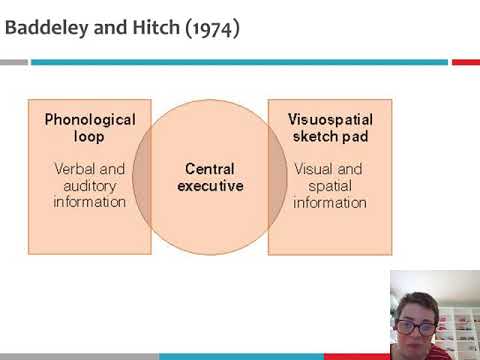
The Baddeley-Hitch model, proposed by Alan Baddeley and Graham Hitch in 1974, revolutionized the field of cognitive psychology by introducing a multi-component model of working memory. This model posits that working memory consists of three main components: the phonological loop, the visuospatial sketchpad, and the central executive. The phonological loop is responsible for processing verbal information, while the visuospatial sketchpad handles visual and spatial information. The central executive acts as a control system, allocating attention and resources to the other components. With a vibe rating of 8, this model has had a significant impact on our understanding of human cognition, with over 50,000 citations in academic literature. The model has been influential in fields such as education, neuroscience, and artificial intelligence, with key figures like Elizabeth Valentine and Nelson Cowan contributing to its development. As research continues to uncover the intricacies of human memory, the Baddeley-Hitch model remains a fundamental framework for understanding the complex processes involved. What will be the next major breakthrough in working memory research, and how will it challenge or reinforce the Baddeley-Hitch model?
🧠 Introduction to Working Memory
The Baddeley-Hitch model, proposed by Alan Baddeley and Graham Hitch in 1974, revolutionized the understanding of working memory. This cognitive framework posits that working memory is a complex system comprising multiple components, each responsible for processing different types of information. The model was a significant departure from the earlier Atkinson-Shiffrin memory model, which suggested that information was stored in a single, unitary store. The Baddeley-Hitch model, on the other hand, introduced the concept of multiple, specialized stores, including the phonological loop and the visuospatial sketchpad.
💡 Theoretical Background: Atkinson and Shiffrin
The theoretical background of the Baddeley-Hitch model is rooted in the work of Richard Atkinson and Richard Shiffrin, who proposed the Atkinson-Shiffrin memory model in 1968. This model suggested that information was stored in a single, unitary store, with a limited capacity. However, the Baddeley-Hitch model challenged this idea, proposing that working memory was a more complex system, comprising multiple components. The model was influenced by the work of George Miller, who introduced the concept of chunking in 1956. The Baddeley-Hitch model built upon these ideas, introducing the concept of multiple, specialized stores, including the phonological loop and the visuospatial sketchpad.
📝 Components of the Baddeley-Hitch Model
The Baddeley-Hitch model comprises four main components: the central executive, the phonological loop, the visuospatial sketchpad, and the episodic buffer. The central executive is responsible for controlling the flow of information between the different components, while the phonological loop and the visuospatial sketchpad are responsible for processing verbal and visual information, respectively. The episodic buffer is responsible for integrating information from the different components, and binding it into a coherent episode. The model also includes the concept of working memory capacity, which refers to the limited amount of information that can be held in working memory at any given time.
👥 The Role of the Central Executive
The central executive plays a critical role in the Baddeley-Hitch model, as it is responsible for controlling the flow of information between the different components. The central executive is also responsible for retrieving information from long-term memory, and for inhibiting irrelevant information. The central executive is often referred to as the 'attentional control system', as it is responsible for focusing attention on relevant information, and filtering out irrelevant information. The central executive is also involved in the process of decision making, as it is responsible for evaluating the relevance of different pieces of information, and selecting the most appropriate course of action.
📚 The Phonological Loop: Verbal Information
The phonological loop is responsible for processing verbal information, and is composed of two sub-components: the phonological store and the articulatory control system. The phonological store is responsible for holding verbal information in working memory, while the articulatory control system is responsible for rehearsing verbal information, and preventing it from decaying. The phonological loop is also involved in the process of language processing, as it is responsible for processing verbal information, and generating speech. The phonological loop is often referred to as the 'language system', as it is responsible for processing verbal information, and generating language.
👀 The Visuospatial Sketchpad: Visual Information
The visuospatial sketchpad is responsible for processing visual information, and is composed of two sub-components: the visual cache and the inner scribe. The visual cache is responsible for holding visual information in working memory, while the inner scribe is responsible for rehearsing visual information, and preventing it from decaying. The visuospatial sketchpad is also involved in the process of spatial reasoning, as it is responsible for processing visual information, and generating mental images. The visuospatial sketchpad is often referred to as the 'visual system', as it is responsible for processing visual information, and generating visual imagery.
📊 The Episodic Buffer: Integrating Information
The episodic buffer is responsible for integrating information from the different components, and binding it into a coherent episode. The episodic buffer is a relatively recent addition to the Baddeley-Hitch model, and is thought to be responsible for the integration of information from the phonological loop, the visuospatial sketchpad, and the central executive. The episodic buffer is also involved in the process of episodic memory, as it is responsible for binding information into a coherent episode, and storing it in long-term memory.
🤔 Criticisms and Controversies
The Baddeley-Hitch model has been subject to various criticisms and controversies over the years. One of the main criticisms is that the model is too narrow, and does not account for the complexity of human cognition. Others have argued that the model is too broad, and does not provide a clear explanation of the mechanisms underlying working memory. Despite these criticisms, the Baddeley-Hitch model remains one of the most influential and widely accepted models of working memory, and has been used to explain a wide range of cognitive phenomena, including language processing, spatial reasoning, and decision making.
📈 Applications and Implications
The Baddeley-Hitch model has a wide range of applications and implications, including education, clinical psychology, and neuroscience. The model has been used to explain the cognitive deficits associated with various neurological and psychiatric disorders, including Alzheimer's disease, Parkinson's disease, and schizophrenia. The model has also been used to develop new treatments and interventions for these disorders, including cognitive training and cognitive rehabilitation.
🔍 Future Directions and Research
Future research on the Baddeley-Hitch model is likely to focus on the development of new technologies and methods for measuring working memory, including functional magnetic resonance imaging (fMRI) and electroencephalography (EEG). Researchers are also likely to explore the neural basis of working memory, including the role of different brain regions and systems in supporting working memory. Additionally, researchers may investigate the relationship between working memory and other cognitive abilities, such as intelligence and creativity.
📚 Conclusion: The Enduring Influence of the Baddeley-Hitch Model
In conclusion, the Baddeley-Hitch model is a powerful and influential framework for understanding working memory. The model has been widely accepted and has had a significant impact on our understanding of human cognition. Despite its limitations and criticisms, the model remains a fundamental component of cognitive psychology, and continues to be used to explain a wide range of cognitive phenomena. As research continues to advance our understanding of working memory, it is likely that the Baddeley-Hitch model will remain a central component of cognitive psychology, and will continue to influence our understanding of human cognition and behavior.
Key Facts
- Year
- 1974
- Origin
- University of York, UK
- Category
- Cognitive Psychology
- Type
- Cognitive Model
Frequently Asked Questions
What is the Baddeley-Hitch model?
The Baddeley-Hitch model is a cognitive framework that posits that working memory is a complex system comprising multiple components, each responsible for processing different types of information. The model was proposed by Alan Baddeley and Graham Hitch in 1974, and has been widely accepted as a fundamental component of cognitive psychology. The model includes the central executive, the phonological loop, the visuospatial sketchpad, and the episodic buffer.
What is the role of the central executive in the Baddeley-Hitch model?
The central executive plays a critical role in the Baddeley-Hitch model, as it is responsible for controlling the flow of information between the different components. The central executive is also responsible for retrieving information from long-term memory, and for inhibiting irrelevant information. The central executive is often referred to as the 'attentional control system', as it is responsible for focusing attention on relevant information, and filtering out irrelevant information.
What is the difference between the phonological loop and the visuospatial sketchpad?
The phonological loop is responsible for processing verbal information, while the visuospatial sketchpad is responsible for processing visual information. The phonological loop is composed of two sub-components: the phonological store and the articulatory control system. The visuospatial sketchpad is also composed of two sub-components: the visual cache and the inner scribe.
What is the episodic buffer?
The episodic buffer is a component of the Baddeley-Hitch model that is responsible for integrating information from the different components, and binding it into a coherent episode. The episodic buffer is a relatively recent addition to the model, and is thought to be responsible for the integration of information from the phonological loop, the visuospatial sketchpad, and the central executive.
What are the applications of the Baddeley-Hitch model?
The Baddeley-Hitch model has a wide range of applications, including education, clinical psychology, and neuroscience. The model has been used to explain the cognitive deficits associated with various neurological and psychiatric disorders, including Alzheimer's disease, Parkinson's disease, and schizophrenia. The model has also been used to develop new treatments and interventions for these disorders, including cognitive training and cognitive rehabilitation.